


Introduction to Cycling and Weight Loss
Cycling, as a form of physical activity, has gained popularity not only for its enjoyable nature but also for its numerous health benefits, particularly in weight management. Engaging in regular cycling can significantly contribute to weight loss by increasing the body’s calorie expenditure. This activity can be customized for various fitness levels, making it accessible and appealing to a broad audience.
One of the primary advantages of cycling is its role in enhancing cardiovascular health. This aerobic exercise elevates the heart rate, promoting better circulation and efficient oxygen delivery to muscle tissues. As individuals pedal, they engage in a rhythmical motion that boosts cardiovascular endurance and strengthens the heart. When combined with a balanced diet, the increase in physical activity can lead to substantial weight loss results over time.
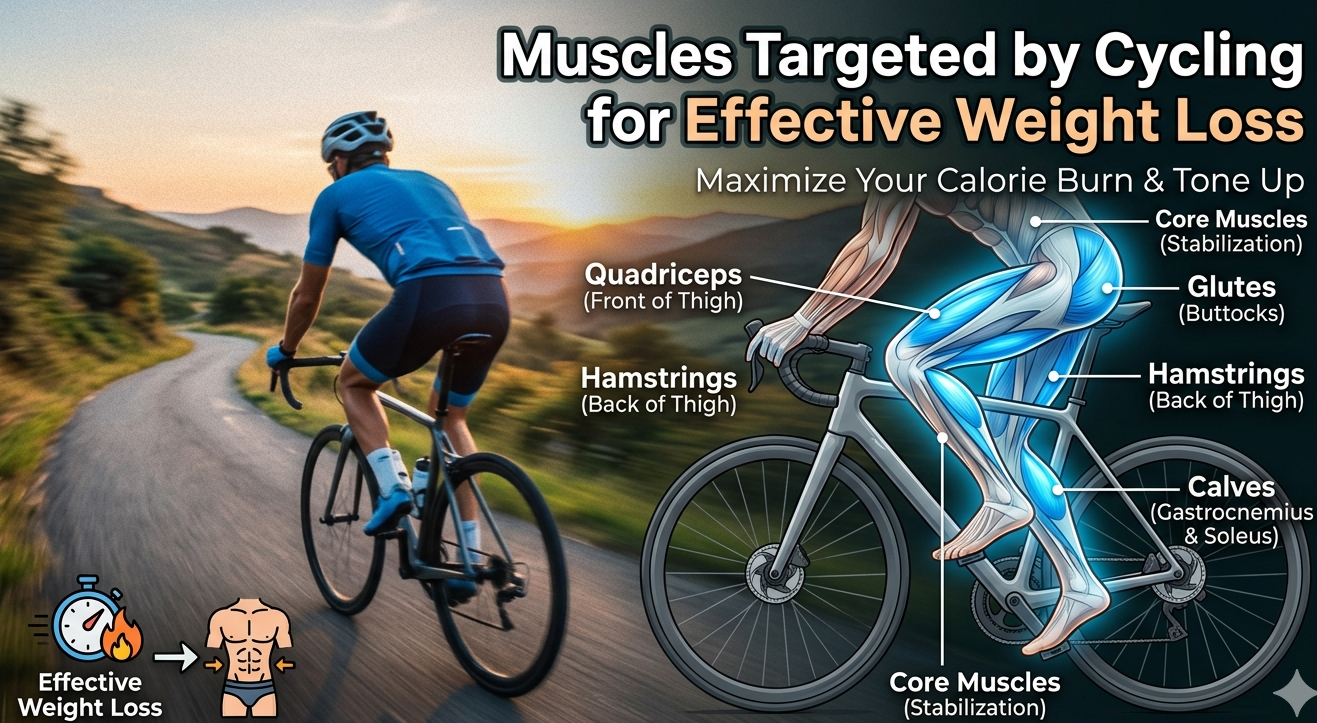
Moreover, cycling can aid in altering body composition. As cyclists engage in sustained efforts, they not only burn calories but also build lean muscle mass, particularly in the lower body. The muscles targeted during cycling include the quadriceps, hamstrings, calves, and glutes. This muscle development can improve metabolic rates, allowing the body to burn calories more efficiently even while at rest. Consequently, regular cycling sessions contribute to a more toned physique and an overall reduction in body fat.
In conclusion, cycling stands out as an effective exercise for those seeking to lose weight. Its ability to enhance cardiovascular fitness and alter body composition makes it a valuable addition to any weight loss regimen. By incorporating cycling into a fitness routine, individuals can achieve their weight loss goals while enjoying the many benefits this activity has to offer.
Overview of Muscle Groups Engaged in Cycling
Cycling is an excellent aerobic exercise that engages a variety of muscle groups, making it an ideal choice for individuals looking to enhance their fitness and achieve effective weight loss. The primary muscle groups targeted during cycling include the quadriceps, hamstrings, calves, glutes, and core muscles. Understanding the role of each of these muscles can help cyclists optimize their training routines for improved performance and weight management.
The quadriceps, located at the front of the thigh, are the dominant muscle group used while pedaling. They are engaged primarily during the downstroke of the pedal cycle, providing the power needed to push the pedals and maintain speed. In contrast, the hamstrings, located at the back of the thigh, assist in the upstroke, helping to lift the pedal back up. This dual action of the quadriceps and hamstrings ensures a balanced muscle engagement that is crucial for effective cycling.
Additionally, the calves contribute significantly by facilitating ankle movement during cycling. The gastrocnemius and soleus muscles work together to stabilize the ankle joint and provide the necessary propulsion as the cyclist pedals. The gluteal muscles, particularly the gluteus maximus, are also heavily involved, especially when cycling uphill or during sprint efforts. Activating the glutes not only aids in generating power but also helps in maintaining overall stability during rides.
Lastly, the core muscles—including the abdominal and lower back muscles—provide essential support for postural stability while cycling. A strong core is crucial for maintaining balance and transferring energy efficiently throughout the pedaling action. In summary, understanding these muscle groups engages enhances the cycling experience and promotes effective weight loss by combining strength, endurance, and core stability in one comprehensive workout.
Quadriceps: The Powerhouse of Cycling
The quadriceps, a group of four muscles located at the front of the thigh, play a pivotal role in the activity of cycling, making them a central focus when discussing muscle engagement for effective weight loss. These muscles are instrumental in creating the power needed for pedaling, as they extend the knee and propel the cyclist forward. As a primary driver of cycling motion, strong quadriceps enhance both speed and endurance on the bike.
In various cycling positions, the quadriceps are engaged differently. For instance, in a seated position during steady-state cycling, these muscles are utilized primarily for generating consistent force. This position allows cyclists to maintain a high cadence with efficiency, maximizing the effectiveness of the quadriceps in calorie expenditure. Conversely, when cycling out of the saddle, such as during climbs or sprint efforts, the quadriceps are activated more intensely. This change in positioning requires a greater commitment of strength and energy, resulting in higher calorie burn and increased muscle engagement.
The intensity at which one cycles significantly influences quadriceps engagement as well. In high-intensity interval training (HIIT) or vigorous rides, the quadriceps endure substantial recruitment, generating power that surpasses what may be experienced during more moderate cycling. As such, conditioning these muscles through varied cycling intensities enables cyclists to enhance their overall performance and contributes significantly to weight loss goals.
In conclusion, understanding the role of the quadriceps during cycling is essential for maximizing weight loss benefits. By focusing on effective pedaling techniques and varying cycling positions, cyclists can effectively engage these powerhouse muscles, ultimately leading to greater fitness levels and successful weight loss outcomes.
Hamstrings: The Essential Counterpart
The hamstrings, a group of three muscles located at the back of the thigh, play a crucial role in cycling performance and effective weight loss. As cyclists pedal, the hamstrings work in conjunction with the quadriceps to execute a smooth and efficient cycling motion. This partnership is vital for maintaining cadence and power output, particularly during the upward phase of the pedal stroke.
The contribution of the hamstrings is often overlooked when considering the mechanics of cycling. While the quadriceps are responsible for the primary power during the downward phase, the hamstrings counterbalance this force and assist in knee flexion, facilitating a more effective pedal stroke. This intermuscular cooperation not only improves performance but also helps in injury prevention. By engaging the hamstrings properly, cyclists can alleviate undue stress on the knees and enhance their overall efficiency on the bike.
In addition to their contribution to cycling dynamics, well-developed hamstrings help in caloric expenditure, which is essential for weight loss. Engaging these muscles effectively during cycling workouts promotes a greater overall calorie burn, which is critical for those seeking to shed excess body weight. A strong set of hamstrings complements the efforts of the quadriceps and glutes, ensuring a balanced workout that targets multiple muscle groups, thereby maximizing performance and fat loss.
To optimize cycling workouts, it is essential for cyclists to incorporate exercises that specifically strengthen the hamstrings. Regularly engaging in strength training that focuses on this muscle group can lead to improved cycling performance, increased power output, and enhanced weight loss results.
Calves: The Engine of the Pedaling Motion
The calf muscles play a critical role in the biomechanics of cycling, primarily influencing the efficiency and power of each pedal stroke. Within the calves, the two key muscles responsible for this function are the gastrocnemius and the soleus. The gastrocnemius is the larger of the two muscles, located superficially at the back of the lower leg, and it is primarily engaged during the push phase of the cycle. In contrast, the soleus lies underneath the gastrocnemius and is more active during the recovery phase, contributing to a smooth transition and pedal rotation.
As one cycles, the calves generate force to push the pedals down and upwards. This engagement is critical for maintaining speed and momentum, particularly in situations where quick bursts of energy are required, such as uphill climbs or sprints. Enhanced calf strength translates into improved cycling performance, allowing for greater power output with less effort. Furthermore, when the calf muscles are strong and well-conditioned, they enable cyclists to sustain longer rides, effectively increasing endurance levels.
Moreover, engaging the calf muscles not only improves cycling efficiency but also contributes to significant calorie expenditure. The higher the power output during cycling, the greater the potential for weight loss to occur. Since cycling is a compound exercise utilizing multiple muscle groups, the activation of the calves complements the efforts of the quadriceps and hamstrings, creating a more efficient pedal stroke overall.
In conclusion, focusing on strengthening the gastrocnemius and soleus through targeted exercises can lead to noticeable improvements in cycling performance. This can enhance weight loss efforts through increased caloric burn and an overall more effective pedaling motion. Thus, integrating calf-strengthening routines can serve as an essential strategy for cyclists aiming to optimize both their endurance and weight management goals.
Glutes: The Key to Power and Stability
The glutes, comprising the gluteus maximus, medius, and minimus, play a pivotal role in cycling, both in terms of performance and weight loss. These muscles are the largest in the body and serve as the primary power generators during the cycling motion. Well-developed gluteal muscles enhance pedaling efficiency, enabling cyclists to generate greater force with each stroke. This power is crucial, especially during climbs and sprints, where explosive strength is essential for overcoming resistance.
In addition to power generation, the glutes are integral to maintaining stability while cycling. They help stabilize the pelvis, ensuring proper alignment and optimizing the transfer of energy through the lower limbs to the pedals. This stability becomes particularly important during varied terrains, such as uphill climbs or off-road cycling, where the body must adapt to shifting forces. Effective glute function minimizes energy wastage and enhances endurance, allowing cyclists to maintain effort for prolonged periods.
From a weight loss perspective, engaging the glutes effectively during cycling not only contributes to improved performance but also aids in burning more calories. As the glutes are larger muscles, they consume more energy, elevating the overall metabolic rate during and after workouts. This increased energy expenditure plays a critical role in weight loss, making focused cycling sessions that emphasize glute engagement a strategic approach for those seeking to shed pounds. In essence, the glutes are not merely a muscle group to be overlooked; they are fundamental to achieving optimal cycling performance and enhancing weight loss outcomes.
Core Muscles: Supporting Your Cycling Endeavors
The role of core muscles in cycling cannot be overstated. A strong core serves as the foundation for proper cycling techniques, influencing not only performance but also weight loss outcomes. Core muscles comprise the abdominal, lower back, and pelvic floor regions, which work collectively to provide stability and balance during cycling.
One of the primary benefits of a strong core is improved posture. When cyclists possess a stable core, their posture on the bike is naturally enhanced. This can lead to more comfortable rides over longer distances, as a stable torso allows for smoother and more efficient pedaling strokes. This efficiency translates to a greater ability to maintain speed and endurance, ultimately supporting efforts in burning calories and promoting weight loss.
Additionally, a well-developed core can significantly enhance pedaling efficiency. The power exerted on the pedals originates not only from the legs but also from how effectively the core engages during the cycling motion. A robust core allows for the transfer of energy from the upper body to the lower body, optimizing each pedal stroke. Consequently, this efficiency can contribute to increased speed and stamina, which are vital for maximizing fat burning during cycling sessions.
Moreover, engaging core muscles plays a crucial role in reducing the risk of injuries. Cyclists who have stronger core support typically experience lesser fatigue in the lower back and hips, allowing them to ride with confidence and sustained energy. When cyclists feel physically capable, they are more likely to make cycling a regular part of their fitness routine, thereby enhancing their weight loss efforts over time.
In summary, the core muscles are pivotal in supporting cyclists in their endeavors. By strengthening these muscles, individuals can improve their overall cycling experience, boost their pedaling efficiency, and ultimately achieve better weight loss results.
Cycling Intensity and Muscle Targeting
Cycling, as a highly efficient cardiovascular exercise, engages various muscle groups and offers distinct benefits depending on the intensity of the workout. The two primary intensities of cycling are steady-state and interval training, each targeting different muscle fibers and contributing uniquely to weight loss and muscle engagement.
Steady-state cycling involves maintaining a consistent pace for an extended period, usually at moderate intensity. This type of training primarily recruits slow-twitch muscle fibers, also known as Type I fibers, which are more endurance-oriented and are effective at utilizing oxygen for long durations. These fibers play a crucial role in fat oxidation, thus promoting weight loss through sustained energy expenditure. As cyclists engage in longer steady-state rides, they enhance their aerobic capacity while efficiently burning calories, making this approach favorable for those looking to shed weight gradually.
On the other hand, interval training involves alternating periods of high-intensity effort with recovery phases. This method targets fast-twitch muscle fibers, or Type II fibers, which are more suited for short bursts of power and speed. Interval training significantly elevates heart rate, leading to increased calorie burn not only during the workout but also post-exercise, a phenomenon known as excess post-exercise oxygen consumption (EPOC). By incorporating intervals, cyclists can maximize muscle engagement and improve metabolic rate, which further aids weight loss. Both steady-state and interval training offer distinct advantages for weight loss, and combining the two strategies can lead to optimal results.
Ultimately, understanding the differences in muscle targeting based on cycling intensity empowers individuals to tailor their workouts according to personal fitness goals. By strategically engaging in both steady-state and interval cycling, individuals can achieve a balanced approach to weight loss and muscle development.
Conclusion: The Comprehensive Benefits of Cycling for Weight Loss
In summary, cycling is a highly effective form of exercise that targets various muscle groups while simultaneously facilitating weight loss. Through engaging muscles such as the quadriceps, hamstrings, glutes, and calves, cycling delivers a focused workout that strengthens and tones the lower body. Importantly, the aerobic nature of cycling promotes cardiovascular health, improving overall stamina and endurance, which is critical for maintaining an active lifestyle.
Moreover, cycling offers a low-impact alternative to other cardiovascular exercises, thus reducing the risk of injury while still providing a robust workout. This low-impact aspect makes cycling a suitable option for individuals of varying fitness levels, including those who may experience discomfort with high-impact sports.
Furthermore, the versatility of cycling allows for a range of intensities and durations tailored to individual goals, making it easier to achieve and sustain weight loss. Whether opting for leisurely rides, structured classes, or off-road cycling, the integration of different formats can help keep motivation high and prevent workout monotony.
In addition to physical benefits, cycling contributes positively to mental health by promoting the release of endorphins, often referred to as feel-good hormones. This not only enhances mood but can also lead to reduced stress and anxiety levels, further supporting effective weight management.
Overall, the comprehensive benefits of cycling extend beyond muscle targeting for weight loss. Its capacity to improve physical health while also fostering mental well-being makes cycling an excellent choice for those seeking a holistic approach to fitness and weight management.