
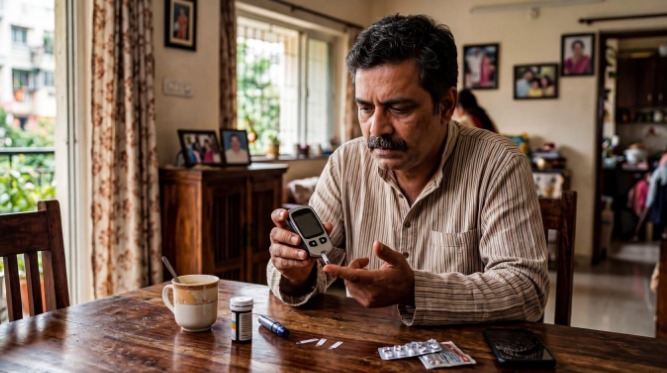


Many people don’t understand why their sugar levels remain high even when they take medicines on time and try to eat better. Still, the numbers don’t come under control, and this becomes frustrating over time.
If your blood sugar stays high even after medication, the reason is usually not just the medicine; small daily habits can quietly affect your results.
Late meals, hidden sugars in food, poor sleep, stress, and low physical activity can slowly increase blood sugar levels. Most people don’t notice these factors at first.
Once you start focusing on these daily habits, managing blood sugar becomes easier and more consistent.
Why Blood Sugar Stays High Even After Medication: What You Might Be Missing
Here are some common reasons why blood sugar may remain high, even when you’re taking medication regularly:
-
Diet mistakes (even small ones)
Even small daily food habits can push your blood sugar higher than expected.
Sudden spikes might result from eating irregularly, missing meals, or overindulging later.
Packaged foods like biscuits, flavored yogurt, or even “healthy” breakfast cereals often contain hidden sugars, which slowly push your glucose levels up.
Try to eat simple meals at the same time every day. It helps keep your sugar levels stable.
For example, one person was taking medicines regularly, but his sugar stayed high. Later we found he was eating dinner at 11 PM every night. After fixing just this one habit, his readings started improving.
-
Stress and poor sleep
Stress and poor sleep can quietly raise your blood sugar.
Your body releases a hormone called cortisol when you are under stress. This hormone can increase blood sugar levels, even if your diet is controlled.
At the same time, poor sleep makes your body less sensitive to insulin. This makes it harder for glucose to enter your cells.
Lifestyle factors like stress, diet, sleep, and physical activity directly affect how your sugar levels behave (Source: World Health Organization).
A few small changes like fixing your sleep timing, reducing screen use at night, and taking short breaks during the day can help improve control.
-
Lack of physical activity
Physical activity helps your body use glucose in a better way. When you stay active, your muscles use sugar for energy.
That’s one of the simplest ways your body lowers blood sugar naturally. But when you sit most of the day, that sugar doesn’t get used.
Gradually, this turns into a pattern of high readings.
For example, someone who sits for long hours, avoids walking, or has no fixed movement routine may notice their sugar levels staying high, even after following treatment.
The good part is you don’t need intense workouts to see results.
Simple habits like walking for 20–30 minutes, using stairs, or staying lightly active during the day can make a real difference in blood sugar control.
-
Insulin resistance
In some cases, the body becomes less responsive to insulin, a condition known as insulin resistance.
This means that, despite taking medicine regularly, glucose does not enter the cells effectively, leading to higher blood sugar levels.
That’s why even with medicines, sugar levels may remain high.
-
Irregular routine
An irregular routine, such as late meals, inconsistent sleep timing, and lack of structure, disrupts how your body handles glucose.
Such habits disrupt your body’s rhythm and make sugar control harder.
For instance, Irregular meals and sleep can affect how your body controls sugar.
Common Causes and What You Can Do
| Cause | What You Can Do |
| Irregular eating habits | Eat at fixed times; avoid overeating |
| High stress levels | Try simple relaxation like breathing or meditation |
| Lack of physical activity | Add daily walking or light exercise |
| Poor sleep routine | Maintain proper sleep timing |
| Processed food intake | Choose fresh, home-cooked meals |
This shows how small daily changes can make a big difference in managing blood sugar.
Signs You Should Not Ignore
When blood sugar stays high for a long time, the body starts giving small warning signs. Most people ignore these in the beginning.
You may notice:
- Feeling tired even after proper rest
- Sudden changes in sugar levels
- Weight going up or not reducing despite effort
- Frequent cravings, especially for sweets
- Mood changes like irritation or low energy
Over time, these signs can become more noticeable if not managed properly.
This usually means something important is being missed in your routine, not just medicines alone.
If these signs continue despite medication and routine changes, proper medical guidance is important.
How Ayurveda Looks at This Problem
In Ayurveda, the focus is not just on symptoms but on finding the real cause.
In many people, digestion, routine, and overall lifestyle play a key role in unstable blood sugar levels. Because of these factors, sugar levels keep going up and down.
Ayurveda works on improving digestion, balancing the body, and fixing daily habits step by step.
If these basics are ignored, medicines may not work properly.
In such cases, you can also explore a more structured Ayurvedic approach to managing blood sugar, like this Ayurvedic diabetes reversal treatment program.
Simple Steps to Manage Blood Sugar Naturally
Here are a few easy adjustments that do make a difference:
- Follow a consistent meal routine
Try to eat meals at consistent times each day and avoid long gaps followed by heavy meals. This helps prevent sudden spikes and drops in blood sugar levels.
- Choose the right foods
Include more fiber, vegetables, and balanced meals. Avoid excess sugar and processed foods.
- Stay active daily
Even 30 minutes of walking can help your body use sugar better.
- Manage stress
Try simple practices like breathing exercises or meditation.
- Use herbs wisely (seasonal approach)
Certain Ayurvedic herbs can support sugar control, especially when used as per season and body type.
You can also read more about daily sugar intake and its impact in our guide on [how much sugar is too much].
Research from the American Diabetes Association also highlights that lifestyle changes play a key role in managing blood sugar effectively.
When should you seek proper guidance?
If your blood sugar is staying high for a long time, it’s important not to ignore it.
If your medicines are increasing but results are still not improving, your body may need a different approach.
Furthermore, if symptoms like tiredness, sugar spikes, or weight issues are not getting better, it’s a sign that something is not working properly.
In such cases, getting the right guidance can help you understand the root cause and manage your condition better.
Conclusion
If your blood sugar stays high even after medication, it can feel frustrating and confusing.
In many cases, the issue isn’t the medicine itself but the daily habits around it. Factors like irregular meals, poor sleep, stress, and low activity can quietly affect how your body responds.
A closer look at these areas often explains why sugar levels stay high despite treatment.
Getting the right guidance at the right time can help you identify what’s missing and take better control of your condition in a more structured way.
FAQ
-
Why is my blood sugar still high even after taking medicine?
Medicine helps, but it’s not the only factor. Things like your diet, stress, sleep, and daily routine also affect your sugar levels.
-
Do changes in lifestyle actually have an impact?
Yes, they do. Small changes like eating on time, staying active, and sleeping well can improve your sugar control over time.
-
Is medicine alone enough to manage diabetes?
Not always. Medicine works better when your daily habits are also in balance.
-
When should I seek proper help?
If your sugar levels are not improving or your medicine keeps increasing, it’s better to get proper guidance and understand what’s missing.