


Introduction to Home Health Checks
In recent years, the concept of performing health checks at home has gained considerable traction among individuals seeking to maintain and monitor their well-being. Conducting these health assessments regularly is essential for understanding one’s overall health status. It provides an opportunity for individuals to monitor vital metrics such as heart rate, blood pressure, and body weight without the inconvenience of visiting a healthcare facility.
The importance of regular health assessments cannot be overstated. These evaluations enable early detection of potential health issues before they become significant medical concerns. By taking the initiative to check vital signs regularly, individuals can gain insights into their health patterns, leading to proactive measures that support overall health. This proactive approach often empowers individuals to make informed lifestyle choices that can enhance their well-being.
Aside from the health benefits, performing health checks at home offers a level of convenience that traditional methods may lack. Home health assessments can be incorporated into one’s daily routine, eliminating barriers such as time constraints and travel expenses. As a result, individuals can take charge of their health in a comfortable setting, significantly reducing the anxiety often associated with clinical visits.
Furthermore, knowing one’s health status plays a vital role in leading a healthier lifestyle. By being aware of vital signs and the overall health condition, individuals can set specific goals for fitness and nutrition. This self-awareness also aids in managing chronic conditions, as individuals can identify unusual changes and seek medical advice accordingly.
In summary, the practice of conducting health checks at home empowers individuals to take control of their health. Through consistent self-assessment, one can enjoy the benefits of proactive health management, leading to improved well-being.
Essential Tools Needed for a Home Health Check
Conducting a comprehensive health check at home requires a few essential tools that can help monitor different aspects of your health effectively. Each of these tools serves a specific purpose and provides valuable information about your well-being.
First and foremost, a digital thermometer is crucial for measuring body temperature. It allows you to quickly and accurately assess any fever or abnormal temperature range. To use a digital thermometer, place it in the mouth, armpit, or rectum as per the instructions to obtain a reading.
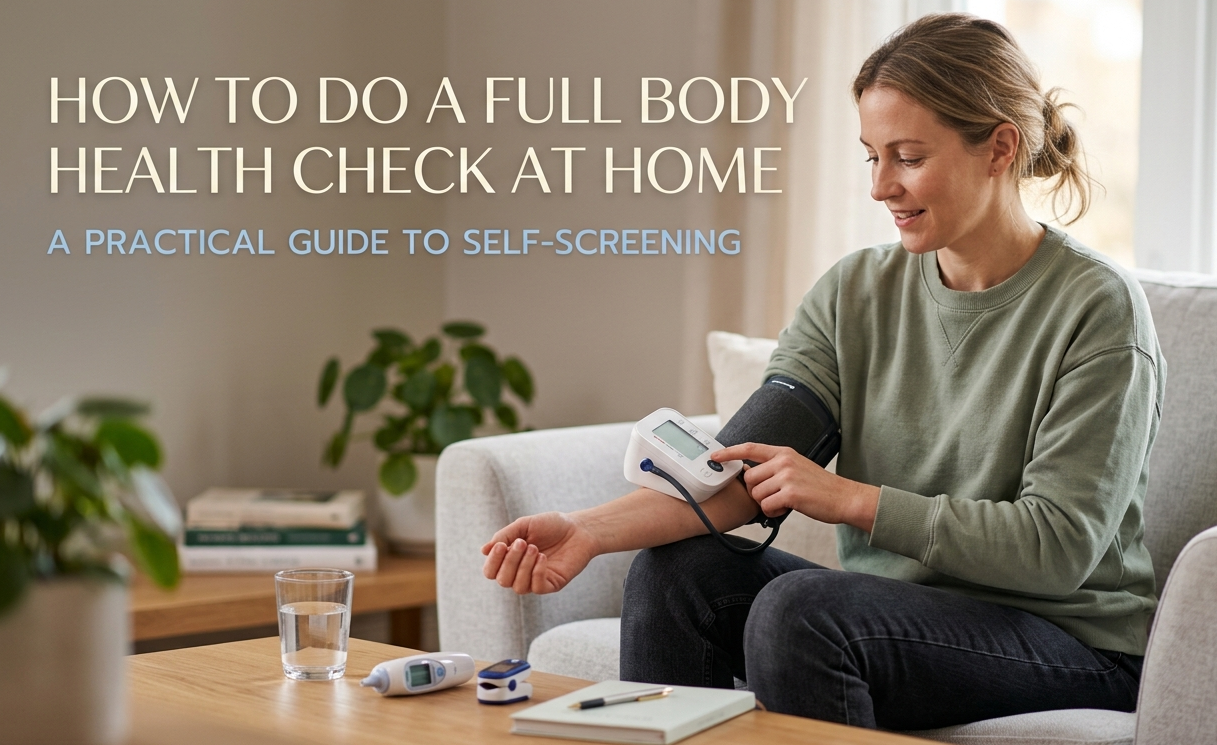
Another important device is a blood pressure monitor, which enables you to check your blood pressure levels conveniently at home. Understanding your blood pressure is vital for cardiovascular health. To measure your blood pressure, secure the cuff around your upper arm, ensuring it is positioned correctly, and activate the monitor according to the device’s instructions.
A glucometer is essential for individuals who need to monitor their blood sugar levels, especially those with diabetes. This device requires a small blood sample for reading glucose levels, providing critical data for managing your diet and medication.
A pulse oximeter is another handy tool that measures the oxygen saturation of your blood, which is particularly useful in assessing respiratory health. Place the device on your fingertip, and within seconds, it will display the oxygen saturation and pulse rate on its screen.
For overall well-being, a scale can help you track your weight, while a measuring tape is helpful for checking waist circumference, which is an important indicator of health risks. Regularly using these tools can provide insights and help you maintain better health at home.
Step-by-Step Guide to Measuring Vital Signs
Measuring vital signs is a crucial part of performing a full body health check at home. This process includes assessing four primary indicators: body temperature, heart rate, respiration rate, and blood pressure. Regular monitoring of these vital signs can provide insights into an individual’s health status.
1. Measuring Body Temperature: Start by using a digital thermometer. For an accurate reading, place the thermometer under the tongue, in the armpit, or rectally, depending on the type of thermometer used. Ensure that the person has not consumed hot or cold beverages or smoked within 15 minutes before measurement. A normal body temperature typically ranges from 97°F to 99°F (36.1°C to 37.2°C).
2. Checking Heart Rate: The heart rate can be measured by finding the pulse at the wrist or neck. Place your fingers over the radial artery (on the thumb side of the wrist) or the carotid artery (on the side of the neck) and count the beats for 30 seconds, then multiply by two to get beats per minute. It is best to measure heart rate when at rest, preferably in the morning.
3. Assessing Respiration Rate: To measure the respiration rate, observe the rise and fall of the chest. Count the number of breaths taken in one minute while the individual is at rest. Generally, a normal respiration rate ranges from 12 to 20 breaths per minute for adults.
4. Measuring Blood Pressure: Use a digital blood pressure monitor for ease and accuracy. Have the person sit quietly for at least five minutes before taking the reading. Ensure the cuff fits correctly on the upper arm. Record both systolic and diastolic pressures, which should normally be less than 120/80 mmHg.
For precise measurements, it is advisable to take readings at the same time each day and maintain a relaxed environment. Avoid measuring after heavy physical activity or during times of stress, as these factors can lead to inaccurate results. Keeping a health journal can help track changes in these vital signs over time.
Self-Assessment for Weight and Body Measurements
Assessing your weight and body measurements can provide valuable insights into your overall health. To begin, it is crucial to weigh yourself accurately. Use a reliable digital scale, placing it on a flat, hard surface to ensure precise readings. Stand still on the scale without holding onto anything for stability. It is recommended to weigh yourself at the same time each day, preferably in the morning after using the restroom, to maintain consistent conditions.
Next, measuring your body dimensions is equally important. Start with your waist circumference by wrapping a measuring tape around the narrowest part of your waist, typically located above your belly button, ensuring the tape is parallel to the ground. For hip measurement, wrap the tape around the widest part of your hips while keeping the tape snug but not restrictive. Both waist and hip measurements are pivotal as they can indicate fat distribution and potential health risks associated with obesity.
Moreover, calculating your Body Mass Index (BMI) offers a simplified assessment of your body weight relative to your height. The BMI formula is weight (in kilograms) divided by the square of height (in meters). This index helps categorize individuals into various weight statuses such as underweight, healthy weight, overweight, and obesity. Understanding your BMI can direct your health considerations and lifestyle choices.
Body measurements, such as waist and hip circumferences, along with BMI, play a considerable role in evaluating health and fitness. Research suggests that higher waist-to-hip ratios are linked to increased health risks like diabetes and cardiovascular issues. Therefore, regularly monitoring these metrics can assist individuals in maintaining better health and proactively addressing potential concerns.
Understanding Common Health Indicators
Performing a full body health check at home involves evaluating various health indicators that can provide insights into overall well-being. Key markers to focus on include cholesterol levels, blood sugar levels, and hydration status. Each of these indicators plays a crucial role in assessing potential health risks and can inform personal health management strategies.
Cholesterol levels are vital for understanding cardiovascular health. Monitoring both low-density lipoprotein (LDL) and high-density lipoprotein (HDL) cholesterol can help identify risks for heart disease. Elevated LDL cholesterol is often referred to as “bad” cholesterol because it can lead to plaque buildup in arteries, increasing the risk for heart attacks and strokes. Regularly checking cholesterol, especially for individuals with a family history of heart disease, is essential.
Another important health indicator is blood sugar levels. High blood sugar can indicate insulin resistance or diabetes, conditions that can lead to serious health complications if left unmanaged. For individuals at risk or already diagnosed with diabetes, keeping track of blood sugar levels through home testing devices becomes vital. Maintaining balanced blood sugar levels can improve energy, weight management, and overall health.
Hydration is often overlooked but is equally important for overall health. The body requires adequate hydration to function optimally, affecting everything from cognitive performance to organ function. Simple indicators of hydration include monitoring urine color and frequency of urination. A well-hydrated body is better equipped to cope with stress and illness, making regular assessment essential.
By understanding and regularly monitoring these health indicators at home, individuals can take proactive steps towards managing their health effectively. Engaging with these aspects not only enhances health awareness but also aids in making informed decisions regarding lifestyle changes and when to seek medical advice.
Identifying Signs of Common Health Issues
Conducting a full-body health check at home is essential for recognizing common health issues that may not present obvious symptoms early on. By familiarizing yourself with the signs of various conditions, you can effectively perform self-assessment and determine when to seek professional medical advice.
High blood pressure, often referred to as hypertension, is a condition that can be detected through regular monitoring. Individuals may not experience noticeable symptoms, which is why it is often referred to as a “silent killer.” Signs to watch for include headaches, dizziness, or shortness of breath in severe cases. It is advisable to check blood pressure with a home monitor, and values consistently above 130/80 mmHg warrant consultation with a healthcare professional.
Another prevalent health issue is diabetes. It can sometimes go unnoticed for years but may manifest through increased thirst, frequent urination, fatigue, or blurred vision. If such symptoms arise, particularly in conjunction with a family history of diabetes or other risk factors such as obesity, it’s crucial to perform a glucose test and consult a doctor to rule out or confirm diabetes.
Obesity is another common concern that can be self-assessed using the Body Mass Index (BMI). A BMI over 30 indicates obesity, which can lead to further complications like heart disease or type 2 diabetes. Be alert for signs of weight gain, difficulty in physical activities, or overall fatigue. If the BMI suggests obesity, it may be necessary to seek guidance on dietary and lifestyle changes.
Recognizing the symptoms of common health issues through self-assessment is a proactive step towards personal wellbeing. Understanding when to seek medical attention is critical for prompt intervention and better health outcomes.
Creating a Health Diary
Maintaining a health diary is an essential practice for individuals seeking to monitor their well-being comprehensively. This diary serves as a personalized log, providing insight into various health metrics over time, including weight, blood pressure, heart rate, dietary habits, and exercise routines. By committing to regular entries, individuals can track changes in their health, which is crucial for identifying patterns that may require attention or adjustment.
To create an effective health diary, it is beneficial to adopt a structured approach. Begin by selecting a format that resonates with your lifestyle, whether digital or paper-based. Ensure that the diary includes sections for daily entries on diet, physical activity, and any relevant health symptoms. It might also be useful to incorporate weekly or monthly summaries to highlight trends in your data. For instance, noting the effects of dietary changes or new workout routines can inform future health decisions.
The benefits of maintaining a health diary extend beyond personal accountability. It provides a significant resource for discussions with healthcare providers. When visiting a medical professional, a detailed diary can offer an accurate portrayal of one’s health journey, making it easier for the provider to understand patterns and suggest appropriate interventions. Furthermore, sharing this information can lead to more tailored health plans, ensuring that care is aligned with personal goals and medical needs.
In addition to monitoring physical health metrics, the diary can serve as a tool for mental health tracking. Documenting moods or stress levels alongside physical health indicators can facilitate a more holistic view of overall well-being. Ultimately, the practice of keeping a health diary encourages proactive engagement with personal health and fosters a deeper understanding of how various aspects of health are interconnected.
When to Seek Professional Medical Advice
Conducting a full body health check at home can provide valuable insights into one’s overall health. However, there are critical instances when findings from these self-assessments warrant a visit to a healthcare professional. Firstly, if you discover any unusual symptoms such as persistent pain, sudden weight loss, or ongoing fatigue, it is essential to seek professional medical advice promptly. These symptoms may indicate underlying health issues that require investigation and potential intervention.
Secondly, if your home health checks reveal troubling changes in vital signs—like elevated blood pressure or irregular heart rhythms—it is crucial to consult a healthcare provider. These variations could signal conditions that necessitate immediate treatment or further diagnostic evaluation. Monitoring your vital signs can serve as a helpful guide, but interpreting them and determining if they indicate a serious health concern is best left to qualified medical professionals.
Additionally, even self-diagnosed minor concerns should not be neglected. For instance, if symptoms such as skin rashes, respiratory discomfort, or digestive irregularities persist despite home remedies, professional assessment and care may be necessary. Ignoring these issues can potentially lead to worse health outcomes.
Even for those who feel healthy, regular check-ups with a healthcare professional are advisable, especially if they have pre-existing conditions or a family history of chronic illnesses. These appointments can provide preventative care and establish a baseline for your health over time, ensuring any changes are monitored closely.
In conclusion, while home health checks are valuable tools for maintaining awareness of one’s health, they are not substitutes for professional medical advice. Recognizing significant changes and understanding when to consult a healthcare provider is vital for ensuring timely and effective management of health concerns.
Conclusion and Encouragement for Regular Health Checks
In summary, conducting a full body health check at home is not only feasible but also essential for maintaining your overall health and wellbeing. Throughout this blog post, we discussed various aspects of self-assessment, including monitoring vital signs, evaluating dietary habits, and recognizing signs of stress or illness. By being proactive about your health, you place yourself in a position of control, allowing you to address potential health concerns before they escalate.
Regular health checks are a straightforward yet vital practice. They empower you to understand your body better and encourage you to make informed lifestyle choices. Consistency in monitoring your health can lead to early detection of issues, which is crucial in promoting a better quality of life. Emphasizing the importance of these checks can lead to significant reductions in serious health complications.
We encourage our readers to embrace the habit of regular health assessments at home. Begin with simple steps, such as tracking your blood pressure, heart rate, and weight or regularly reviewing your dietary intake. Creating a routine for these evaluations can make the process more manageable and less daunting. Consider setting specific times each month for a thorough check, much like scheduling important appointments. This way, health checks become an integral part of your self-care routine.
In conclusion, adopting the practice of regular health checks at home is imperative for fostering a proactive approach to your wellbeing. It is an investment in your future health, and ultimately, a commitment to living a longer and healthier life. Encourage your family and friends to join you in this practice, creating a supportive community focused on health and wellness.