


For many men diagnosed with prostate cancer, surgery is often presented as the primary treatment option. While effective, it can come with long-term side effects that impact quality of life.
Because of this, more patients are exploring alternatives that aim to treat cancer while preserving function and reducing recovery time.
Prostate cancer often progresses more slowly than many other cancers, which gives patients time to evaluate their options and choose an approach that aligns with both their diagnosis and quality of life goals.
When Surgery Isn’t the Only Option
In many cases, radical prostatectomy is still a highly effective treatment approach. However, it is associated with several long-term side effects such as urinary incontinence and erectile dysfunction. Surgery also brings risks like bleeding, infection, and pain.
For this reason, many patients seek alternative treatments, including radiation therapy. While this is another established solution, it carries many of the same long-term risks as prostate surgery and is even more likely to cause bowel and bladder irritability.
As a result, alternative treatments may be worth considering for patients who want to preserve urinary and sexual function, avoid invasive procedures, or explore less disruptive approaches. This is especially relevant for patients with localized prostate cancer, where there is more flexibility in choosing how the disease is managed.
Alternative Prostate Cancer Treatment Options
In recent years, several newer modalities have emerged as less invasive alternatives, including focal and electroporation-based treatments and systemic therapies that target cancer throughout the body.
Many of these alternatives aim to deliver strong cancer control while preserving quality of life.
Electroporation-Based Treatments (IRE & ECT)
Electroporation-based therapies are emerging alternative treatments for prostate cancer. They use high-voltage electrical pulses to make cancer cell membranes more permeable, which helps destroy cancer cells.
There are two main types of electroporation-based treatments:
- Irreversible Electroporation (IRE) uses high-voltage electrical pulses to create permanent openings in cancer cell membranes, leading to cell death.
- Electrochemotherapy (ECT) uses reversible electroporation to temporarily increase cell membrane permeability. This allows chemotherapy drugs to enter the cells more effectively, causing cancer cell death over time.
Because these treatments use electrical pulses rather than heat or surgery, they are designed to better preserve surrounding healthy tissue and nearby structures. This lowers the risk of common side effects like urinary incontinence and erectile dysfunction.
IRE is offered at only a few specialized clinics around the world. Electrochemotherapy for prostate cancer is an emerging approach that has been developed and studied in specialized centers, including Vitus Privatklinik in Germany. The clinic published the first clinical cohort analysis of ECT for prostate cancer in December 2025.
Thermal Focal Treatments (HIFU & Cryotherapy)
IRE and ECT are not the only focal therapies for prostate cancer. Various thermal treatments target the cancerous part of the prostate, offering an alternative to surgery.
The most common thermal focal therapies include:
- High-Intensity Focused Ultrasound (HIFU): relies on focused ultrasound waves to destroy cancer tissue through heat.
- Cryotherapy: involves freezing prostate tissue to destroy cancer cells in localized cancer.
- Focused laser ablation: uses heat from a laser to destroy tumour cells.
These treatments help preserve quality of life with more targeted approaches than surgery, but they also have distinct risks. Heating or freezing can affect surrounding structures, causing side effects such as urinary incontinence and erectile dysfunction.
Systemic Treatments for Advanced Prostate Cancer
Systemic therapies are used for advanced prostate cancer that has spread beyond the prostate. Rather than targeting a specific area, these treatments work throughout the body to control cancer growth.
The most common types of systemic therapies include:
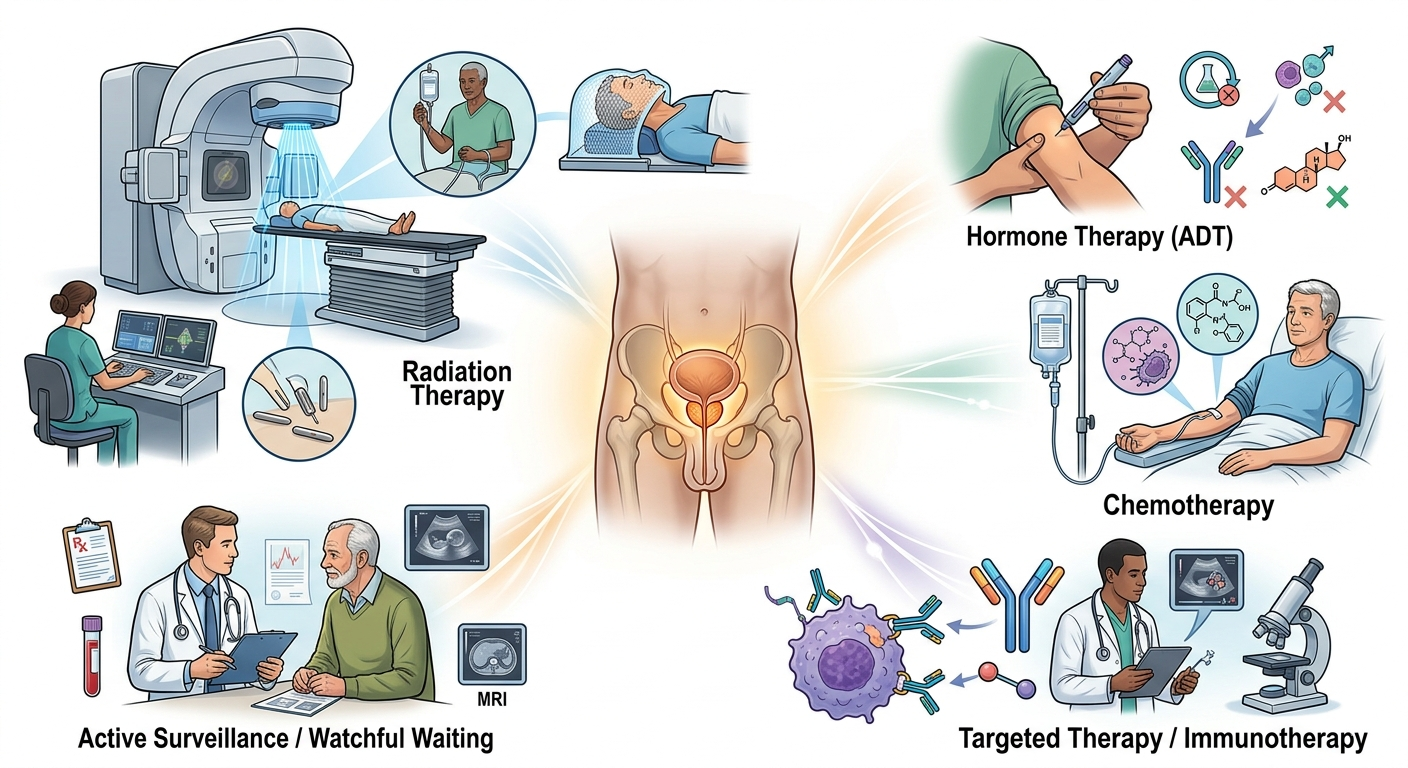
- Hormone therapy: reduces or blocks male hormones (androgens) that fuel prostate cancer growth.
- Chemotherapy: uses drugs to destroy cancer cells, particularly when the cancer has spread or no longer responds to hormone therapy.
- Immunotherapy: helps the immune system recognize and attack cancer cells in certain advanced cases.
- Targeted therapy: focuses on specific genetic mutations or proteins that drive cancer growth.
Each treatment plays a different role depending on how advanced the cancer is and how it responds to previous therapies.
Hormone therapy is often the first-line treatment for advanced prostate cancer. While effective at slowing disease progression, it can cause side effects such as hot flashes, reduced libido, and increased risk of metabolic or cardiovascular issues.
Chemotherapy is used in more advanced stages, especially when the cancer has spread to lymph nodes or other parts of the body. Common side effects include fatigue, easy bruising, and peripheral neuropathy.
Immunotherapy and targeted therapies are generally used in more specific cases, often based on individual patient factors such as genetic markers or prior treatment response.
Choosing the Right Treatment Approach
While several treatment options are available for prostate cancer, the right approach depends on a number of individual factors.
A few key considerations that help determine the best option include:
- Cancer stage
- Gleason score
- How quickly the cancer is growing
- Patient age and overall health
- Quality of life priorities
While it’s important to research and understand the options available, treatment decisions should always be made in consultation with your healthcare team. They can help determine whether active surveillance, localized therapies, or systemic treatment is the most appropriate approach for your specific case.
Conclusion
Prostate cancer treatment is highly individualized, and surgery is not the only option.
While prostatectomy and radiation therapy remain common approaches, newer alternatives such as focal and minimally invasive treatments offer ways to target the cancer while reducing the impact on quality of life.
At the same time, systemic therapies continue to play a critical role in managing advanced or metastatic disease.
Ultimately, understanding the full range of available options allows you to make a more informed decision alongside your healthcare team and choose an approach that aligns with both your diagnosis and your long-term quality of life goals.
References
- https://pubmed.ncbi.nlm.nih.gov/30986263/
- https://pubmed.ncbi.nlm.nih.gov/41401060/
- https://uroweb.org/guidelines/prostate-cancer