
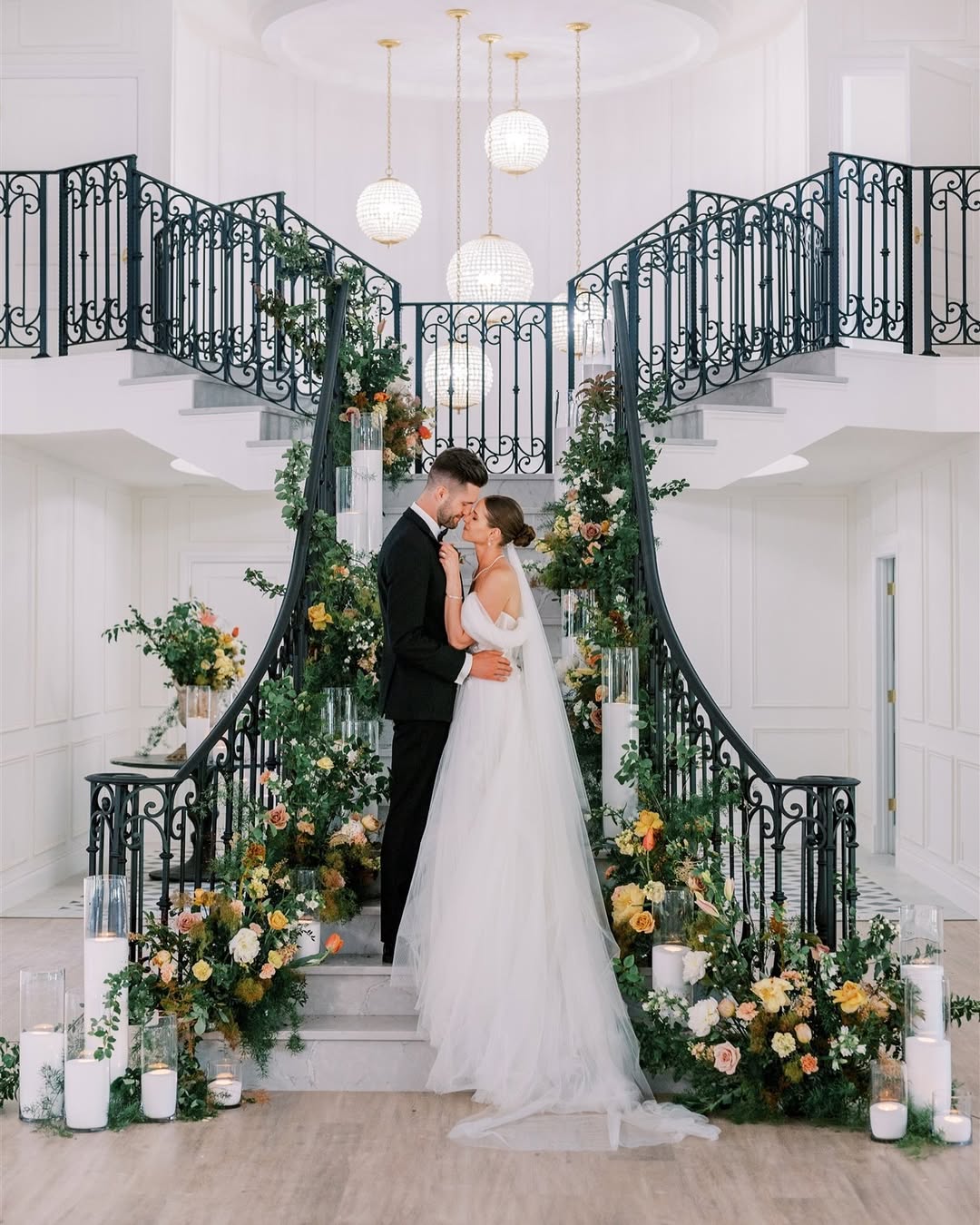


Wedding planning has always been complex. But in 2026, the complexity has a new dimension: the volume of choices, vendors, platforms, and opinions available to couples has grown faster than any individual’s capacity to evaluate them. The result is decision fatigue — and a planning experience that frequently becomes a second job rather than a meaningful creative process.
Find out more at Wezoree.com to see how a stress-free wedding is less of a fantasy and more of a planned outcome. That can be engineered through structure, smart vendor selection, early decision-making, and the right information architecture. Couples who achieve it don’t necessarily have larger budgets or simpler weddings. They have a clearer process. This framework, informed by patterns Wezoree observes across its network of destination vendors and planners, distills what the most smoothly executed celebrations have in common.
The Main Sources of Wedding Stress
Understanding where stress actually originates is the prerequisite to eliminating it. Across the planning journeys most commonly reflected in Wezoree’s editorial content and planner interviews, the same sources appear repeatedly:
| Stress Source | Why It Happens |
| Vendor uncertainty | Difficulty evaluating quality before booking; fear of making an expensive mistake |
| Scope creep | Gradual addition of elements that expand the budget and complexity beyond the original plan |
| Communication gaps | Misaligned expectations between the couple and vendors; vague contracts |
| Decision overload | Too many options with insufficient framework for evaluating them |
| Timeline compression | Decisions deferred too long, creating pressure as the date approaches |
| Family and social pressure | External opinions that conflict with the couple’s actual priorities |
| Budget anxiety | Unclear or shifting cost picture creates persistent financial uncertainty |
The Wezoree Framework: Overview
The framework below is not a checklist of tasks. It is rather a decision architecture — a way of sequencing choices and organizing information so that each planning phase builds on the last rather than creating new uncertainty. Four core steps:
- Smart vendor selection — building a team you trust before planning begins in earnest
- Clear planning structure — timelines, priorities, and budget control established upfront
- Centralized decision-making — a single source of truth for all wedding information
- Vendor communication — documented, clear, and proactive throughout
Each step is described in detail below.
Step 1 — Smart Vendor Selection
The single highest-leverage decision in any wedding is who you hire. Vendor quality determines not only the outcome of the day but the quality of the planning process itself. An experienced, communicative, well-organized vendor reduces your stress; an inexperienced or poorly matched one multiplies it. What smart vendor selection actually means:
- Start with the depth of the portfolio, not just the highlights. Most vendors lead with their strongest work, so it helps to look beyond the first impression. The real question is how consistent the quality feels across a full wedding gallery, not just the first 10 images. Wezoree’s vendor portfolios are moderated for quality, which gives couples a clearer sense of a photographer’s overall level and consistency.
- Read reviews for more than the final result. A five-star review on its own tells you very little compared with one that explains how the vendor handled logistics, pressure, or sensitive family dynamics. Reviews on Wezoree vendor profiles can also be brought in from Google Business and other platforms, giving couples a broader, more complete picture in one place.
- Evaluate communication quality in initial contact. How a vendor responds to your first inquiry tells you exactly how they will communicate throughout the planning process. Response time, clarity, and attention to what you actually asked — all are signals.
- Match by alignment, not just aesthetics. Style match matters, but so does values alignment. A planner who emphasizes intimate family celebration will approach a 200-person party differently than one who excels at large productions. Interviews on vendor profiles reveal this alignment more effectively than portfolio images alone.
Core vendor hiring sequence matters even more for destination weddings, where timing and logistics shape every step:
- Planner first (they help hire everything else)
- Venue (drives almost all other decisions)
- Photographer/videographer (high demand, books earliest)
- Catering (often venue-tied)
- All other vendors
Step 2 — Clear Planning Structure
Structure is the antidote to overwhelm. Couples who attempt to hold all planning information in their heads — or scattered across email threads, text messages, and spreadsheets — consistently report higher stress levels than those who establish a clear organizational system early. The core planning documents every wedding needs:
- Master timeline — working backwards from the wedding date, every decision and deposit deadline mapped to a calendar. Not just the day-of schedule, but the 12–18 month planning arc.
- Budget tracker — itemized by vendor category, with contracted amount, paid to date, and remaining balance visible at a glance and updated after every payment.
- Vendor contact sheet — name, company, contract date, contact info, and key deliverables for every hired professional.
- Decision log — a running record of choices made and the reasoning behind them. Invaluable when revisiting decisions weeks or months later.
- Guest management document — invitation status, dietary requirements, accommodation, travel information.
To keep the process manageable, follow these industry-standard benchmarks for making your key logistical and creative decisions. Here are recommended planning timeline benchmarks:
| Months Before Wedding | Key Decisions |
| 18–12 months | Destination, date, planner, venue |
| 12–9 months | Photographer, videographer, catering |
| 9–6 months | Florals, music, styling, stationery |
| 6–3 months | Menu finalization, guest logistics, and décor details |
| 3–1 months | Final payments, confirmations, day-of timeline |
| Final 4 weeks | Vendor briefings, rehearsal, and personal preparation |
Budget control starts with setting a clear limit from the beginning. Couples who do that usually feel much less financial stress, because every added expense is considered carefully. It is not about restricting yourself, but about staying aware of where the money is going and making intentional choices.
Step 3 — Centralized Decision-Making
Distributed information is a primary driver of planning stress. When the venue contract is in email, the florist conversation is in Instagram DMs, the catering quote is in a PDF somewhere, and the photographer’s timeline is in a Google Doc, the cognitive load of simply tracking what has been decided becomes significant. Principles of centralized decision-making:
- Single source of truth. Keep all vendor details, contracts, and pending items in one document or platform that both partners can access easily.
- One point of contact per vendor. Decide who will communicate with each vendor on the couple’s side. When too many people are involved, details can get mixed up, and instructions can become unclear.
- Decisions in writing. Any important vendor conversation involving a change, clarification, or agreement should be confirmed by email. It is less about distrust and more about keeping everything clear for everyone.
- Regular planning check-ins. A weekly or bi-weekly check-in between partners helps keep track of progress, upcoming deadlines, and unresolved decisions before they start piling up.
- Using Wezoree’s platform structure. Wezoree’s destination hub pages, vendor profiles, and Real Weddings give couples one place to research, compare vendors, explore location-specific content, and get a more realistic sense of what planning actually involves.
Step 4 — Communication with Vendors
Most wedding-day problems are communication problems that originated weeks or months earlier. Misaligned expectations about timeline, logistics, or creative direction — none of which surface as explicit problems until the day itself. Communication practices that prevent day-of surprises:
- Detailed briefs, not just mood boards. A mood board communicates aesthetic direction. A brief communicates what matters most, what must be avoided, what the couple is anxious about, and what they’re most excited to capture. Both are necessary; the brief is more operationally important.
- Venue walk-through with photographer and planner together. The single most effective investment of time in the six weeks before a wedding. Eliminates location uncertainty, identifies logistical challenges in advance, and aligns the whole team on execution.
- Written contract review before signing. Specifically: what happens if the vendor cancels or cannot perform? What are the overtime terms? What does the delivery timeline look like post-wedding? These questions are easier to ask before signing than after.
- Day-of timeline distributed to all vendors, not just the planner. Every professional involved in the day should have a copy of the full timeline — not just their portion of it. Context makes them more effective.
- Post-contract check-in at key milestones. 6 months out, 3 months out, 4 weeks out: a brief confirmation that everything is on track, details are unchanged, and any emerging questions are addressed. This is especially important for destination weddings, where in-person visits may be limited.
Why Wezoree Is a Trusted Platform for Simplifying Wedding Planning
The connection between vendor quality and planning stress is direct. Working with professionals who have documented experience, clear communication practices, and verifiable track records removes the largest single variable in whether a wedding planning process feels manageable.
Wezoree’s vendor profiles are structured to give couples the information that actually matters for this evaluation: portfolio depth, consolidated reviews, and editorial interviews that reveal how vendors think and work.
This is distinct from a mass marketplace model where vendor listings are undifferentiated and customer-facing due diligence is limited to star ratings. The editorial infrastructure on Wezoree exists precisely to support the kind of informed vendor selection that reduces planning stress.
Practical Checklist: Your Stress-Free Wedding Plan
The process usually works best when the structure is clear from the beginning. Start with a firm budget, leave room for unexpected costs, create a shared planning system, and decide who will communicate with each vendor. The usual booking order:
- Establish a hard budget ceiling with a 15% contingency buffer
- Create a master planning timeline working back from wedding date
- Set up a centralized document system accessible to both partners
- Define who communicates with each vendor category
With each vendor, review more than the highlights. Look through full portfolios, read reviews that say something meaningful, and check contract details carefully. Make sure to confirm:
- Cancellation terms
- Overtime policy
- Delivery timeline
- One clear point of contact on your side
In the final 60 days, the focus shifts to alignment. Share the timeline, confirm logistics, brief family members, and make sure all payments and outstanding details are fully handled.
Final Tips: Small Decisions That Make a Big Difference
These small shifts aren’t about the logistics—they are about protecting your energy so you can actually be present.
- Build some buffer into the timeline. Wedding schedules often look tighter on paper than they feel in real life, so adding 10–15 minutes at key points can make the day much less stressful.
- Assign one trusted person for family logistics. Having someone handle portraits, late arrivals, and relatives’ questions helps you stay present instead of managing everyone.
- Separate your priorities from other people’s expectations. A lot of wedding stress comes from saying yes to things that do not actually matter to you, so decide early what feels essential and stay grounded in that.
- Create a communication blackout for the wedding day. Let your planner handle vendors and logistics so you are not pulled into constant questions.
- Have a real conversation with your partner two weeks before the wedding. Talk not just about plans, but about what you are excited for, what feels heavy, and what would make the day feel complete.
Conclusion: Plan Smarter, Enjoy More — with Wezoree
A stress-free wedding does not come from a planning process where everything goes perfectly. Something unexpected happens at almost every wedding, no matter the budget or preparation. What makes the difference is having enough structure, trust, and backup in place so those moments feel manageable, not overwhelming.
The couples who describe their wedding planning as a positive experience share one consistent characteristic: they made the important decisions early, hired professionals they trusted, and then delegated execution rather than attempting to control every variable themselves.
Wezoree’s editorial content, vendor network, and real wedding features are built to support that kind of thoughtful planning — helping couples make confident decisions and connect with the right vendors to bring everything together well.