


Thinning hair does not always begin with a clear bald patch. Many men first notice a wider parting, weaker coverage or more scalp under bright light. The change may be gradual and easy to dismiss. Early assessment can help identify what is actually happening.
Platelet-rich plasma, known as PRP, is a non-surgical treatment used in hair restoration clinics. It uses a concentrated part of the patient’s own blood. The preparation is placed into selected areas of the scalp. Its purpose is to support follicles that are still present.
How PRP is prepared
A PRP appointment usually starts with a small blood draw. The blood is placed in a centrifuge, which spins at a controlled speed. This process separates its components into distinct layers. The platelet-rich portion is then prepared for treatment.
Platelets are best known for their role in clotting, but they also release growth factors. These signalling proteins are involved in repair processes within the body. PRP treatment aims to deliver a concentrated preparation close to affected follicles. Protocols can differ between clinics, so assessment and technique matter.
What happens during treatment
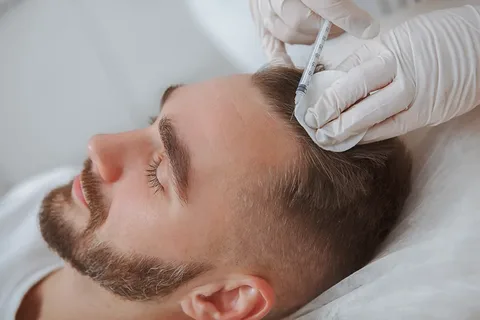
The clinician identifies the areas where hair has become thinner. The scalp is cleaned before the PRP is introduced through a series of small injections. Some clinics combine PRP with microneedling as part of their protocol. The appointment is usually completed without surgery or a donor area.
Patients may feel brief pressure, stinging or tenderness during the session. Comfort measures can be discussed before treatment begins. Mild redness or sensitivity may remain for a short time afterwards. The clinic should explain when normal washing, styling and exercise can resume.
PRP works with existing follicles
PRP does not move hair from one part of the scalp to another. It is intended to support follicles already growing in the treated area. For that reason, it may be more relevant to early or moderate thinning. Completely smooth areas may have few active follicles left to support.
This distinction is important because online descriptions can blur different treatments together. A hair transplant adds follicles to an area using donor hair. PRP aims to improve the environment around existing follicles. The two options solve different problems, although they may form part of one plan.
Results take time
Hair grows through a cycle rather than at a constant rate. Any response to PRP therefore develops gradually. A patient may first notice less shedding or a change in hair quality. Visible improvements in coverage, where they occur, can take several months.
Results also vary between people. The cause of hair loss, the stage of thinning and the treatment protocol can all influence the outcome. No responsible clinic should promise a guaranteed level of regrowth. Progress should be reviewed with consistent photographs and realistic expectations.
More than one session may be advised
PRP is often planned as a course rather than a single appointment. The number and timing of sessions depend on the clinic’s protocol and the patient’s needs. Maintenance treatment may also be discussed after the initial course. Patients should understand the full schedule before calculating the cost.
A written plan makes comparison easier. It should explain what each appointment includes and how progress will be assessed. Patients can then judge the commitment as well as the headline price. They should also ask what happens if the response is limited.
PRP after a hair transplant
Some clinics use PRP as part of a broader transplant programme. It may be offered before or after surgery to support scalp and hair care. This does not replace careful graft extraction, placement or aftercare. It is an additional treatment with a separate role.
Men should ask why PRP is being recommended in their specific case. The answer should relate to their scalp, existing hair and treatment goals. A routine add-on is not the same as a personalised recommendation. Clear reasoning helps patients decide whether the extra treatment has value for them.
Finding the cause of thinning
Male pattern hair loss is common, but it is not the only possible explanation. Illness, stress, weight change and nutritional problems can also affect hair. Sudden or patchy loss needs proper medical attention. Treating without understanding the cause can waste time and money.
A good consultation reviews how the loss began and how quickly it changed. Medical history and current medicines may also be relevant. Some patients should speak with their GP or another medical professional before cosmetic treatment. This step is especially important when hair loss appears unusual.
Who may consider PRP
PRP may suit men who want a non-surgical option for thinning areas. It can also appeal to those who are not ready for a transplant. However, suitability depends on clinical assessment rather than age alone. Existing follicle activity is a key part of the discussion.
Men with advanced loss may need a different plan. Others may benefit from monitoring, medical management or surgery. The best recommendation may also change as hair loss progresses. Honest advice sometimes means waiting rather than starting treatment immediately.
Look for evidence that matches the claim
Before and after photographs can help, but only when they show comparable conditions. Changes in lighting, angle and hair length can exaggerate improvement. Ask whether the images show PRP alone or several treatments together. The answer matters when judging what PRP may achieve.
Patient reviews can describe comfort and service, but they cannot predict a clinical response. Objective scalp photographs give a different kind of information. A useful review process combines both experience and visible evidence. It should also acknowledge when progress is modest or difficult to measure.
Making an informed choice
Ask what PRP system the clinic uses and who performs the injections. Find out how many sessions are proposed and what evidence will be used to judge progress. The clinic should also explain possible side effects and aftercare. These questions reveal whether the service is structured around patient care.
Men exploring PRP or FUE can review the services offered by Total Hair Restoration. The clinic provides assessments in Ireland and develops plans around each patient’s pattern of hair loss. A consultation should leave someone better informed, even if they choose not to proceed. That is a stronger basis for treatment than promises of instant transformation.