
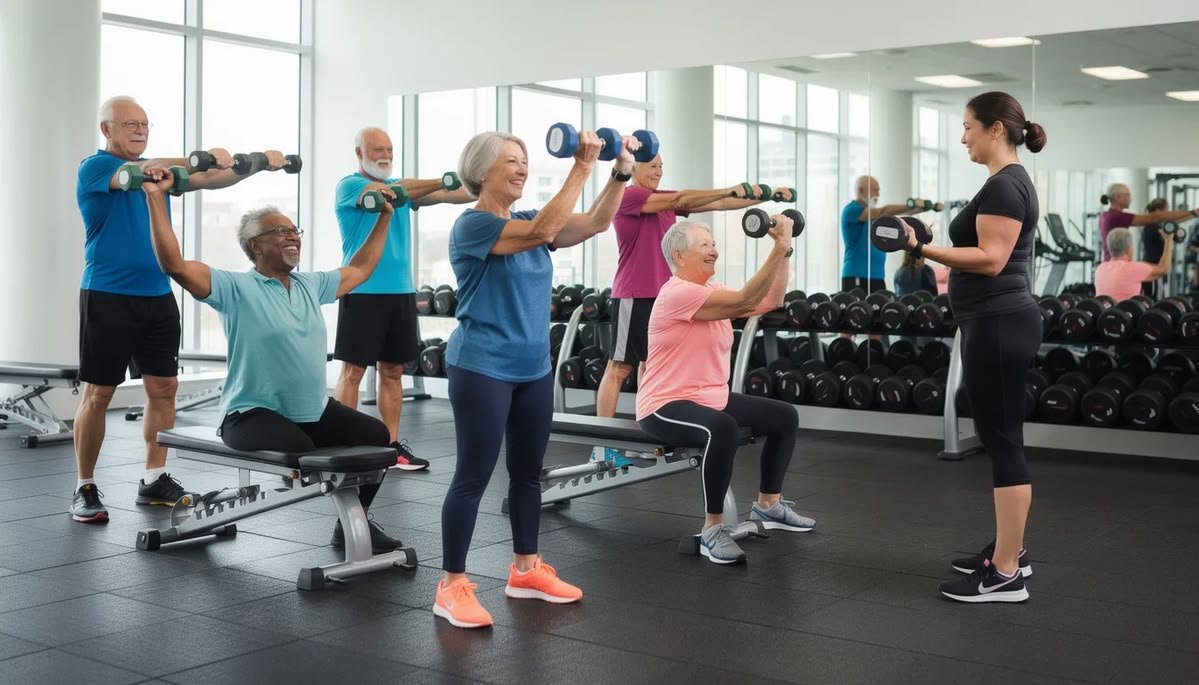


When people hear “core training,” they often picture sit-ups and six-pack abs. After 50, the core has a far more practical job. It’s the group of muscles that keeps you upright, protects your spine, and transfers force between your upper and lower body every time you walk, lift, twist, or reach.
What the Core Actually Is
The core includes much more than the abdominal muscles at the front. It wraps around the trunk like a cylinder: the deep abdominal muscles, the obliques on the sides, the muscles along the spine, the glutes, the diaphragm on top, and the pelvic floor at the bottom. These muscles work together to stabilize the spine and pelvis so the arms and legs can move efficiently.
Why It Matters More With Age
Several changes make core strength more important as the years go on:
- Balance declines. A strong, responsive core helps you recover when you trip or step on an uneven sidewalk.
- Posture shifts. Years of sitting can lead to rounded shoulders and a forward head position, which a stronger trunk helps counteract.
- Back pain becomes more common. Weak trunk muscles leave the spine with less support during everyday tasks.
- Daily tasks get harder. Getting out of bed, carrying laundry, and loading a car all depend on core stability.
Better Core Exercises for Older Adults
Traditional crunches aren’t the best choice for many people over 50, especially those with neck or back issues. Exercises that train the core to resist movement are usually safer and more useful:
- Dead bugs: Lying on your back, extend opposite arm and leg while keeping your lower back steady.
- Bird dogs: On hands and knees, reach one arm forward and the opposite leg back, then switch.
- Modified planks: Hold a plank from the knees or with hands on a bench.
- Suitcase carries: Walk while holding a weight in one hand, staying tall without leaning.
- Sit-to-stands: Standing up from a chair without using your hands trains the core and legs together.
Start with short holds and a few repetitions, focusing on steady breathing. Quality matters more than quantity.
Working With a Professional
Core training sounds simple, but small form errors, such as arching the lower back or holding the breath, can reduce the benefit or cause discomfort. A personal trainer etobicoke residents work with can assess your posture, check for any limitations, and choose the right progression for your body.
Core Strength at Work
Many people in their 50s and 60s are still working, often at a desk. Long hours of sitting weaken the glutes and trunk muscles, which is one reason employers are investing in workplace fitness. Well-designed corporate wellness programs toronto companies offer often include short core and mobility sessions that employees can fit into a lunch break.
Small Effort, Big Return
You don’t need hours of training to see results. Ten to fifteen minutes of focused core work two or three times a week, combined with regular walking and strength training, can make you steadier on your feet and more comfortable in daily life. After 50, a strong core is less about appearance and more about independence.