
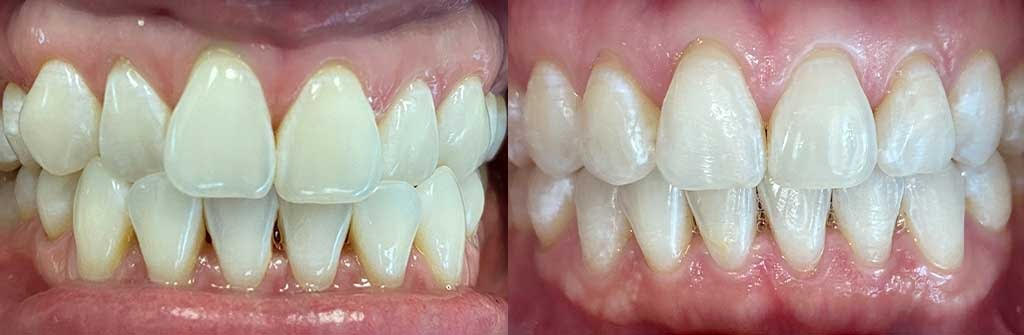


A lot of people compare veneers and bonding as if they do the exact same thing.
They do overlap. Both can improve the look of your smile. Both can help with chips, uneven edges, discoloration, and small cosmetic flaws. But they are not the same treatment, and the differences matter more than most people realize.
The short version is this. Bonding is usually simpler, faster, and more conservative. Veneers are usually more durable, more stain-resistant, and better for bigger cosmetic changes.
That does not mean one is always better.
It means the right choice depends on what you want to fix, how long you want the result to last, and how much change your teeth actually need. Here is an expert advice guide from Dr. Sally.
What dental bonding actually is
Dental bonding uses a tooth-colored composite resin that your dentist applies directly to the tooth. The material can change the tooth’s shape, size, or color, and it is commonly used to close small gaps, hide chips, cover minor cracks, and improve discoloration.
One reason people like bonding is that it is usually very straightforward. Cleveland Clinic says it can often be completed in a single office visit, and the procedure typically takes about 30 to 60 minutes per tooth.
Bonding is also considered minimally invasive because it typically does not require significant enamel removal. That is a big reason it is often described as reversible.
In simple terms, bonding adds material to your tooth rather than heavily reshaping it.
What veneers actually are
Veneers are thin coverings that fit over the front surfaces of teeth. They are used to hide cosmetic concerns such as chips, small gaps, stains that do not improve with whitening, teeth that look too small, or teeth that look misshapen.
Porcelain veneers are custom-made in a lab to fit your smile. Before they are placed, the dentist usually removes a small amount of enamel so the veneer can fit and stay in place properly. That is one of the biggest reasons veneers are usually not reversible.
They also tend to take more than one visit. Cleveland Clinic notes that the dentist prepares the teeth and takes impressions at the first visit, then places the finished veneers at a second visit after the lab completes them.
So while bonding is more of a direct, same-day cosmetic fix, veneers are more of a custom-crafted cosmetic upgrade. That comparison is an inference from how each procedure is performed.
The biggest difference comes down to how much change you want
This is where the choice becomes clearer.
Bonding is often a strong option when the cosmetic issue is small or moderate. It works well for little chips, minor spacing, slight reshaping, and limited discoloration. Cleveland Clinic specifically describes bonding as a good option for making small cosmetic changes.
Veneers usually make more sense when the change needs to be more dramatic or more comprehensive. They are often chosen when several front teeth need to look more uniform, when discoloration does not respond well to whitening, or when someone wants a more complete smile transformation. Cleveland Clinic notes that veneers can dramatically enhance the appearance of a smile and are used for issues like stains that do not improve with whitening, gaps, chips, and misshapen teeth.
That is why bonding often feels like a repair, while veneers often feel like a redesign. That phrasing is an interpretation, but it fits the clinical differences described in the sources.
Bonding is easier on enamel
For many people, this is the deciding factor.
Bonding usually does not require major enamel removal. Veneers usually do require at least some enamel removal, especially traditional porcelain veneers.
That matters because enamel does not grow back. Once it is removed for a veneer, that tooth usually remains committed to some kind of veneer coverage going forward. Cleveland Clinic states that many veneers are not reversible for this reason.
If someone wants the most conservative cosmetic option possible, bonding often looks more appealing.
Veneers usually last longer
Longevity is another major difference.
Cleveland Clinic says dental bonding typically lasts about three to 10 years before it needs to be touched up or replaced. Porcelain veneers usually last about 10 to 15 years, and one Cleveland Clinic comparison page gives an even broader estimate of 10 to 20 years.
That does not mean bonding fails quickly or that veneers last forever. Both depend on habits, oral hygiene, and how much pressure the teeth take. But in general, veneers are considered the longer-lasting option.
Veneers resist stains better than bonding
This difference matters a lot for coffee drinkers, tea drinkers, red wine drinkers, and smokers.
Cleveland Clinic says veneers resist staining better than natural enamel, while bonding material does not resist stains as well as porcelain restorations.
That does not mean veneers can never discolor. Cleveland Clinic still recommends being careful with dark-colored foods and drinks because veneers can stain over time. But porcelain generally holds its color better than bonding resin.
So when long-term color stability matters, veneers often have the edge.
Bonding is faster and simpler
Another practical difference is how quickly treatment happens.
Bonding is commonly done in one visit, with little to no downtime afterward. Cleveland Clinic also notes that normal activities can usually be resumed right away.
Veneers usually take more planning. The dentist first checks whether you are a good candidate, prepares the teeth, takes impressions, waits for the lab work, and then bonds the veneers at a later visit.
That extra process is part of why veneers can look so polished and customized, but it also means they are not the quick fix that bonding can be. That is an inference from the treatment steps.
Bonding is often better for small fixes
If one tooth has a tiny chip, one front tooth looks slightly shorter, or there is a small gap that bothers you, bonding is often a very reasonable place to start.
It is versatile, less invasive, and easier to adjust. Cleveland Clinic specifically says bonding can hide chips, cracks, and gaps, and that it is useful for smaller cosmetic changes.
This is also why bonding is often appealing to younger patients or to people who want to improve their smile without committing to a permanent enamel-reduction procedure. That second point is an inference from bonding’s reversibility and minimal enamel removal.
Veneers are often better for broader smile changes
Veneers usually stand out when several front teeth need improvement at the same time.
They can camouflage stains that do not respond to whitening, make teeth look more even, and create a more uniform shape and color across the smile. Cleveland Clinic lists chips, gaps, small teeth, misshapen teeth, and stubborn discoloration among the issues veneers can address.
Cleveland Clinic also notes that bonding may not be the best option when someone has several discolored teeth, while porcelain veneers may be considered for widespread discoloration that does not improve with whitening.
That is why veneers are often chosen when the goal is not just to repair one tooth, but to create a more consistent overall look.
Not all veneers are exactly the same
This is where people sometimes get confused.
There are porcelain veneers, but there are also composite veneers. Cleveland Clinic notes that composite veneers use the same tooth-colored composite resin material used for dental bonding.
So sometimes the line between “veneers” and “bonding” is not completely black and white. A dentist may recommend direct composite work that functions like veneer-style reshaping without the same lab process as porcelain veneers. That is an inference from Cleveland Clinic’s explanation of composite veneers and bonding material.
This is one reason treatment should be based on your actual teeth, not just the label of the procedure.
Neither option is for unhealthy teeth or gums
Cosmetic treatment sounds simple, but the foundation still matters.
Cleveland Clinic says veneers are only an option if you are free of extensive cavities and gum disease. The bonding page also notes that if you have oral health issues like tooth decay, you may need treatment first.
That means the real starting point is not which cosmetic option looks nicer. The real starting point is whether your teeth and gums are healthy enough for cosmetic work at all.
So which one is better
There is no universal winner.
Bonding is usually better when you want a conservative, lower-commitment solution for small cosmetic changes. It is quicker, easier, and more reversible.
Veneers are usually better when you want a longer-lasting solution, better stain resistance, and a more dramatic overall transformation. But they usually require enamel removal, and many types are not reversible.
So the better question is not “Which is better?” It is “Which is better for your teeth, your goals, and your comfort level with permanent change?” That final framing is an inference from the tradeoffs described by the clinical sources.
Final thoughts
If you are choosing between veneers and bonding, think about three things.
Think about how much change you want.
Think about how long you want it to last.
And think about whether you want the most conservative option or the most polished, long-term cosmetic result.
Bonding can do a lot with very little drilling. Veneers can do more dramatic work and usually hold up better over time. Both can look beautiful when they are done for the right reason and on the right teeth.
The best choice is the one that matches the condition of your teeth, not just the trend you see online that says the Author: Hollywood-dentist.