
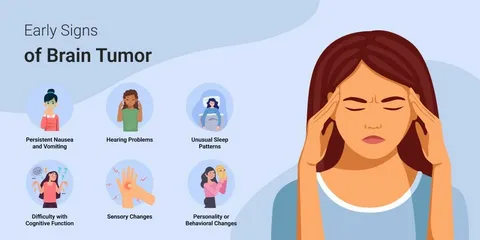


The brain doesn’t have pain receptors the way your skin does. So a tumour growing inside it rarely announces itself with the kind of obvious pain people expect. Instead, it shows up in stranger, quieter ways. A headache that behaves differently from usual. A hand that feels slightly clumsy. A personality shift that family members notice before the patient does. Most of these symptoms get blamed on stress, ageing, or a bad week, which is exactly why brain tumours are so often caught late. Getting evaluated promptly by the best neurosurgeon when something feels persistently off can make an enormous difference to the outcome.
This guide walks through the brain tumour symptoms worth taking seriously, and when it’s time to push for a proper scan.
Why Brain Tumour Symptoms Are Easy to Miss
A brain tumour causes symptoms in two main ways. It either presses on the surrounding brain tissue or it raises pressure inside the skull. What symptoms appear depends entirely on where the tumour sits. A tumour near the speech centre affects language. One near the motor cortex affects movement. One near the optic pathway affects vision.
This is why brain tumour symptoms are so varied and so easily misread. There is no single warning sign. There is a pattern, and the pattern is what matters.
Headaches That Behave Differently
Headaches are common, and most are harmless. But brain tumour headaches have a particular character worth knowing, and a DBS Specialist or functional neurosurgeon can quickly tell a routine headache apart from one that signals something deeper.
They are often worse in the early morning or wake you from sleep. They may worsen with coughing, sneezing, bending, or straining. They tend to be progressive, getting more frequent and more intense over weeks. They are frequently paired with nausea or vomiting. And crucially, they may not respond well to ordinary painkillers. A new headache pattern in someone over 50, or any headache that steadily worsens, deserves medical attention.
Seizures With No Prior History
A first-ever seizure in an adult is a major red flag. When someone with no history of epilepsy suddenly has a seizure, a brain tumour is one of the conditions doctors actively rule out. Seizures are, in fact, one of the most common first symptoms of a brain tumour. They don’t always look dramatic. Sometimes it’s a brief lapse, an unusual sensation, a strange smell, or a moment of staring blankly. Any unexplained seizure needs prompt neurological evaluation.
Changes in Vision, Speech or Hearing
Because different brain regions control different functions, tumours often disrupt the senses. Watch for blurred or double vision, loss of peripheral vision, or episodes of vision blacking out. Speech changes matter too, slurred speech, trouble finding words, or difficulty understanding others. Hearing loss in one ear, or persistent ringing, can point to tumours near the hearing nerve. Individually easy to dismiss, but together they tell a story.
Weakness, Numbness or Coordination Problems
Tumours pressing on the motor areas of the brain often cause physical symptoms. Weakness or numbness on one side of the body. A limb that feels clumsy or doesn’t quite obey. Loss of balance or unsteady walking. Difficulty with fine movements like writing or buttoning a shirt. When these appear gradually and persist, they should never be brushed off as tiredness or age.
Personality and Cognitive Changes
This is one of the most overlooked categories, because the patient often doesn’t notice. Family members do. A normally calm person becomes irritable or aggressive. Someone sharp becomes forgetful or confused. There may be difficulty concentrating, poor judgment, or mood swings. Tumours in the frontal lobe especially affect behaviour and personality. If those around you notice a change you can’t explain, take it seriously.
Nausea, Vomiting and Persistent Fatigue
Raised pressure inside the skull can trigger nausea and vomiting, often without the stomach upset you’d expect from food poisoning. It’s frequently worse in the morning. Persistent, unexplained fatigue, the kind rest doesn’t fix, can also accompany a growing tumour. On their own these are vague, but combined with headaches or neurological signs, they add weight to the picture.
When to See a Doctor
No single symptom on this list confirms a brain tumour. Most headaches are just headaches. Most forgetfulness is just stress. But certain situations warrant prompt evaluation: a new or worsening headache pattern, a first-ever seizure, progressive weakness or numbness, unexplained changes in vision or speech, or noticeable personality shifts. When several of these appear together, or one steadily worsens, an MRI of the brain is the logical next step.
Conclusion
Brain tumours are frightening, but fear shouldn’t stop you from acting. The truth is that many brain tumours, when caught early, are highly treatable, and some are entirely benign. The danger lies in waiting, in explaining away symptoms month after month until the tumour grows large enough to cause serious damage. Listen to the pattern. If your headaches have changed, if your body isn’t obeying you the way it used to, or if the people around you sense something is wrong, get a scan.
FAQs
Q1. Are all brain tumours cancerous? No. Many brain tumours are benign. But even benign tumours can cause harm by pressing on brain tissue, so all need evaluation.
Q2. Can a headache alone mean a brain tumour? Rarely. Most headaches are harmless. Concern rises when headaches are new, progressive, worse in the morning, or paired with other symptoms.
Q3. What test confirms a brain tumour? An MRI of the brain is the gold standard. A CT scan may be used first in emergencies, followed by MRI for detail.
Q4. Can brain tumours be cured? Many can be successfully treated, especially when caught early. Outcomes depend on the tumour’s type, size, and location.
Q5. Who should I see if I suspect a brain tumour? Start with a neurologist or neurosurgeon. They can order the right scans and guide diagnosis and treatment.