
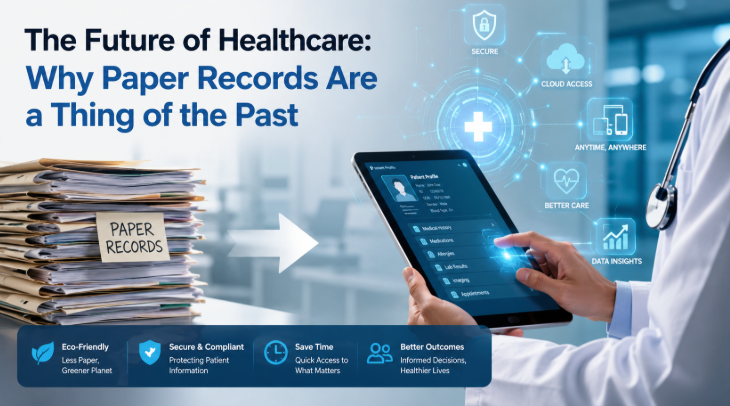


Healthcare is changing. No longer is it just about treatments or medical breakthroughs—it’s about the way we handle our health information. If you’ve ever walked into a doctor’s office, only to watch the staff hunt through a pile of paper charts to find your medical history, you know exactly how outdated paper records can feel. The reality is, those paper files are becoming a thing of the past. The future of healthcare is digital—and it’s about time we embrace it.
The Challenges of Paper-Based Medical Records
Think about the last time you had to deal with a paper form. Wasn’t it frustrating? Whether it was filling out a form at the doctor’s office or trying to find a document in a stack, it felt inefficient, didn’t it? Now imagine that frustration in a busy healthcare setting where every patient’s medical history is stored on paper.
Paper records are slow, disorganized, and can be downright risky. They take up valuable space. As a practice sees more patients, the pile of files grows, eventually cluttering up filing cabinets and closets. Even worse, these records are easy to lose or damage. A spilled coffee or a misplaced chart could mean losing critical information, which could have serious consequences for patient care.
Not to mention, paper records are more prone to human error. Doctors and nurses often have to rely on handwritten notes, which can lead to misunderstandings or missed information. A scribbled prescription might be misread, or a diagnosis could be overlooked because the doctor can’t read the chart properly. Mistakes like these can be dangerous when it comes to someone’s health.
The Rise of Digital EHR Systems
So, how do we fix these problems? Enter electronic health records (EHR). EHRs are the solution to the headaches caused by paper files. Instead of searching through physical charts, doctors can access a digital version of your medical history at the click of a button. And this digital shift is revolutionizing the healthcare industry.
EHRs streamline the whole process. No more waiting for someone to find your file or wasting time digging through paperwork. Everything is organized and readily accessible, making it easier for healthcare professionals to get the information they need quickly. But it’s not just about saving time—it’s also about improving the quality of care. Let’s dive into how digital records are changing healthcare for the better.
Improved Accuracy and Reduced Errors
How many times have you gone to a doctor’s appointment and had to repeat your medical history because the records were misplaced or unreadable? It’s frustrating, right? But with EHRs, this issue becomes a thing of the past. The biggest advantage of going digital is the reduction in human error.
When medical professionals enter data into EHRs, the system often provides prompts or checklists to ensure all information is recorded correctly. Unlike paper charts, EHRs are clear, legible, and easily updated. This means no more struggling to read handwritten notes or missing crucial details.
EHRs also make it easier to prevent medication errors. With automated systems that cross-check prescriptions against your medical history, doctors can avoid dangerous interactions or mistakes that might otherwise slip through the cracks with paper records. The ability to track and update patient records in real time ensures the accuracy and safety of treatments.
Better Patient Care Through Accessible Information
Let’s think about you, the patient, for a moment. When you visit a new doctor, you’d expect them to have your entire medical history available at their fingertips, right? With paper records, that often isn’t the case. But with EHRs, healthcare professionals can access your complete health history instantly. No more waiting for your records to be transferred or faxed.
This means that when you go in for a check-up or a new treatment, your doctor has all the information they need in one place. They can quickly review your allergies, medications, past surgeries, and more, ensuring they make informed decisions about your care. EHRs create a more personalized experience, allowing healthcare providers to tailor treatments based on a comprehensive view of your health.
It’s not just about convenience for doctors—it’s about making sure you get the best care possible. When your health information is easily accessible, doctors can act faster, prevent mistakes, and ultimately provide better care.
Data Security and Privacy: A Key Advantage of EHR
Of course, with all this digital transformation, a common concern is: “Is my health data secure?” After all, privacy matters. The good news is that digital health records are far more secure than their paper counterparts. With paper records, the risk of physical theft, loss, or damage is high. A fire, flood, or theft could destroy your medical history in an instant. But with EHR systems, your data is encrypted, backed up, and protected by multiple layers of security.
Access to EHRs is tightly controlled. Only authorized personnel can view your health records, ensuring that your information stays private. These systems also comply with regulations like HIPAA (Health Insurance Portability and Accountability Act), which is designed to safeguard your medical information.
This level of protection simply isn’t possible with paper records. Digital systems ensure that your health data remains secure, protected from physical risks, and only accessible to those who need it.
Supporting Remote Care and Telemedicine
Here’s an exciting aspect of digital records: they make remote care, including telehealth, easier and more effective. We’ve all heard a lot about telemedicine lately, especially with the rise of virtual doctor visits. So, what role do EHRs play in making these services better?
Well, a lot. With EHRs, telemedicine becomes a seamless extension of in-person care. Imagine having a virtual visit with your doctor. Instead of having to explain your entire medical history from scratch, your doctor can access your digital records before the call even starts. This allows them to provide better advice, follow up on previous treatments, and prescribe medications—all remotely.
Telehealth, including telehealth EHR solutions, relies on the ability to share patient information quickly and securely. Without EHRs, these remote consultations wouldn’t be as effective. Digital health records ensure that your doctor has up-to-date information at their fingertips, making virtual visits more reliable and comprehensive.
The Future: Where Healthcare Is Heading
As we look to the future, it’s clear that the healthcare industry will continue evolving, with EHRs playing a central role. The integration of artificial intelligence, predictive analytics, and other cutting-edge technologies will depend heavily on the accessibility and accuracy of digital health records.
Imagine a future where healthcare providers can predict health issues before they happen, all thanks to the data stored in EHRs. Or where your health information is shared automatically between your different healthcare providers, ensuring that no crucial detail is overlooked. This is where we’re headed, and EHR systems are paving the way.
Conclusion: The Necessity of Adopting Digital Solutions
So, what’s the takeaway here? The shift from paper records to digital EHR systems is more than just a passing trend—it’s a necessary step for modernizing healthcare. The benefits are clear: increased accuracy, improved patient care, better data security, and streamlined access to information.
In a world where healthcare is becoming more complex and fast-paced, sticking to outdated paper systems simply doesn’t make sense. By embracing EHRs, we’re ensuring that healthcare is more efficient, more accurate, and ultimately more patient-centered.
If you’re still wondering whether it’s time to embrace digital health records, ask yourself this: Would you rather trust a slow, error-prone paper system, or one that’s fast, secure, and precise? The future of healthcare is digital, and the time to make the switch is now. Let’s move forward with a smarter, healthier future, one digital record at a time.