
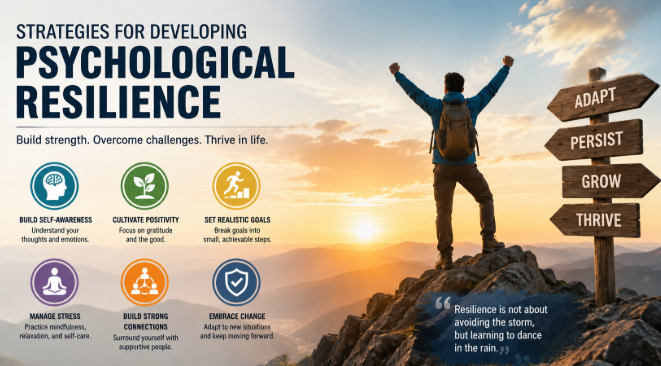


Understanding Psychological Resilience
Psychological resilience refers to the capacity of an individual to mentally or emotionally cope with a crisis or return to pre-crisis status. It involves the ability to adapt well in the face of adversity, trauma, or significant sources of stress. This can encompass challenges such as personal or family problems, health-related concerns, or financial hardships. The significance of psychological resilience lies in its potential to facilitate effective coping strategies, fostering overall mental health and well-being. Resilient individuals tend to maintain a positive outlook and exhibit problem-solving skills that enable them to navigate life’s challenges more effectively.
Several key traits characterize resilient individuals. These traits include optimism, a strong social support network, flexibility, and the ability to embrace change. Additionally, resilient people often possess a sense of purpose and clear goals that guide their behavior and responses to difficulties. Through these characteristics, they are better equipped to process and recover from adverse situations. Furthermore, resilience is not a static trait; it can be cultivated over time through various strategies and practices.
Development of psychological resilience can be influenced by both genetic and environmental factors. Life experiences, especially during childhood, play an essential role in shaping an individual’s resilience. Positive relationships with family members and peers can enhance a person’s ability to cope with stress. Various interventions and resilience-training programs also promote the growth of resilience skills. Techniques such as mindfulness, cognitive restructuring, and emotional regulation are effective tools that individuals can employ to bolster their coping mechanisms. By integrating these strategies into daily life, individuals can develop a greater capacity for resilience, enabling them to handle future challenges with confidence.
The Science Behind Resilience
Resilience is a complex construct that integrates various psychological theories and research findings. It refers to the ability of individuals to adapt positively in the face of adversity, trauma, and stress. Psychological theories such as the Ecological Model emphasize the interplay between individual traits and environmental factors, suggesting that resilience is not solely an inherent trait but is also shaped by external conditions. This model illustrates how supportive relationships, sociocultural backgrounds, and life experiences influence an individual’s capacity to cope with life’s challenges.
Research has identified several key components that contribute to psychological resilience, primarily focusing on cognitive, emotional, and social aspects. Cognitive flexibility, for instance, allows individuals to reframe negative experiences into manageable challenges, leading to better outcomes. Emotional regulation is another critical factor, as it empowers individuals to manage their feelings in response to stressors, thereby minimizing emotional distress. Furthermore, social support plays a vital role, providing individuals with resources and assistance that enhance their coping strategies.
Neuroscientific studies reveal that resilience is also linked to biological factors, including genetic predispositions and brain function. Neuroplasticity, the brain’s ability to reorganize and adapt in response to experiences, is a fundamental mechanism enabling resilience. Individuals who exhibit higher levels of resilience may show enhanced activation in specific brain regions associated with emotional regulation and stress response.
On an environmental level, factors such as socioeconomic status, education, and community support greatly influence resilience development. Programs designed to enhance social networks and provide access to educational resources have been shown to foster resilience among individuals facing adversities. Collectively, these elements underscore that resilience is a dynamic process influenced by a spectrum of psychological, biological, and environmental factors, which ultimately contribute to positive mental health outcomes.
Building a Support Network
Developing psychological resilience relies heavily on the presence of a robust support network. Social support serves as a buffer against stressors, providing essential emotional, informational, and practical assistance during difficult times. To build a strong support network, individuals should prioritize cultivating relationships that are characterized by trust, empathy, and open communication. It is important to engage with family members, friends, colleagues, and community members who can offer support and understanding when facing adversity.
One effective strategy for establishing such relationships is to actively participate in social and community groups. Joining clubs, volunteer organizations, or professional associations can foster connections with like-minded individuals, helping to build a sense of belonging and community. Participating in group activities creates opportunities for interpersonal interactions, which can enhance one’s support network and provide a sense of shared purpose.
Additionally, nurturing existing relationships is crucial in creating a reliable support system. Regular communication with close friends or family members can deepen bonds and establish emotional connections that will be beneficial when challenges arise. Taking the time to listen and understand others’ perspectives reinforces trust and creates an environment where individuals feel comfortable seeking help. Furthermore, offering support to others can reciprocate and strengthen these relationships.
It is also beneficial to reach out to professionals such as counselors or therapists who can guide individuals in developing coping strategies and provide emotional support. These professionals can help individuals navigate through personal challenges and aid in the development of resilience. Ultimately, a diversified support network will fortify one’s coping mechanisms and contribute significantly to enhanced psychological resilience.
Practicing Self-Care and Mindfulness
In the journey towards developing psychological resilience, self-care practices play a pivotal role. These practices not only foster overall mental well-being but also strengthen an individual’s ability to cope with stress and adversity. Engaging in self-care activities helps to replenish emotional resources, allowing individuals to face challenges with greater fortitude.
Mindfulness, a crucial component of self-care, involves being present and fully engaged with the current moment without judgment. This practice encourages individuals to observe their thoughts and feelings, facilitating a better understanding of their emotional responses. Mindfulness meditation can be a powerful tool, as it promotes relaxation and reduces anxiety, enhancing one’s capacity to handle adversity.
Incorporating regular exercise into one’s routine also significantly contributes to improving psychological resilience. Physical activity has been shown to release endorphins, which are natural mood lifters. Furthermore, engaging in exercise helps to improve sleep quality and reduce symptoms of anxiety and depression, creating a more robust mental and emotional state.
Additionally, maintaining a balanced diet is essential for mental health. Nutrition plays a significant role in how we feel; a diet rich in fruits, vegetables, whole grains, and lean proteins can have positive effects on mood and energy levels. Ensuring adequate hydration and limiting the intake of processed foods can further support cognitive function and emotional well-being.
Ultimately, integrating these self-care strategies—mindfulness, exercise, and healthy eating—into daily life can significantly bolster one’s resilience. By recognizing and actively addressing their mental health needs, individuals can build a solid foundation to withstand life’s challenges effectively.
Cognitive Behavioral Techniques
Cognitive Behavioral Therapy (CBT) is a widely recognized approach that focuses on the interplay between thoughts, feelings, and behaviors. It emphasizes the importance of recognizing and reframing negative thought patterns, which can significantly contribute to an individual’s psychological resilience. One fundamental technique within CBT is cognitive restructuring, which involves identifying irrational beliefs and replacing them with more constructive perspectives. This process begins with self-reflection, where individuals can become aware of their automatic thoughts that may not reflect reality accurately.
Another technique utilized in CBT is the practice of thought challenging. This involves questioning the validity of negative thoughts and examining the evidence for and against them. By systematically analyzing these thoughts, individuals can weaken the hold of negative thinking patterns and develop a more balanced viewpoint. For instance, if a person believes they are incapable of handling a challenging situation, they can assess past experiences to find evidence of their competence and resilience.
Exposure therapy is another component of cognitive behavioral techniques, particularly effective for overcoming fears or anxieties. By gradually facing their fears in a controlled manner, individuals can diminish the power these fears hold over them. This gradual exposure allows for the creation of new, positive associations with previously feared situations, helping bolster resilience.
Additionally, practicing mindfulness can enhance the effectiveness of these cognitive techniques. Mindfulness encourages individuals to observe their thoughts and feelings without judgment, fostering a space to respond to challenges constructively instead of reactively. Together, these cognitive behavioral strategies not only assist individuals in reframing negative thoughts but also empower them to cultivate a more resilient mindset.
Goal Setting and Problem-Solving Skills
Developing psychological resilience is a multifaceted process that heavily relies on effective goal setting and problem-solving skills. Setting clear, achievable goals allows individuals to establish a sense of direction and purpose. When approaching goal setting, it is essential to utilize the SMART criteria—goals should be Specific, Measurable, Achievable, Relevant, and Time-bound. This structured methodology ensures that individuals set realistic targets that align with their overall aspirations.
Once goals have been identified, breaking them down into manageable steps is crucial. This segmentation not only makes the goals less daunting but also promotes a sense of accomplishment as individuals complete each step. For instance, if the goal is to improve physical fitness, one might start by committing to exercise for 15 minutes for three days a week. Gradually increasing the duration and frequency allows one to progress towards the overarching goal without feeling overwhelmed.
Additionally, adopting a proactive approach to problem-solving can significantly enhance resilience. When faced with obstacles, it’s important to analyze the situation objectively and identify potential solutions instead of dwelling on the difficulties. This could involve brainstorming alternative strategies, seeking advice from others, or even reevaluating goals if necessary. Embracing flexibility in the face of change is essential as plans may need adjustment based on unforeseen circumstances. When challenges arise, successful individuals view them as opportunities for growth rather than insurmountable barriers.
Building goal-setting and problem-solving skills requires consistent practice and reflection. Maintaining a journal to track progress and learning experiences can help individuals remain focused on their goals and develop a deeper understanding of their problem-solving approaches. By integrating these techniques, individuals can foster greater psychological resilience, enabling them to navigate life’s challenges with confidence.
Emotional Regulation and Coping Strategies
Emotional regulation plays a crucial role in developing psychological resilience. It refers to the ability to monitor, evaluate, and modify emotional reactions to achieve adaptive outcomes. In the face of stress or adversity, individuals who can effectively regulate their emotions are often better equipped to manage challenges, allowing them to respond thoughtfully rather than impulsively. This responsiveness is key to building resilience.
One fundamental strategy for enhancing emotional regulation is mindfulness, which involves being present in the moment and observing one’s thoughts and feelings without judgment. Practicing mindfulness can help individuals gain greater awareness of their emotional states, enabling them to recognize when they are becoming overwhelmed. Through techniques such as meditation and deep breathing exercises, individuals can learn to decrease their emotional reactivity, creating space for more measured responses.
Another effective coping strategy involves cognitive reappraisal, where individuals consciously change their perspective on a stressful situation. By reframing their thoughts, they can alter how they feel and respond. For instance, viewing a challenging obstacle as an opportunity for growth can significantly diminish negative emotions and foster a positive mindset. This approach empowers individuals to take control over their emotional landscape, which is essential for resilience.
Additionally, maintaining a strong support system is vital in enhancing emotional regulation. Engaging with friends, family, or professionals can provide insight and emotional validation, which aids in coping with stress. Support from others can also offer a different mindset and alternative coping strategies. By discussing feelings and experiences, individuals often find relief and practical advice, further fortifying their resilience.
Ultimately, developing emotional regulation skills and implementing effective coping strategies can significantly bolster an individual’s ability to navigate life’s challenges, promoting overall psychological resilience.
Growth Mindset and Positive Thinking
A growth mindset is a concept developed by psychologist Carol Dweck, which posits that individuals can develop their abilities and intelligence through dedication and hard work. This perspective fosters a love for learning and resilience in the face of challenges. When one adopts a growth mindset, they are more likely to view obstacles not as insurmountable barriers, but as opportunities for personal growth and development. This adaptive mindset is essential for cultivating psychological resilience, as it encourages individuals to persist despite difficulties and setbacks.
Maintaining a positive outlook is critical in enhancing resilience. Positive thinking, characterized by optimism and a constructive attitude, can significantly impact one’s mental well-being. Research indicates that individuals who embrace positive thinking exhibit lower levels of stress and anxiety, leading to improved coping strategies during tough times. Positive thinkers tend to focus on solutions rather than problems, which enables them to navigate adversity more effectively.
To cultivate a positive mindset, it is helpful to employ techniques such as gratitude journaling, where one regularly reflects on and expresses appreciation for the good things in life. Additionally, practicing mindfulness and self-compassion can enable individuals to better manage their thoughts and emotions. Surrounding oneself with supportive and uplifting individuals also reinforces a positive attitude, as social interactions can significantly influence one’s outlook. Furthermore, setting realistic goals and celebrating small achievements can provide motivation and a sense of purpose, further reinforcing resilience.
Adopting a growth mindset alongside positive thinking can empower individuals to face challenges with strength and determination. By integrating these approaches into daily life, one can enhance their psychological resilience and foster a healthier, more constructive response to adversity.
Practical Tips for Daily Resilience Building
Building psychological resilience is a continuous process, and implementing practical strategies into your daily routine can significantly enhance your ability to cope with stress and adversity. One effective approach is to cultivate a mindful practice. Engaging in mindfulness meditation, even for a few minutes each day, allows individuals to develop present-moment awareness, fostering a deeper connection with their thoughts and emotions without judgment. This practice can lead to improved emotional regulation and an increased sense of control over one’s mental landscape.
Another important aspect to consider is the establishment of a consistent physical exercise regimen. Regular physical activity has been scientifically proven to reduce anxiety and depression while boosting mood through the release of endorphins. Whether through walking, jogging, or participating in team sports, finding an enjoyable form of exercise is vital in promoting both physical and psychological well-being.
Additionally, fostering a supportive social network is crucial. Building and maintaining strong relationships with family and friends provides a buffer against stress. Humans are inherently social creatures, and sharing your experiences with others can encourage resilience by creating a sense of belonging and acceptance. Make it a habit to connect with loved ones regularly, whether through phone calls, video chats, or in-person gatherings, as these interactions play a pivotal role in promoting mental health.
Moreover, setting realistic goals and maintaining a positive mindset can further contribute to resilience. Break larger tasks into manageable steps and celebrate small achievements to build confidence. Positive affirmations and self-compassion are effective tools in this process. Regularly reflecting on personal strengths and accomplishments fosters a growth-oriented mindset that enables individuals to face challenges more effectively.