
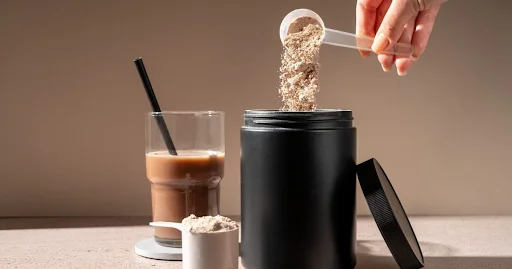


The sports supplement shelf has never been more crowded. Powders, gummies, shots and capsules all promise more energy, faster recovery and better results — and most of them cost more than a week of groceries. For anyone who trains regularly, the real question is simple: which ones are actually worth taking?
We ranked eight of the most popular sports supplements by the strength of the scientific evidence behind them, using the International Olympic Committee’s 2018 consensus statement on dietary supplements and the position stands of the International Society of Sports Nutrition (ISSN) as the benchmark. Each entry includes the evidence grade, the effective dose and one practical tip for getting the most out of it.
The Ranking at a Glance
| Rank | Supplement | Evidence grade | Effective dose | Best for |
| 1 | Creatine monohydrate | A | 3–5 g/day | Strength, power, lean mass |
| 2 | Protein powder | A | 20–40 g per serving | Hitting daily protein needs |
| 3 | Caffeine | A | 3–6 mg/kg pre-training | Endurance, strength, focus |
| 4 | Beta-alanine | B | 3.2–6.4 g/day | 1–4 minute high-intensity efforts |
| 5 | Dietary nitrate (beetroot) | B | ~6–8 mmol nitrate, 2–3 h pre | Endurance sessions |
| 6 | Electrolytes | B (situational) | Per sweat loss | Long or hot sessions |
| 7 | BCAAs | C | — | Rarely needed with adequate protein |
| 8 | “Fat burners” & “T-boosters” | D | — | Mostly marketing |
1. Creatine Monohydrate — Grade A
Creatine is the most researched sports supplement in the world. The ISSN position stand concludes that it reliably increases strength, power output and lean body mass, and that it is safe for healthy adults at recommended doses. A growing body of research also links creatine to better memory and mental performance under stress and sleep deprivation.
Practical tip: Skip the expensive “advanced” forms. Plain creatine monohydrate at 3–5 g a day, taken at any time, is what the research is built on. Expect 1–2 kg of water weight in the first weeks — it is stored inside muscle, not under the skin.
2. Protein Powder — Grade A
Active adults need roughly 1.4–2.0 g of protein per kilogram of bodyweight per day. Protein powder does not build muscle on its own, but it makes those targets far easier to reach, particularly at breakfast and after training.
Practical tip: Spread protein across 3–5 meals of 20–40 g each. Whey is fast-digesting and rich in leucine; quality plant blends (pea plus rice) work well for people who avoid dairy.
3. Caffeine — Grade A
The ISSN’s 2021 position stand supports caffeine at 3–6 mg per kilogram of bodyweight, 30–60 minutes before training, for improved endurance, strength and alertness. It is the main active ingredient in nearly every pre-workout formula.
Practical tip: Check labels for “proprietary blends” that hide doses, and keep caffeine at least 6–8 hours away from bedtime. Lost sleep costs more recovery than caffeine adds in performance.
4. Beta-Alanine — Grade B
Beta-alanine increases muscle carnosine, which buffers acid build-up during hard efforts lasting roughly one to four minutes: intervals, rowing, combat sports and high-rep sets. Benefits appear after several weeks of daily use.
Practical tip: Split the daily dose into smaller servings with meals to reduce the harmless tingling sensation (paraesthesia).
5. Dietary Nitrate (Beetroot) — Grade B
Nitrate from beetroot juice improves the oxygen cost of exercise and can boost endurance performance, especially in recreational athletes. Effects in elite endurance athletes tend to be smaller.
Practical tip: Take concentrated beetroot juice 2–3 hours before a key session. Avoid antibacterial mouthwash around that time — oral bacteria are needed to convert nitrate into its active form.
6. Electrolytes — Grade B (Situational)
For sessions longer than about an hour, in heat, or for heavy sweaters, replacing sodium supports hydration and performance. For a short gym session, water is enough.
Practical tip: A simple homemade option — one litre of water, a quarter teaspoon of salt (roughly 550–600 mg sodium), citrus juice and a little honey — covers most needs at a fraction of the cost.
7. BCAAs — Grade C
Branched-chain amino acids are already present in every complete protein source. If daily protein intake is adequate, extra BCAAs add little for muscle growth or recovery.
Practical tip: Put the money toward whole-food protein — eggs, fish, Greek yoghurt — or a quality protein powder.
8. “Fat Burners” and “Testosterone Boosters” — Grade D
These categories rely mostly on stimulants and herbal blends with weak evidence. A review of 50 popular testosterone-boosting products published in the World Journal of Men’s Health found that most ingredient claims were not supported by published research.
Practical tip: Sleep, a healthy body-fat level and correcting any confirmed vitamin D or zinc deficiency do more for natural hormone health than any herbal capsule.
Supplements vs. Sports Pharmacology: Know the Difference
Everything in this ranking is a nutritional supplement. Compounds such as HGH and peptides sit in a completely different category: they are pharmacologically active, act directly on the endocrine system and are regulated differently from country to country. Adults who consider them should do so only with medical supervision, baseline and follow-up bloodwork, and products backed by independent lab testing. Specialised retailers such as RoidTeam.shop serve that adult market and publish lab tests for the brands they carry — documentation that should be the minimum expectation for anything in this category.
How to Buy Supplements Smarter
- Look for third-party testing. NSF Certified for Sport and Informed Sport programmes batch-test products for label accuracy and banned substances. An IOC-funded study found that almost 15% of non-hormonal supplements contained undeclared anabolic agents.
- Choose single-ingredient products where possible, so you know exactly what and how much you are taking.
- Start with the A-grade trio: creatine, protein and a sensible dose of caffeine cover most people’s needs.
- Match the supplement to the sport: beta-alanine and nitrate only make sense for specific types of training.
The Bottom Line
The top of the ranking is short, cheap and backed by decades of research: creatine, protein and caffeine. Beta-alanine, beetroot and electrolytes earn their place in specific situations. Everything else is optional at best and marketing at worst. Build the foundation with training, food and sleep — then let a few well-tested supplements add the final few percent.