


Many people enjoy an alcoholic drink to relax after a busy day or to unwind during social occasions. It’s also common to hear people say that alcohol helps them sleep. And that’s true. To an extent.
While alcohol may initially make you feel drowsy, the reality is far more complex. Research shows that alcohol can have a significant impact on sleep quality, mood and energy levels, with effects that often extend well beyond the evening itself.
And with more of us turning to alcohol to deal with the stresses of daily life, it’s important that we start to understand our relationship with alcohol more and the affects it has on us, including our sleep, mood and energy levels.
Alcohol and Sleep
One of the biggest misconceptions about alcohol is that it improves sleep. Although drinking alcohol may help some people fall asleep more quickly, it often disrupts the quality of sleep later in the night.
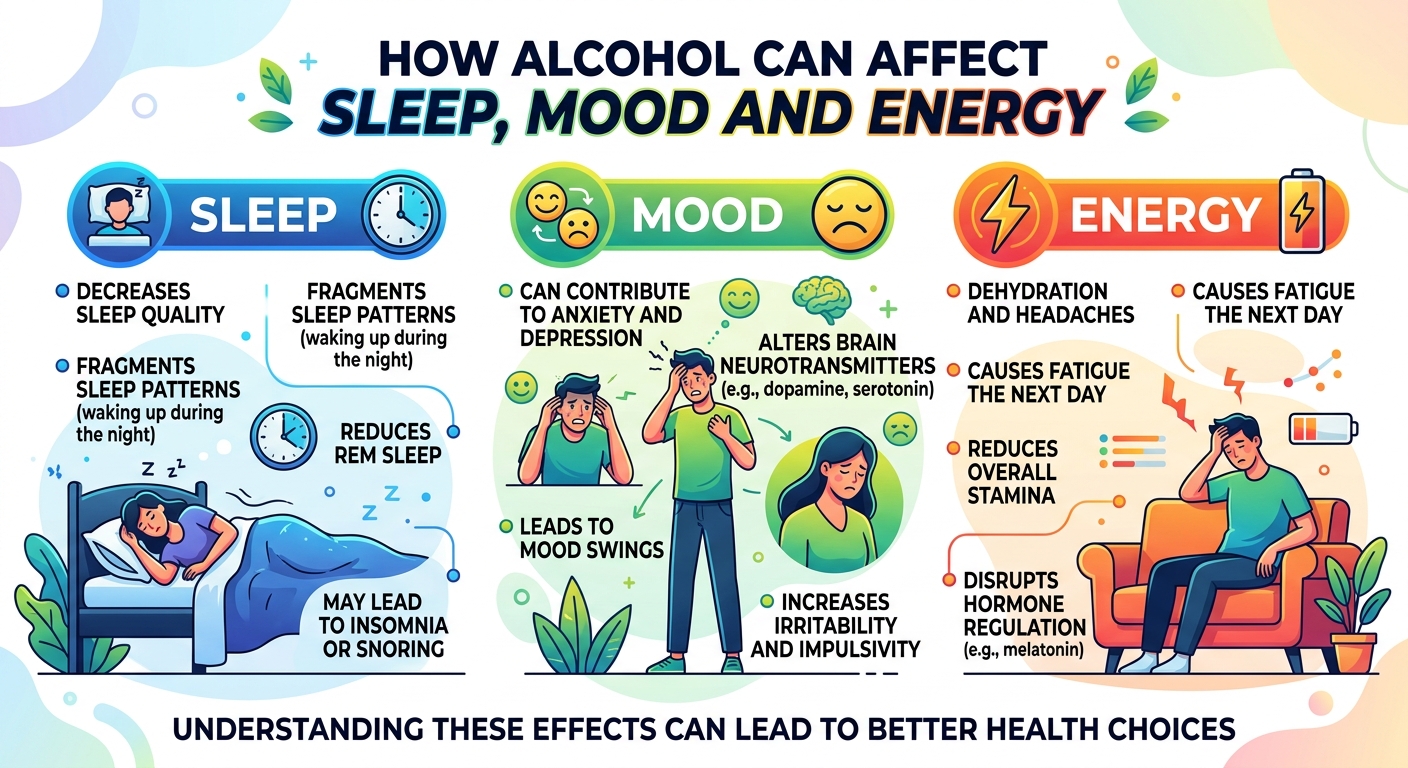
As alcohol is processed by the body, it interferes with normal sleep cycles, particularly rapid eye movement (REM) sleep. REM sleep is essential for memory, emotional processing and mental recovery. When this stage of sleep is reduced, people often wake feeling less refreshed, even if they have spent enough hours in bed.
Alcohol can also increase the likelihood of waking during the night, particularly as its sedative effects wear off. Some people experience lighter, more fragmented sleep, making it difficult to achieve the deep, restorative rest the body needs.
For individuals who regularly rely on alcohol to fall asleep, this cycle can become increasingly disruptive over time.
The Impact on Mood
Alcohol is often viewed as something that lifts mood or reduces stress, particularly in social settings. Initially, it may create feelings of relaxation or confidence because it slows activity in the central nervous system. However, these effects are temporary.
As alcohol leaves the body, it can contribute to irritability, anxiety and low mood, something many people experience during alcohol or ketamine detox, particularly heavy drinkers who are seeking help and detoxing. Some people notice they feel emotionally drained or more sensitive the day after drinking, even if they haven’t consumed large amounts.
Frequent or excessive alcohol use can also affect the balance of chemicals in the brain that regulate mood. Over time, this may increase the risk of developing or worsening symptoms of anxiety and depression.
For people already experiencing mental health challenges, alcohol can sometimes make those symptoms more difficult to manage.
Why Energy Levels Drop
Poor-quality sleep and alcohol’s physical effects often combine to leave people feeling tired the following day. Even after a full night’s sleep, disrupted sleep cycles can result in reduced concentration, slower reaction times and lower motivation.
Alcohol is also a diuretic, meaning it encourages the body to lose fluids through increased urination. Mild dehydration can contribute to headaches, fatigue and difficulty concentrating, all of which reduce energy levels throughout the day.
In addition, alcohol can affect blood sugar regulation. After an initial increase, blood sugar levels may fall, leading to feelings of sluggishness or reduced stamina.
This combination of disrupted sleep, dehydration and changes in blood sugar explains why many people feel exhausted after drinking, even when they haven’t consumed excessive amounts.
Effects on Daily Performance
Reduced energy and poorer mood can have a noticeable impact on everyday life. At work or school, concentration, memory and decision-making may all be affected. Tasks that would normally feel straightforward can become more challenging when you’re tired or struggling to focus.
Physical performance can also suffer. Whether exercising, playing sport or simply carrying out daily activities, reduced coordination and slower recovery may make it harder to perform at your best.
For people who regularly consume alcohol, these effects can gradually become part of everyday life without them realising alcohol is contributing to the problem.
Finding a Healthy Balance
This doesn’t necessarily mean that everyone needs to avoid alcohol completely. For many adults, moderate drinking is unlikely to cause long-term problems if consumed responsibly. However, becoming aware of how alcohol affects your own sleep, mood and energy can help you make choices that support your overall wellbeing.
Simple strategies such as limiting alcohol before bedtime, staying hydrated, eating balanced meals and scheduling alcohol-free days each week can reduce some of its negative effects.
Many people who cut back on alcohol report improvements in sleep quality, daytime energy and emotional wellbeing within just a few weeks.