
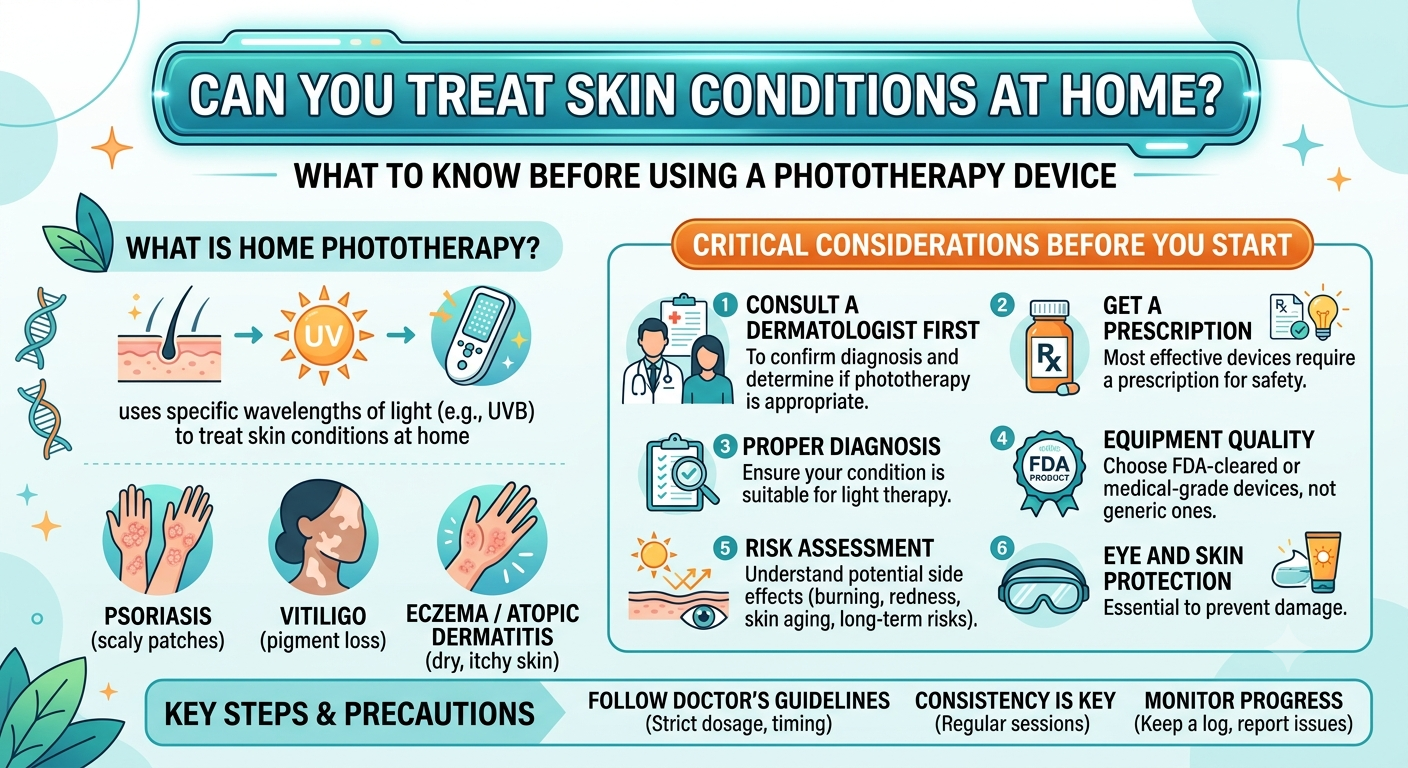


Buying skincare used to mean a trip to Boots and reading the back of the box. Now people are stashing narrowband UVB lamps next to the moisturiser and expecting hospital-grade results between the school run and dinner.
Some of them get what they’re after. Plenty don’t. The gap between the two comes down to a handful of things worth understanding before spending the money.
What Phototherapy Actually Does
UV light at specific wavelengths does two things: slows down skin cells that are dividing too fast, and dampens inflammation. That’s the whole trick. Hospital booths have been running it since the 1980s.
Different wavelengths reach different depths, though, which is why not every lamp does the same job. UVB (280 to 315 nm) hits the epidermis, where psoriasis and eczema flares start. UVA goes further into the dermis and has different uses (and different risks).
Almost every home unit worth buying sits at around 311 nm, which is what hospitals use too. The only real change from clinic to living room is the size of the machine.
Which Conditions Actually Respond
Psoriasis has the strongest evidence by miles. Studies keep landing on roughly 70% of patients seeing plaques clear with regular UVB sessions, though the number moves depending on skin type and how often people actually turn the thing on.
Vitiligo and atopic eczema respond too, but less predictably. Chronic itch sometimes improves. Before buying a home phototherapy device, get a proper diagnosis: fungal infections, contact dermatitis and early skin cancers can look like psoriasis to an untrained eye, and hitting them with UV can make things worse.
Rosacea and acne aren’t the same conversation. Red and blue light (not UV) show up in some studies for those, but the marketing runs a lot further than the science does.
Safety Considerations Before Buying
UV causes cancer with enough exposure. That’s not scaremongering, it’s why clinics measure everything.
Goggles matter. Proper UV goggles, not sunglasses, not squinting, not “just for a second”. A corneal burn from one careless session isn’t hypothetical.
Then there’s dosing. In the clinic, you get a minimal erythema dose test to work out exactly how much light your skin can take before it reddens. At home, most people guess, and the guess is either too little (nothing happens, they give up) or too much (they burn and blame the lamp).
TheNHS guide to psoriasis treatments is worth ten minutes if you want the full picture on where phototherapy fits and why supervision keeps coming up.
Photosensitising medication is another one. Some antibiotics, diuretics and certain antidepressants make UV hit harder than usual. Anyone with lupus, a family history of melanoma or an autoimmune condition should be talking to a dermatologist before ordering anything.
Where Regulation Comes In
Kit sold in the UK for treating skin conditions should carry a UKCA mark (or a CE mark under transitional recognition), and it falls underthe MHRA’s remit for medical devices. If someone’s selling a lamp for psoriasis or eczema without that paperwork, that’s the story.
The reason it matters isn’t bureaucracy. A regulated device has submitted wavelength data, safety testing and a clinical rationale. A “wellness” lamp with vague claims about “skin renewal” hasn’t, and often can’t.
Independent lab reports on wavelength output are the other check worth doing. Cheap knock-offs quite often push out UV outside the advertised band, which changes the treatment and the risk in ways the buyer never sees. Wikipedia’s entry on light therapy explains why small wavelength shifts matter more than they sound like they should.
What a Real Protocol Looks Like
Two or three sessions a week, thirty to ninety seconds at the start, building slowly based on how the skin responds. Eight to twelve weeks before anyone can honestly say whether it’s working. That’s the shape of a real course.
Missing sessions kills momentum. Overdoing sessions burns skin and sets you back further than starting again. The people who get results are the ones who write down what they did and when.
The Practical Takeaway
A home phototherapy unit is a good tool for a specific person: someone with a proper diagnosis, a treatment plan and the patience to run it for months. It’s a bad tool for anyone who wants their skin fixed by Friday.
The lamp doesn’t replace the dermatologist; it extends what the dermatologist started. Book the consultation first, buy the device second, then treat it like a prescription: schedule, notes, and clear conditions for stopping when it isn’t working.