
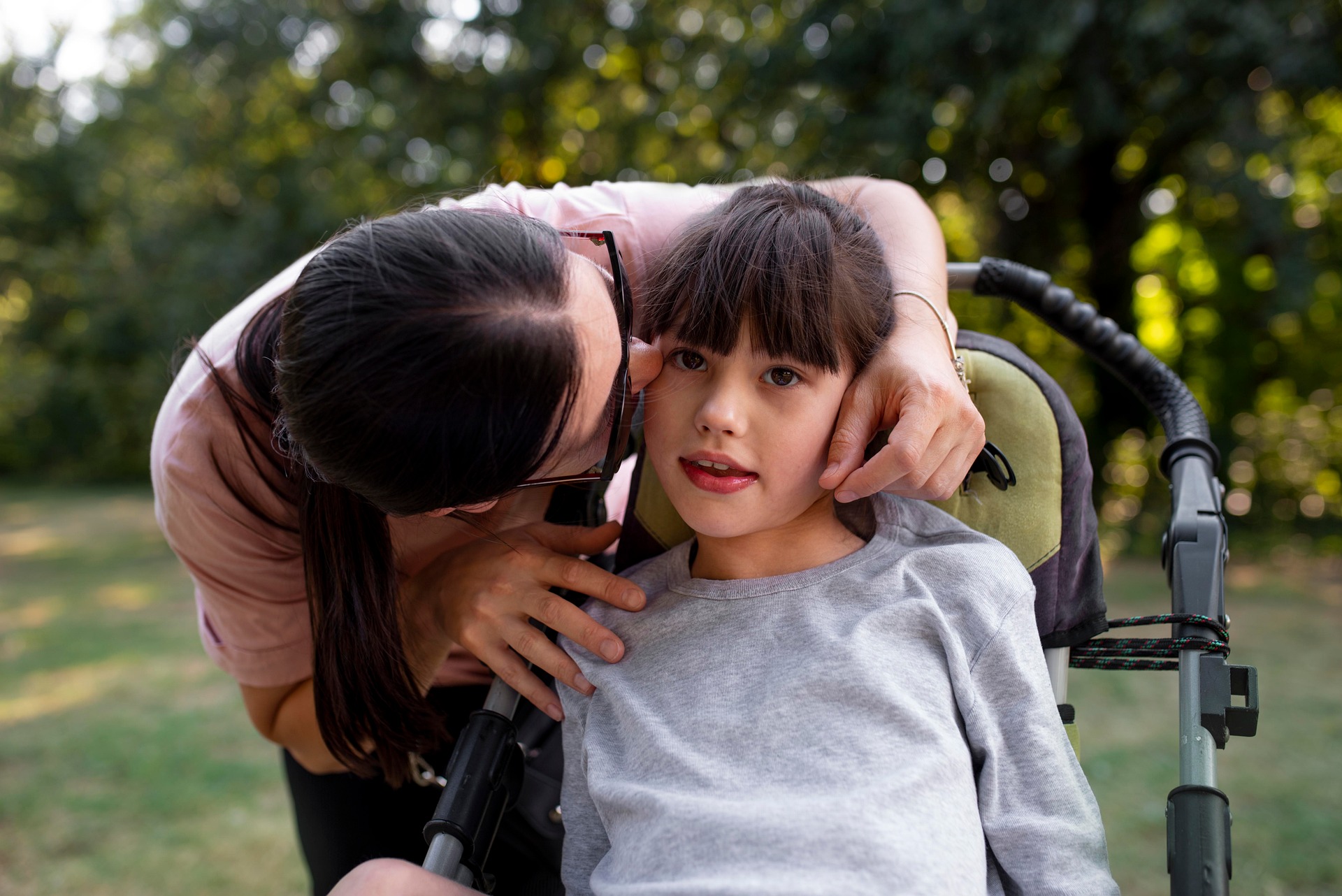


The field of Applied Behavior Analysis (ABA) has grown leaps and bounds since the stereotypical vision of a clinical ABAer hunched over a lap-top doing discrete trial training in a cold empty clinic. Today’s ABA providers don’t just see teaching autism as delivering instruction to an isolated child and family. Instead, they recognize the valuable role of families within the overall support system.
From Compliance-based to Collaboration-focused Treatment
So, the autism transformation is not just about changing words and practices? Yes, it is not. While it is true that even the first ABA programs were primarily focused on having kids complete tasks and comply with directions, with little room for individuality, autonomy, or the child’s unique learning style or interests, there is much more that can and should be transformed.
In today’s learning programs for children with autism, there are differences from past approaches. One practitioner used words about trains to teach vocabulary to a child with autism while engaged in play with trains. Another practitioner used a child’s preferred activities, such as building with blocks or playing with cars, to teach social skills. Children with autism can learn social skills for their age through activities that are of interest to them.
Children’s behavior improves significantly when therapy follows the child’s natural lines of development rather than going against them.
As we are becoming more aware of sensory processing differences and how they impact children’s daily lives, practices are slowly starting to shift away from telling kids they must tolerate feeling uncomfortably stressed or scared in order to build tolerance. Instead, we can integrate intentional, brief sensory breaks into our day and look at various environmental changes that can support a child’s ability to regulate and learn. For example, a child who needs to move his body to help regulate might take a short walk outside each day or do some jumping jacks before we head to snack or start another activity. Or, a child who is pushed to the edge by the harsh brightness and coolness of fluorescent lighting might find a comfortable space to do his work in warm, soft lighting.
Family Training Becomes Central to Success
Years of parental worry being left to the doctor to handle are now over as parents become active decision makers in determining the most appropriate treatment for their child.
Parent Education That Actually Works
Parent training in Quality ABA programs has evolved from simply listing skills to teach and their corresponding behaviors, to teaching the underlying logic for each skill, and using them to guide the most appropriate application for each child and situation. For many years, effective parent training for Quality ABA included more than just a list of behaviors to teach a child with Autism Spectrum Disorder (e.g., Table Manners). Now, there is a growing trend in Quality ABA programs that focus on teaching parents an understanding of the underlying logic of each skill, to better guide the use of the skills in various situations.
However, training is not limited to the mother-child dyad. In many Watering Can households, parents and caregivers model and teach training to the rest of the family. As a result, training is executed by siblings, grandparents, and other regular caregivers, all using the same basic techniques that the parents have learned. This model ensures that children receive a consistent message and experience minimal regression when all caregivers provide similar responses to similar behaviors.
Home Program Integration
We don’t stop with weekly individual or family therapy sessions. We also support parents in bringing learning into the rest of daily routines, leisure activities and special events, all while maintaining a loving home with reasonable limits and balance. This means teaching children and parents how to create a fun and meaningful bedtime routine that promotes sleep. We work on techniques to support children’s development of self-soothing, self-regulation, and emotional resilience.
Independence practice has moved to morning routines, such as getting dressed and making breakfast. We went grocery shopping today, which is always a fun opportunity to practice communication in the community.
We support children with tooth brushing between appointments with the aid of technology. There are various apps which record and measure progress. The app contains video tutorials on how to effectively brush teeth. These tutorials can be watched by parents/carers in between appointments and they can inform the orthodontist of any issues encountered.
Access Barriers Start to Crumble
Historically, families have faced various geographic and scheduling barriers when seeking high quality ABA-based comprehensive treatment programs for their children with Autism Spectrum Disorders; however, recent advances in service delivery have begun to address these issues while still maintaining program rigor and efficacy.
Telehealth consultation allows specialist support to be available to rural families enabling them to have access to short-term consultation with our specialist staff despite the geographical location of their home. While hands-on therapy and play are an important component of the support provided by an ABA team, the rest of the support, including the ABA component and parent coaching can be provided via Telehealth consultation.
School-based programmes are becoming more comprehensive and less “add on”. Programmes are becoming more sophisticated and less time consuming. There is no longer a need for children to be taken out of mainstream classrooms for isolated “therapy sessions” in which they play with toys while wearing headphones in isolation. Now, ABA Support is embedded into the daily routines and activities of the school day and the ABA Therapist works closely with the Special Education Teacher to plan and programme ABA Support across all settings and circumstances.
There are now insurance options for middle class families with incomes too high for publicly subsidized coverage but too low for private coverage. As a result, providers of ABA services in Massachusetts like ours are gearing up to meet the demand for services, while doing our best to offer individualized, high quality ABA.
Measuring What Actually Matters
What does success mean in today’s world of Autism Support? Not only do we look at the child’s behavior, we now also look at success in the following areas: sleep, nutrition, family communication, family adaptation, and parent stress. These “success indicators” are reflective of the values and concerns of families with children with autism spectrum disorders.
Is the child appearing more happy? Is the child able to participate more fully in family events and programs, i.e., is he/she no longer an overall problem in the home? Is the child beginning to make and maintain some steady friendships? These are very important goals, of no less significance than those target behaviors which are listed throughout the individual child pages.
Methodology, particularly measurement, has become less intrusive to the clinical process whilst, at the same time, the technologies to facilitate the use of psychological assessments and measurement based bio-psycho-social formulations have become increasingly more accessible in the form of apps on all sorts of devices! Furthermore, many of the new assessments incorporate ongoing therapist-patient collaboration and provide for the instant reporting back to both the patient (therapist) and therapist of initial treatment impact. Furthermore, they enable completion of assessment items in a brief format, on an on-going basis, to support regular feedback and evaluation processes throughout treatment.
Intervention is most effective when evidence-based methods are combined with individualized support and delivered in a way that respects and meets the needs of the family, including their values and preferences. Providers are connecting with individuals and families affected by autism, and learning from their perspectives and experiences as the field grows and research develops.
The field has moved from being stuck in a biomedical cause model of autism to recognizing the complex, biobehavioral/neurobiological contributions. And we’ve moved from an inflexible emphasis on “early intensive behavioral intervention”.