
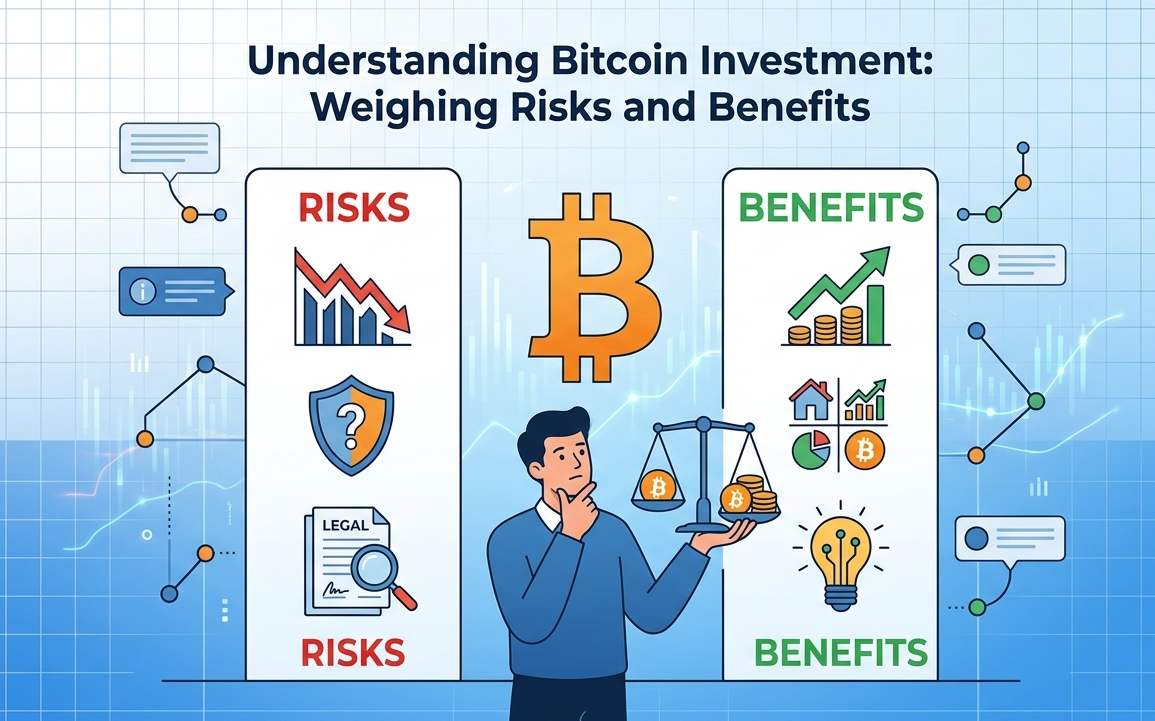


Introduction to Bitcoin Investment
Bitcoin, created in 2009 by an anonymous entity known as Satoshi Nakamoto, emerged as the first decentralized digital currency. This revolutionary form of currency utilizes cryptographic techniques to enable peer-to-peer transactions over the internet, thus bypassing traditional banking systems. The underlying technology, known as blockchain, serves as a public ledger that records all Bitcoin transactions, ensuring transparency and security.
In recent years, Bitcoin has garnered significant attention as an investment vehicle. Its popularity has soared alongside an increasing acceptance by both individual and institutional investors. Many view Bitcoin as a hedge against inflation and currency devaluation, leading to growing demand and interest in owning digital assets. Moreover, Bitcoin’s limited supply—capped at 21 million coins—enhances its allure, as investors anticipate potential price increases due to scarcity.
Historically, Bitcoin has experienced considerable volatility, with price fluctuations often capturing media headlines. These dramatic shifts can be attributed to various factors, including regulatory news, market sentiment, and technological advancements. For example, Bitcoin witnessed a meteoric rise in value during 2017, reaching near $20,000 in December, before undergoing significant corrections in subsequent years. This volatility, while presenting opportunities for substantial gains, also highlights the risks players face in this market.
Understanding the dynamics of Bitcoin investment is essential for potential investors. As this digital currency continues to evolve, it defines a new paradigm of investing that combines technology, economics, and market psychology. In the sections that follow, we will explore the potential benefits and risks associated with investing in Bitcoin, providing a comprehensive overview for prospective investors.
The Benefits of Investing in Bitcoin
Investing in Bitcoin has gained significant attention over the last decade, primarily due to its potential for high returns. Historical data suggests that Bitcoin has outperformed most traditional investment options, offering exceptional growth rates that have transformed early adopters into substantial profit earners. The price volatility of Bitcoin can be daunting for some; however, those who invest wisely are often rewarded with significant capital appreciation.
Another considerable advantage of Bitcoin investment is its liquidity. Unlike certain assets that can take time to convert to cash, Bitcoin can be quickly bought and sold on numerous exchanges, providing investors with the flexibility to access their funds at any moment. This liquidity aspect is particularly appealing for those looking to enter or exit the market swiftly, enabling active trading strategies that capitalize on price fluctuations.
Bitcoin also offers a hedge against inflation, acting as a store of value amid rising consumer prices and traditional currency devaluation. As governments increase the money supply, many investors turn to Bitcoin to protect their purchasing power. Unlike fiat currencies, Bitcoin enjoys a capped supply of 21 million coins, imbuing it with deflationary characteristics that can help maintain value.
Furthermore, the increasing institutional adoption of Bitcoin has lent it greater legitimacy as a serious investment. Major companies and financial institutions are now incorporating Bitcoin into their portfolios, reflecting a growing acceptance of the cryptocurrency within mainstream finance. This support from reputable entities contributes to the perception of Bitcoin as not just a speculative asset but as a viable long-term investment option.
Lastly, Bitcoin can serve as a diversifier within an investment portfolio. Due to its unique performance pattern compared to traditional asset classes, adding Bitcoin to a diversified portfolio can mitigate overall risk while possibly enhancing returns. Investors looking for innovative ways to balance their investment strategies may find Bitcoin an attractive option.
Understanding the Risks of Bitcoin Investment
Investing in Bitcoin presents a unique set of risks that potential investors must carefully consider. One of the primary concerns is the inherent volatility in Bitcoin prices. Compared to traditional investments like stocks and bonds, Bitcoin’s price can fluctuate dramatically within short timeframes, leading to significant financial losses. For instance, it is not uncommon for Bitcoin to experience double-digit percentage drops in mere hours, driven by market sentiment, regulatory news, or macroeconomic factors.
The regulatory landscape surrounding Bitcoin is another critical risk that investors should be wary of. Governments around the world are increasingly scrutinizing cryptocurrencies, which could lead to abrupt changes in regulations that may affect Bitcoin’s legality or operational status in certain regions. Such regulatory actions may hinder market access or impose additional compliance costs, leading to increased instability in Bitcoin prices.
Furthermore, the cybersecurity vulnerabilities associated with Bitcoin investments cannot be overlooked. Investors are at risk of cyberattacks, hacking incidents, and the potential for theft when storing their assets on exchanges or using digital wallets. High-profile security breaches have resulted in the loss of millions of dollars worth of Bitcoin, raising concerns about the security infrastructure in place to protect user assets.
Lastly, navigating the cryptocurrency market brings the threat of fraud and scams, which have become increasingly common in the Bitcoin domain. Unscrupulous actors may attempt to manipulate the market, promote Ponzi schemes, or create fake exchanges—activities that can lead to substantial financial losses for unknowing investors. Due diligence is paramount to avoid falling victim to these malicious practices.
Market Volatility: A Double-Edged Sword
Bitcoin, as a financial asset, is notorious for its market volatility, which can be considered both a risk and an opportunity for investors. The historical price fluctuations of Bitcoin demonstrate this characteristic vividly; for instance, the currency’s price surged from around $1,000 in early 2017 to nearly $20,000 by December of the same year, only to fall dramatically in subsequent months. Such rapid price changes can impact investor sentiment significantly, creating a cycle of fear and greed that can influence buying and selling decisions.
The psychological effects of Bitcoin’s volatility can lead to emotional decision-making among investors. Many may experience panic during market downturns, prompting them to sell at a loss. Conversely, significant upturns may evoke a fear of missing out (FOMO), causing investors to buy at peaks, only exacerbating their exposure to potential downturns. This volatility can thus lead to substantial financial repercussions, especially for less experienced investors who may not fully understand the underlying factors driving the cryptocurrency market.
Moreover, the long-term implications of Bitcoin’s volatility present a complex landscape for investors. On one hand, the potential for high returns is undeniably attractive, drawing many into the investment. On the other hand, the unpredictable nature of the market necessitates a careful and well-strategized approach to avoid succumbing to market emotions. Investors may adopt various strategies, such as dollar-cost averaging or setting strict profit targets, to mitigate the impact of volatility on their portfolios. Ultimately, understanding and navigating Bitcoin’s market volatility is crucial for anyone considering an investment in this digital currency.
Regulation and Its Impact on Bitcoin Investments
The regulatory landscape surrounding Bitcoin and other cryptocurrencies has become increasingly complex over recent years. Governments and financial authorities worldwide have recognized the need to establish regulations to manage risks associated with digital currencies. These regulations are designed to protect investors and maintain financial stability but can also impose limitations on how Bitcoin is used and traded.
One significant impact of regulation is the effect it has on investor confidence. When regulatory frameworks are clearly defined and enforced, they can bolster confidence among investors by providing a safer environment. For instance, countries that have created comprehensive guidelines for Bitcoin exchanges and Initial Coin Offerings (ICOs) enable investors to comprehend their rights and the mechanisms for redress in case of fraud or disputes. This transparency can potentially attract institutional investors who may have previously been hesitant due to regulatory uncertainties.
Conversely, stringent regulations may drive innovation underground or push investors towards less reputable platforms that operate outside legal frameworks, increasing overall risks. Moreover, sudden changes in regulations can lead to market volatility, as seen in instances where countries have imposed outright bans or heavy restrictions on cryptocurrency transactions. Such developments can cause abrupt fluctuations in Bitcoin prices, impacting investment strategies.
Additionally, compliance with regulations is critical for investors aiming to avoid legal repercussions. Understanding regulatory requirements concerning KYC (Know Your Customer) and AML (Anti-Money Laundering) laws can prove essential. Investors are advised to stay informed of regulatory developments and consider their implications carefully before proceeding with Bitcoin investments. Failure to comply with relevant regulations can lead to penalties, as well as impacting the investor’s ability to liquidate their assets when desired.
The Role of Security in Bitcoin Investments
Investing in Bitcoin carries with it both potential rewards and inherent risks, particularly regarding security. The decentralized nature of Bitcoin means that investors must take responsibility for safeguarding their investments. One of the most critical aspects of security in Bitcoin investments is the choice of wallet, which serves as the digital vault for storing cryptocurrencies.
There are several types of Bitcoin wallets, each offering varying levels of security. Hardware wallets, for instance, provide offline storage and are considered among the most secure options. By keeping private keys offline, these wallets protect against online threats such as hacking. Conversely, software wallets, while more convenient for frequent transactions, can be more vulnerable to malware and phishing attacks. Investors should carefully consider which type of wallet aligns with their risk appetite and investment strategy.
In addition to choosing the right wallet, employing secure storage solutions is paramount. This includes enabling two-factor authentication (2FA) for added protection and regularly updating software to defend against the latest security vulnerabilities. Moreover, it is advisable to create backups of wallet seed phrases and private keys, storing them securely in multiple locations to mitigate the risk of loss.
To further reduce the likelihood of falling victim to scams and hacks, investors should be vigilant about the platforms they use for trading and storage. Regulated exchanges and platforms with a solid track record are preferable, as they typically incorporate robust security features and compliance measures. Awareness of common scams, such as phishing attempts and fraudulent investment schemes, is also essential for safeguarding one’s Bitcoin investment.
By prioritizing security and adopting best practices, investors can significantly enhance the safety of their Bitcoin assets while enjoying the potential benefits of this innovative digital currency.
Long-Term vs Short-Term Investment Strategies
The investment landscape in Bitcoin is characterized by two dominant strategies: long-term holding, commonly referred to as “hodling,” and short-term trading. Each approach has distinct risk profiles, potential returns, and suitability for different types of investors. Understanding these differences is essential for making informed investment decisions.
Long-term investors focus on holding their Bitcoin assets for an extended period, often disregarding short-term market fluctuations. This strategy is based on the belief that Bitcoin will appreciate significantly over the years, potentially due to factors like increased adoption, limited supply, and technological advancements. Historically, long-term holders have seen substantial gains despite periods of volatility. It is ideal for individuals who possess a strong conviction in Bitcoin’s future and can tolerate market fluctuations without panic selling. This strategy often involves lower transaction costs as traders are not frequently buying and selling.
Conversely, short-term trading requires a more active approach to capitalizing on price volatility. Traders analyze market trends, news, and technical indicators to execute trades within days or even hours. This strategy can yield quick profits but also carries higher risks. Short-term traders need to be vigilant, as price movements can be sudden and unpredictable. The emotional aspect of this strategy can lead to impulsive decisions, which may negatively impact overall profitability. Additionally, frequent trading can incur higher transaction fees, which could diminish returns.
Ultimately, the choice between long-term hodling and short-term trading depends on an investor’s risk tolerance, financial goals, and market knowledge. Long-term strategies may be better suited for those seeking to build wealth gradually, while short-term strategies appeal to individuals desiring immediate returns and who are comfortable navigating the complexities of the market. Balancing both approaches might also be beneficial for a diversified investment strategy.
The realm of Bitcoin investing is not solely governed by market trends and economic fundamentals; psychological factors play a crucial role in shaping investment behaviors and outcomes. Investors are often influenced by emotions such as fear and greed, which can lead to impulsive decisions that diverge from rational analysis. This emotional rollercoaster can result in significant fluctuations in the market, particularly in the highly volatile Bitcoin environment.
Cognitive biases also significantly impact how investors perceive and engage with Bitcoin. For instance, the availability heuristic may prompt investors to make decisions based on recent market events or sensational media coverage rather than solid research or historical data. This tendency can lead some to overestimate the potential for rapid gains, while others might overlook positive signals due to fear of loss.
Another critical aspect of behavioral finance is herd behavior. In times of market upheaval, many investors feel compelled to follow the crowd, buying or selling Bitcoin based on the actions of others rather than their analysis. This can exacerbate market swings, causing sharp price increases or dips, often disconnected from the underlying fundamentals of Bitcoin itself. Fear of missing out (FOMO) can draw more investors into the market during bullish trends, while conversely, panic selling can dominate when negative news arises.
Furthermore, confirmation bias can lead investors to seek out information that validates their preconceived notions about Bitcoin, while discounting evidence that contradicts their views. This selective perception can skew decision-making processes, ultimately affecting investment performance over time.
Understanding these psychological factors is vital for Bitcoin investors. By acknowledging the influence of emotions and cognitive biases, investors can develop strategies to minimize their impact and make more informed decisions in an unpredictable market.
Conclusion: Making Informed Investment Decisions
As the landscape of cryptocurrency continues to evolve, investing in Bitcoin presents both opportunity and risk. Individuals contemplating Bitcoin investments must weigh the unique benefits against the inherent challenges associated with this digital asset. One of the primary advantages of investing in Bitcoin is its potential for significant returns. Historically, Bitcoin has demonstrated remarkable price appreciation, attracting a diverse range of investors.
On the other hand, volatility remains a defining characteristic of Bitcoin. Price fluctuations can be dramatic, and investors may experience substantial gains or losses in relatively short timeframes. This unpredictability emphasizes the importance of thorough market research and an understanding of the factors influencing Bitcoin’s price movements. Additionally, potential investors should recognize the regulatory uncertainties surrounding cryptocurrency, which could impact its legality and use as a medium of exchange.
Moreover, it is crucial for investors to carefully assess their risk tolerance before entering the Bitcoin market. Allocating capital to Bitcoin should form part of a well-diversified investment portfolio. Limiting exposure to any single asset, including Bitcoin, can mitigate potential risks associated with its inherent volatility.
In summary, making informed investment decisions regarding Bitcoin requires a balanced approach. Investors must engage in comprehensive research, understanding both the risks and rewards while considering their own financial situation and objectives. By doing so, they can navigate the complexities of the Bitcoin market more effectively and position themselves for potential long-term benefits. Ultimately, well-informed decisions are key to capitalizing on the opportunities presented by Bitcoin investments, while also being mindful of the risks involved.