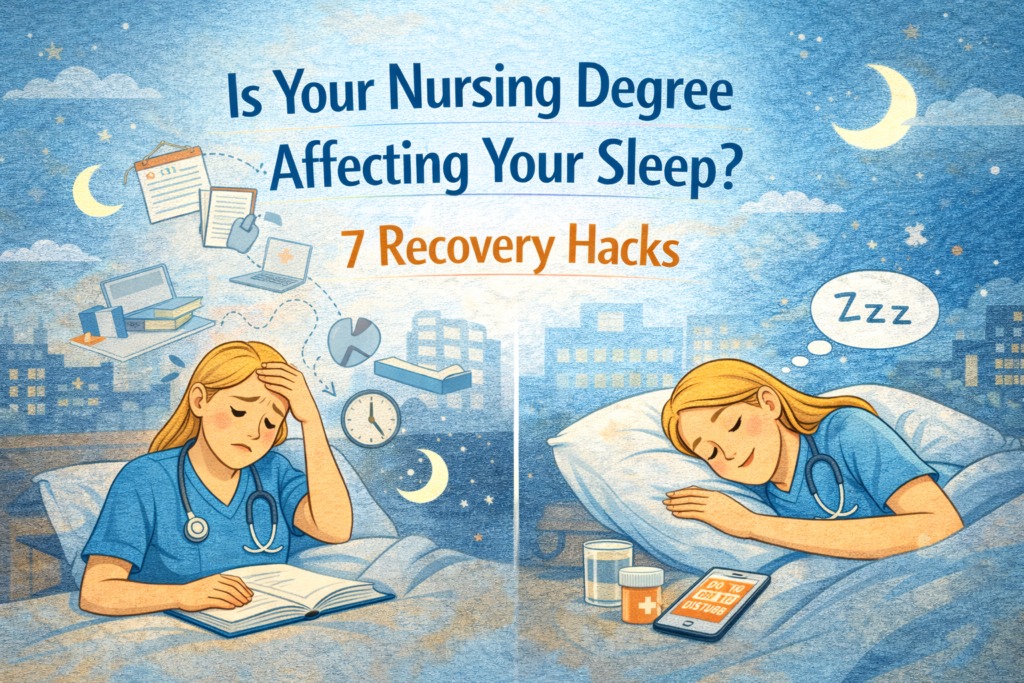
The life of a nursing student is often a blur of blue scrubs, caffeine, and heavy textbooks. While the profession is built on the foundation of caring for others, the irony is that the students training for it are often the most sleep-deprived demographic in the UK.
Between 12-hour hospital shifts and the relentless pressure of academic deadlines, “getting an early night” feels more like a luxury than a biological necessity. However, chronic exhaustion doesn’t just make you grumpy; it actively hinders your ability to learn clinical skills and make safe decisions on the ward. If you feel like your degree is winning the war against your circadian rhythm, it is time for a strategic recovery.
1. Master the “Shift-to-Sleep” Transition
Nursing placements often require a rapid flip between day and night shifts. This constant toggling creates a state of permanent “social jetlag.” To recover, you need to trick your brain into entering sleep mode.
Avoid the temptation to check your emails or social media as soon as you get home. The blue light from your phone signals your brain to stop producing melatonin, the hormone that tells your body it’s time to rest. Instead, invest in a pair of high-quality blackout curtains and a white noise machine. Creating a “cave-like” environment helps your body settle, even if the sun is up and the rest of the world is awake.
2. Strategic Caffeine Management
We all know that coffee is the unofficial fuel of the NHS. However, there is a “caffeine cliff” that many students fall off. Caffeine has a half-life of about 5 to 6 hours. This means if you have a latte at 4:00 PM to survive the end of your shift, half of that caffeine is still buzzing in your system at 10:00 PM.
To protect your sleep, try to implement a “caffeine cutoff” at least six hours before your planned bedtime. If you need a boost, reach for cold water or a high-protein snack. Staying hydrated actually improves cognitive function more sustainably than a third espresso ever will.
3. Delegate the Academic Overload
The primary reason nursing students lose sleep isn’t just the physical labor on the ward; it’s the mental “open loops” of pending assignments. You finish a long shift, and instead of resting, your brain is obsessing over a 3,000-word essay due on Monday. This cognitive load is a major sleep disruptor.
When the pressure becomes a risk to your health, it is okay to seek professional support to balance the scales. Utilizing a reputablenursing assignment writing help service can take the weight off your shoulders. By letting experts handle the structural heavy lifting of your coursework, you can reclaim your weekends for actual rest, ensuring you return to your placement refreshed and focused.
4. Optimize Your “Power Nap” Technique
If you are working a grueling double shift, a 20-minute power nap can be a game-changer. The key is the duration. Anything longer than 30 minutes can lead to “sleep inertia,” that groggy, disoriented feeling that makes you feel worse than before you slept.
Aim for a “NASA-style” nap: 15 to 25 minutes. This is enough time to clear adenosine (the chemical that makes you feel sleepy) from your brain without entering a deep sleep cycle. Set an alarm, keep it short, and you’ll find your alertness levels spike for the remainder of your shift.
5. Use Templates to Reduce Study Anxiety
Anxiety is the enemy of a good night’s sleep. Many students lie awake at night wondering if they formatted their clinical reports correctly. The “blank page syndrome” causes more stress than the actual writing process itself.
One of the best recovery hacks is to work smarter, not harder. For example, if you are struggling with a specific clinical analysis, looking at a professional nursing case study writing example can provide a clear roadmap. When you have a template to follow, the task feels manageable, allowing you to finish your work faster and hit the pillow without a racing mind.
6. The “Brain Dump” Ritual
Before you lay your head down, spend five minutes writing a “To-Do” list for the next day. In psychology, this is known as externalizing your stressors. When you write down your tasks, your brain stops trying to “hold” them in active memory.
For nursing students, this list should include both placement tasks (e.g., “check patient vitals in Room 4”) and academic tasks. Once it is on paper, give yourself permission to stop thinking about it. Your bed should be a sanctuary for sleep, not a boardroom for planning your career.
7. Nutrition for Sedation
What you eat after a shift dictates how well you sleep. High-sugar snacks might give you an immediate energy burst, but they lead to a blood sugar crash that can wake you up in the middle of the night.
Instead, opt for foods rich in magnesium and tryptophan, such as almonds, bananas, or turkey. These nutrients help relax your muscles and encourage the natural production of serotonin. A light, protein-rich meal two hours before bed will keep your blood sugar stable and your sleep deep.
Final Thoughts for the Undergraduate Nurse
Your degree is a marathon, not a sprint. While it is tempting to sacrifice sleep to get ahead, the long-term cost to your health and your clinical accuracy is too high. By managing your caffeine, utilizing academic resources when the load is too heavy, and respecting your body’s need for a “wind-down” routine, you can excel in your studies without sacrificing your wellbeing.
About The Author
Hi, I’m Georgia Taylor. As a senior academic consultant at MyAssignmentHelp, I’ve spent the last several years at the intersection of healthcare education and student wellbeing. My mission is to help nursing students navigate the intense pressure of clinical placements and academic theory without burning out.