
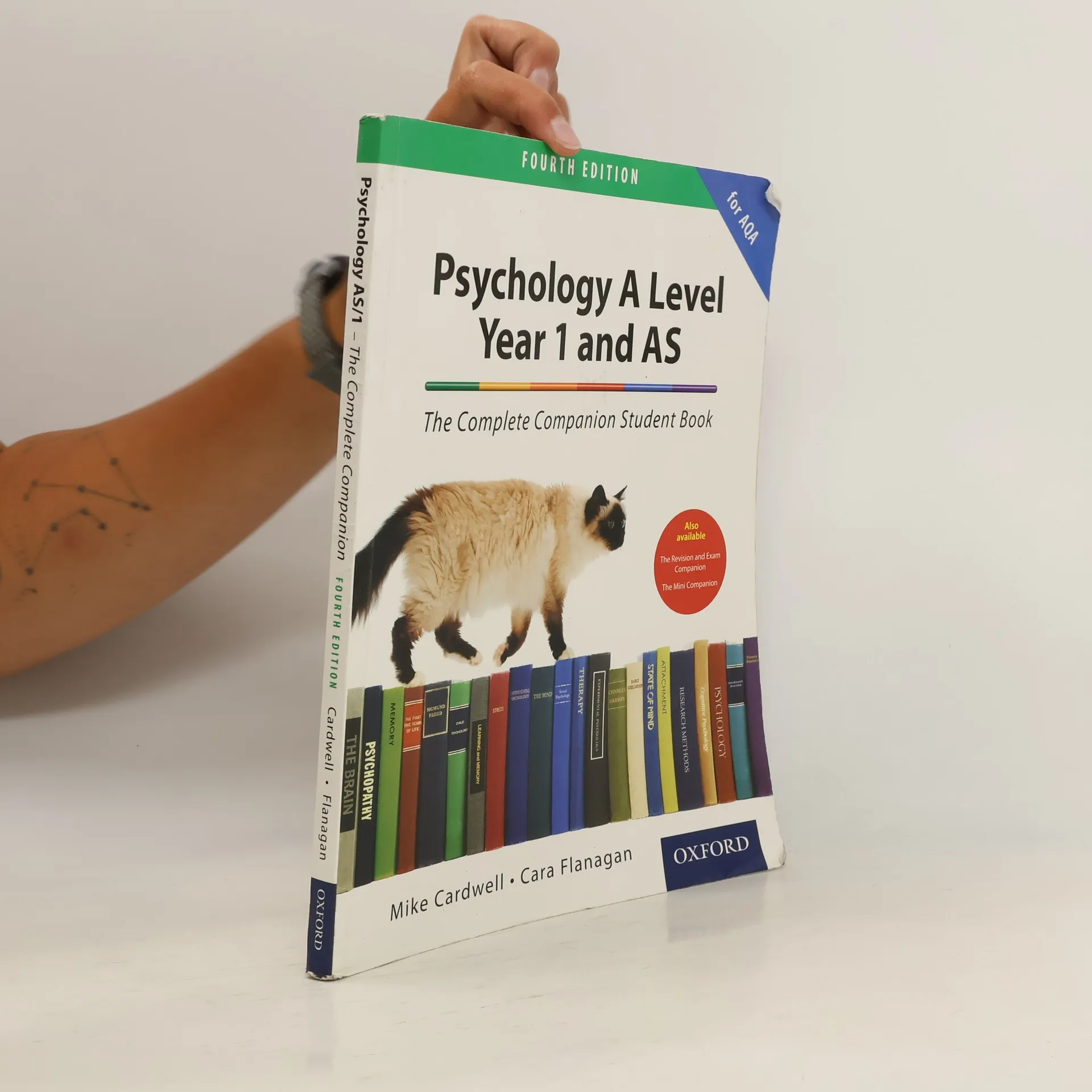


Revise AQA AS Psychology (7181) by finding missing specification content first, then practising application, evaluation and timed questions. The six compulsory areas are Social Influence, Memory, Attachment, Approaches in Psychology, Clinical Psychology and Mental Health, and Research Methods. Biopsychology is within Approaches in Psychology, not a separate AS topic. Use this roadmap for the 2027 main exam session. The usual series is May/June, and AQA publishes confirmed dates in its official timetable when they are released.
Start with a baseline and a two-paper revision calendar
Paper 1 covers Social Influence, Memory and Attachment. Paper 2 covers Approaches in Psychology, Clinical Psychology and Mental Health, and Research Methods. Each paper lasts 1 hour 30 minutes, is worth 72 marks and contains three 24-mark sections with multiple-choice, short-answer and extended-writing questions. Start with a few untimed questions from every area, then identify what you cannot explain, apply or evaluate.
For the diagnostic check, use a SimpleStudy AS Psychology quiz or past-paper question from the A-Level exam hub, then record the exact error before making your calendar.
Give each study block one clear task, such as retrieving the working memory model, planning a research-methods answer or completing one Social Influence question.
Alternate Paper 1 and Paper 2 topics across the week, with question practice every week. AO1 accounts for 35–37% of marks, AO2 32–34% and AO3 30–32%, so practise all three rather than mostly rereading.
Build a current specification checklist and identify the real gaps
Open the current 7181 specification and make a row for every definition, theory, named study, evaluation point, practical activity and mathematical skill. Label each row not learned, insecure, recalled or exam-ready. Add AO1 for knowledge, AO2 for application and AO3 for analysis, interpretation or evaluation, so “I know it” does not hide an inability to use it in an answer.
If an insecure row needs material, use SimpleStudy notes and quizzes, then recall it and update its status. Check against AQA’s specification, not old notes. Older Psychopathology resources may not fully cover Clinical Psychology and Mental Health.
Your checklist should cover these areas in enough detail to expose genuine gaps:
Make separate checklist headings for Social Influence, Memory, Attachment, Approaches in Psychology, Clinical Psychology and Mental Health, and Research Methods. Under each, copy the specification’s required definitions, theories, named studies, evaluation points and practical or mathematical requirements, including biological content within Approaches in Psychology.
Build recall and evaluation material for theories and studies
For each major theory or required study, use a closed-book retrieval grid. Write the aim or core concept, method or explanation, findings, conclusion, one strength, one limitation or methodological issue, one application and a likely exam use. Check notes only after writing what you remember, then correct missing detail in a different colour.
Keep evaluation attached to what it evaluates. For Milgram, explain how evidence or a methodological issue affects conclusions about obedience, rather than merely naming ethical concerns. Apply this to memory, attachment, learning and clinical content, so AO3 answers the question rather than adding a memorised criticism.
Each grid should give you accurate AO1, a possible unfamiliar scenario for AO2, and linked AO3 with a consequence. Use these pieces to build answers instead of memorising a full essay.
Run research-methods and mathematical practice alongside topic revision
Research methods, practical research and mathematical skills can appear in either paper, so attach a methods task to each topic session. For any investigation, identify the aim, operationalised variables and design. Then decide how participants could be sampled, what data will be collected and which permitted descriptive measure or inferential test fits the design and data.
Use this workflow in answers: show the calculation or decision clearly, interpret the result against the hypothesis, then evaluate validity, reliability and ethics before proposing one realistic improvement. For example, if one revision condition has recall scores of 3, 5 and 7, show that its median is 5, calculate the equivalent measure for the other condition and state whether the comparison supports the prediction. Do not simply name a test or measure: explain why it suits the data and design.
Practise short method questions and longer design tasks. Check AQA’s current statistical and mathematical requirements before adding them to your checklist.
Turn recalled knowledge into AQA-style answers
Read the command word and mark allocation before planning. Select only material that meets the task. A short question about synaptic transmission needs that process, not a broad description of a neuron. A question about adrenaline needs its role in fight-or-flight, not every detail of the response.
For a scenario question, build an AO2 chain: name the concept, select a detail from the scenario and explain how that detail illustrates the concept. For evaluation, make a point, support it with evidence or reasoning, explain its effect on the theory, study or conclusion, and make a justified judgement where appropriate.
Extended answers need accurate AO1, explicit AO2 when there is a context, and developed AO3. Check the individual mark scheme: questions worth four marks or more normally use levels-based marking to judge the answer as a whole. For a level-marked response, write a coherent answer, not a memorised mark scheme.
Move from single questions to timed sections and delayed retests
Begin with individual questions while learning to apply material. Next, complete one 24-mark section to time. Finally, sit complete papers in the 90-minute allowance. Mark work using AQA sample assessment materials and the past-paper finder. Use samples to check revised coverage; use older papers and reports for transferable skills, not as a complete current-topic checklist. Availability of past papers and mark schemes can change, and older materials may not match the revised specification exactly.
Maintain an error log with five categories: knowledge, application, evaluation, methods and timing. Write the exact missing action, such as “explain how the scenario detail shows minority influence”, rather than “revise Social Influence”. Rewrite an answer when you know the precise improvement, then test the same weakness later using a fresh question.
Use the final fortnight for error-led priorities and full-paper simulation
In the final fortnight, keep all six topics on the checklist. For example, a student repeatedly loses Memory marks. Their checklist and official-mark-scheme log show that working-memory-model definitions are secure, but AO2 and AO3 are insecure. They stop repeated rereading, keep a short closed-book retrieval task, then use the longer session for one scenario-based 6-mark response.
They annotate the official scheme, rewrite the response using a point-evidence-explanation link, complete a timed Memory section and retest the same weakness later with a different question. This shows the decision rule: once AO1 is secure, do not give it most of the available time when marked work identifies application or evaluation as the problem.
In the final days, complete full papers under the official 90-minute condition. Review them after a short break and make the next study block about repeated error categories, not textbook topic order.
Open the current AQA 7181 specification today, create the six-topic status checklist and complete one diagnostic question on your weakest area. Keep brief retrieval for missing knowledge across all six topics. Once a row is secure, use marked answers to target timed application and evaluation practice.