


Addiction is one of the most misunderstood health conditions, and misconceptions continue to fuel stigma, shame and barriers to treatment. Whether the addiction involves alcohol, drugs, gambling or prescription medication, many people still hold outdated beliefs about what addiction is and who it affects. These myths can discourage individuals from seeking help and make it harder for families and communities to provide meaningful support.
By understanding the reality behind addiction, we can promote greater compassion, encourage early intervention and help break down the stigma that often surrounds recovery.
Addiction Is a Choice
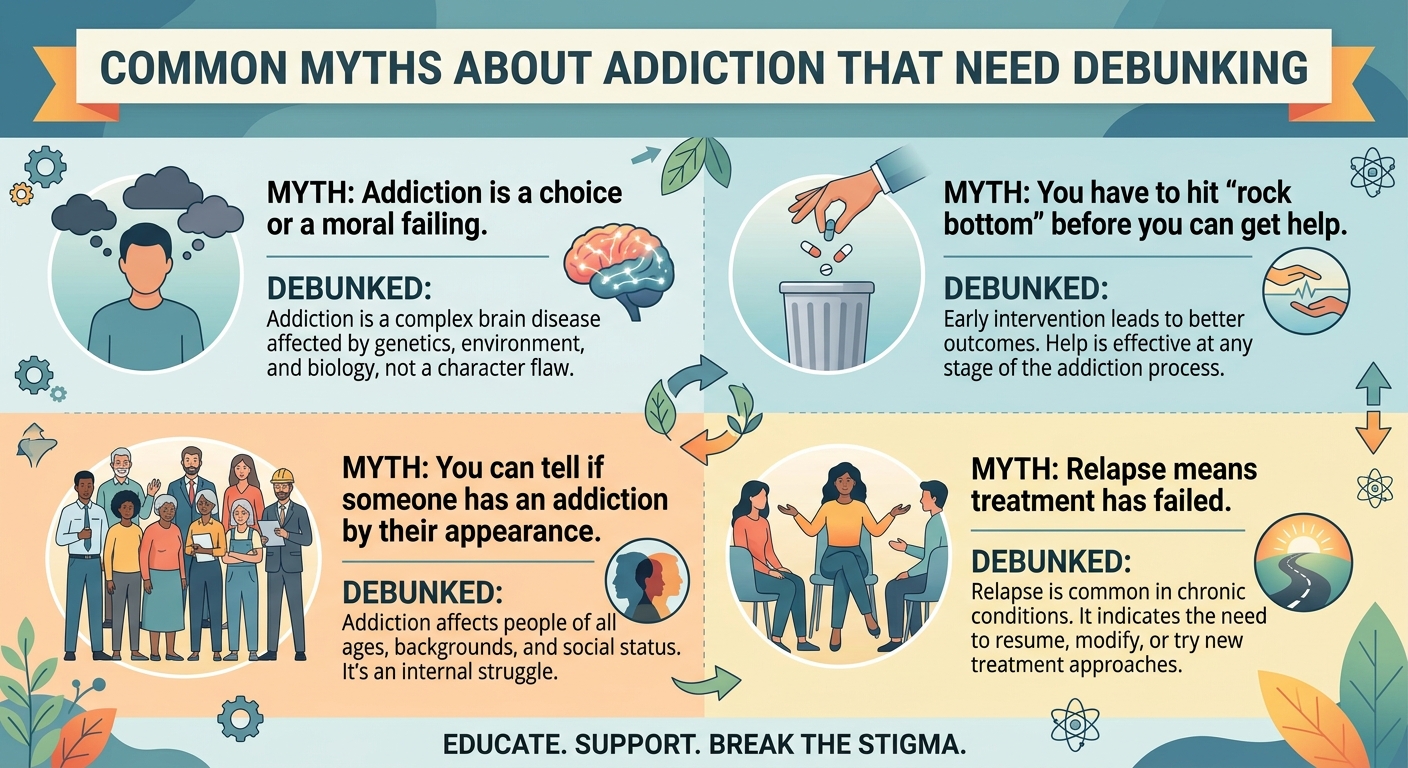
One of the most common misconceptions is that addiction is simply the result of poor choices or a lack of self-control. While the initial decision to try a substance or engage in a particular behaviour may be voluntary, addiction itself is far more complex.
Addiction is recognised as a chronic health condition that affects the brain’s reward, motivation and decision-making systems. Genetics, mental health, trauma, environmental influences and life experiences can all contribute to a person’s risk of developing an addiction. Once addiction develops, stopping is rarely as simple as deciding to quit. It’s something that becomes a realisation for many people who seek help from a alchol or cocaine rehab centre, but it is something many don’t realise until they get there.
You Have to Hit Rock Bottom Before Getting Help
Many people believe that someone must lose everything before treatment will be effective. In reality, waiting for a person to reach “rock bottom” can increase the risk of serious health problems, relationship breakdowns and even fatal overdoses.
The earlier someone receives support, the better their chances of achieving long-term recovery. Recognising warning signs and seeking professional help at an early stage can prevent addiction from becoming more severe and reduce the impact on every aspect of a person’s life.
Addiction Only Affects Certain Types of People
Addiction does not discriminate. It can affect people of any age, background, profession or income level. Successful careers, stable relationships and financial security do not make someone immune to developing a substance use disorder.
Because addiction can affect anyone, it is important to avoid making assumptions based on appearance or lifestyle. Many people struggling with addiction continue to work, care for their families and meet daily responsibilities while hiding their difficulties from those around them.
Treatment Doesn’t Work
Some people assume that treatment is ineffective because relapse can occur. However, relapse does not mean treatment has failed. Like many long-term health conditions, including diabetes and asthma, addiction often requires ongoing management.
Recovery is a journey rather than a single event. Many people benefit from a combination of detoxification, therapy, peer support, medical care and lifestyle changes. If setbacks occur, they should be viewed as an opportunity to reassess treatment rather than as a reason to give up.
With the right support, countless individuals go on to lead healthy, fulfilling lives in recovery.
People with Addiction Just Need More Willpower
Willpower alone is rarely enough to overcome addiction. The condition changes how the brain responds to cravings, stress and rewards, making it extremely difficult to stop without additional support.
Professional treatment helps people develop healthier coping strategies, address underlying mental health concerns and build the skills needed to maintain recovery. Family encouragement and supportive social networks also play an important role in long-term success.
Reducing addiction to a simple lack of determination ignores the biological, psychological and social factors involved.
Recovery Is Impossible
Perhaps one of the most damaging myths is that people never truly recover from addiction. While recovery can involve challenges, many individuals successfully rebuild their lives and maintain long-term sobriety.
Recovery looks different for everyone, but it often includes improved physical health, stronger relationships, greater emotional resilience and renewed purpose. Ongoing support, healthy routines and access to appropriate services can all contribute to lasting positive outcomes.
Stories of successful recovery are far more common than many people realise and demonstrate that change is possible at any stage of life.
Challenging the Stigma Around Addiction
Misunderstanding addiction can prevent people from asking for help when they need it most. By replacing myths with accurate information, we can create a more compassionate society where individuals feel supported rather than judged.
Addiction is not a moral failing or a sign of weakness. It is a complex health condition that deserves understanding, evidence-based treatment and ongoing support. Challenging harmful stereotypes encourages more people to seek help early, strengthens communities and reminds those affected that recovery is always possible.