
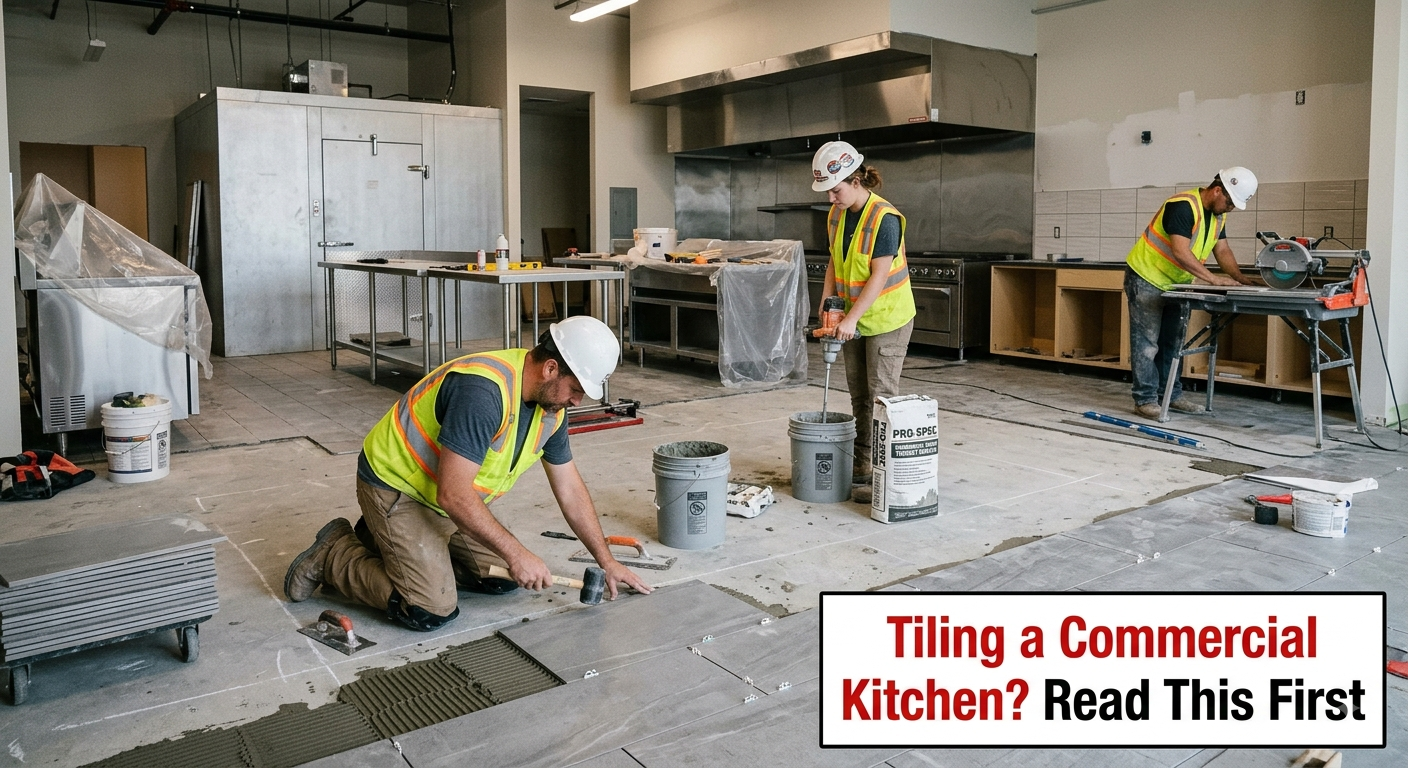


Commercial kitchens face intense heat, high moisture and constant pressure. Ceramic tiles have been the standard wall covering for decades, but they often cause serious long-term issues for busy food businesses. Here’s why traditional tiles might be the wrong choice for your commercial kitchen.
The Hidden Hazards of Grouted Tile Walls
Traditional ceramic tiles are tough, but the real weakness lies in the grout joints that hold them together. In a busy commercial kitchen, grout absorbs grease, water vapour and tiny food particles. This creates an ideal breeding ground for harmful bacteria and mould, which quickly threatens your food safety compliance.
Over time, the intense scrubbing required to clean these joints causes the cement-based grout to erode. Once the grout breaks down, water easily seeps behind the tiles and into the walls. The adhesive fails, leading to loose, cracked or blown tiles that can fall into food preparation areas. Replacing damaged tiles means closing sections of your kitchen, which hurts your daily trade.
The Benefits of Flat Surface Alternatives
To prevent these ongoing headaches, many UK catering operators are choosing different materials for their walls. Installing PVC hygienic wall cladding will give you a completely smooth, solid surface that eliminates grout lines entirely. The material is fully waterproof and easily resists the harsh chemical cleaners used during end-of-service cleans.
Because the finished surface is entirely flat, grease and grime have nowhere to hide. Your team can wash down the walls in roughly a third of the time it takes to scrub tiled walls, using about a quarter of the cleaning chemicals on the same surface area. That’s a real saving on labour and consumables across a year of service.
Installation Costs and Lifetime Value
When you compare initial material prices, ceramic tiles can sometimes look cheaper than plastic panels. However, the installation process for tiles is slow because a tiler must lay and grout each piece individually. Cladding panels cover large areas in one go, which typically cuts installation time by three to five times. A full commercial kitchen can often be clad in one to two days, against three to five days for tiling plus drying time.
This speed is a major advantage for operating businesses. Every day your kitchen stays closed for a refit means lost revenue and shifts sent home. A quicker wall solution gets your chefs back to work and serving customers without unnecessary delays.
Impact Resistance and Maintenance
Quality PVC cladding typically lasts 20 to 25 years in a busy commercial kitchen, while tile grout usually needs replacing every 5 to 10 years even with regular upkeep. Tiled walls also chip and crack easily when hit by heavy stock pots, metal trays or cleaning trolleys. Impact-resistant PVC panels absorb these knocks without cracking, so you don’t have to worry about regular repair bills.
Damaged tiles are also a serious health hazard. Chipped ceramic can drop sharp fragments straight into food, which is a foreign-object contamination risk under UK food safety law. Once tiles come away, the substrate behind them, usually plasterboard or render, absorbs moisture quickly and starts to break down. A solid PVC sheet remains intact even under heavy impact, keeping your environment safe and clean.
Real Examples from Busy UK Kitchens
Many food businesses have made the switch to PVC panels during recent refurbishments. A large restaurant in London recently replaced its entire wash-up area because of recurring damp problems behind the old tiles. The issue came from failing grout joints that allowed water from the pre-rinse spray hoses to soak into the plasterboard.
By fitting large PVC sheets instead, the restaurant fixed the damp issue permanently. The local environmental health officer praised the upgrade during the next inspection, noting that the seamless walls made it simple to keep the area clean. A regional bakery chain also adopted the same cladding system across all its new sites to standardise its deep-cleaning routines.
This pattern isn’t unusual. Hygienic cladding systems are already standard in NHS catering facilities and across major UK chains like McDonald’s, KFC, Nando’s and Costa Coffee, where consistent hygiene standards and fast refit turnarounds matter most.
Why Seamless Walls Win in the Long Run
Choosing the right wall covering is essential for maintaining high hygiene ratings and keeping repair costs low. Tiles were once the only viable option, but they struggle to meet the demands of modern, fast-paced food preparation environments. Moving away from grouted joints helps you protect your walls from moisture damage and bacterial growth.
A seamless plastic surface gives your business a durable wall that stays clean with minimal effort. It helps you meet the wall surface requirements under Regulation (EC) No 852/2004, which is retained in UK law and enforced by local Environmental Health Officers. It also cuts the time your staff spend cleaning at the end of service, saves you money on maintenance, and gives you peace of mind during unexpected health inspections.