
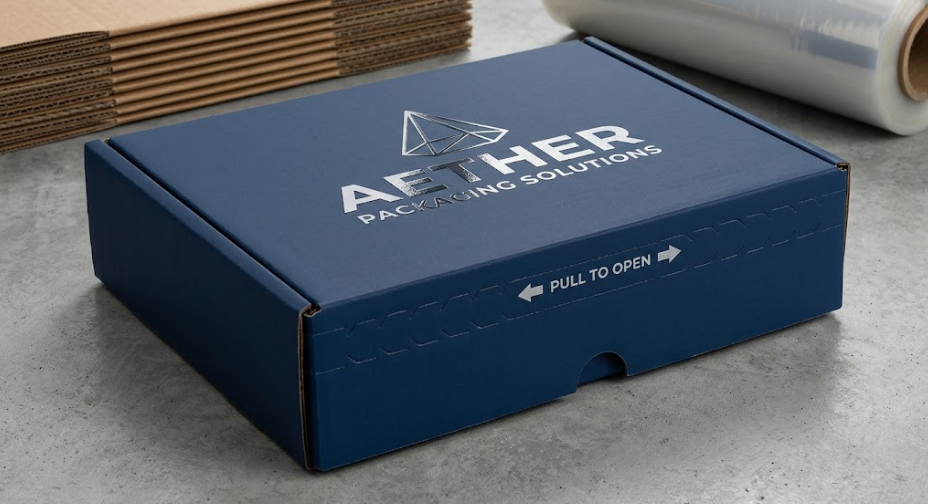


Most companies thing they are not producing any type of packaging waste whatsoever until they get a heads up from a customer who felt their shipment was heavy for no reason
The fix isn’t complicated. It just requires designing die cut boxes around the product instead of grabbing whatever size is on the shelf.
The Real Cost of Oversized Packaging
Empty space in a box isn’t free. It costs money to ship, and it costs material to fill.
Standard cartons come in a handful of set sizes. Rarely does a product fit one of them perfectly. So companies either stuff the extra space with padding or ship a box that’s mostly air. Both options waste money.
Custom die cut boxes solve this differently. Since the shape is cut to match the product, there’s no guessing which stock size comes closest. The box is built around what’s actually going inside it.
Dimensional Weight Pricing Changed Everything
Carriers used to charge based on actual weight. Now most calculate cost using dimensional weight — the size of the box matters as much as what’s inside it.
This changed the math for a lot of businesses. A lightweight product in an oversized box can cost more to ship than a heavier product in a properly sized one. Companies still using generic folding cartons often don’t realize how much this is costing them every month.
Die cut packaging boxes designed around exact product dimensions avoid this problem. Tighter fit, lower dimensional weight, lower shipping bill. The savings show up fast once volume picks up.
Less Material, Same Protection
Cutting waste doesn’t mean cutting corners on protection. It means using material more precisely.
Die cutting cardboard allows for structural folds and reinforced points exactly where a box needs strength. That precision means you need less material overall, because nothing adds just as a safety margin. A flat template can’t always do this. A custom die can put strength exactly where the product needs it and skip it everywhere else.
Less material also means lighter boxes, which brings shipping costs down again. It adds up.
Inserts Instead of Loose Fill
Loose fill, foam peanuts, air pillows, shredded paper all solve a real problem. Products move around in transit, but loose fill also means more material bought, used, and thrown away with every single shipment.
A fitted insert inside custom boxes holds the product in place without any of that. One insert, cut once, replaces bags of packing material on every order going forward. It’s a one-time production cost that keeps paying off.
It also just looks better. Nobody’s impressed opening a box full of packing peanuts. A product sitting snugly in a shaped insert feels intentional.
Reusable Dies Mean Less Waste Over Time
Here’s something people miss. The die used to cut a box isn’t a single-use tool. Once you have it, it can produce the same box shape for years.
Companies ordering wholesale die cut boxes get consistent sizing on every batch, with no design drift and no material guesswork between orders. That consistency also cuts down on production errors, which means fewer boxes tossed for being the wrong shape or size.
Compare that to constantly adjusting folding carton stock to fit new products. Reordering different sizes, testing new fits, wasting prototypes along the way. A reusable die skips most of that churn entirely.
Smart Packaging Is not Just a Social Gossip
It may seem to many that reduction of packaging waste is just a green slogan. In practice, it’s mostly a cost conversation. Less material means lower production costs. Tighter dimensions mean lower shipping costs. Fewer damaged returns means less money lost to replacements.
Die-cut cardboard boxes built around actual product dimensions hit all three of these at once. The environmental benefit is real, but the financial one is usually what gets a business to actually make the switch.
Starting Off
Look at your current packaging first. Measure the empty space in your existing boxes. Check your last few shipping invoices for dimensional weight charges. That’s usually enough to show whether a redesign is worth it.
From there, die cut cardboard packaging that is your product’s actual size is worth pricing out. Ask a supplier to do a sample run before investing in full production. A prototype will cost you much less than a warehouse full of the wrong boxes.
Die-cut boxes may help make your product stand out on the shelf, but when done correctly they can also reduce material waste, lower shipping costs, and still protect the product it’s meant to ship.
Custom boxes built around real dimensions, not guesswork, tend to save money in places businesses don’t expect. Smaller box. Smaller bill. Same protection.