
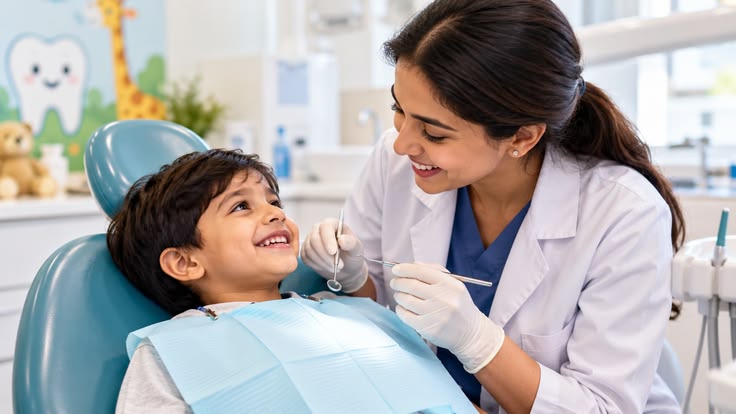


Going to the dentist is often not easy for children. The noise of a dental drill, the pain from an injection, and strange-looking devices may make even a simple procedure scary. But modern innovations in dentistry can change the way pediatric dentists treat children’s teeth, making it possible to improve the dental care of children without causing too much discomfort.
Laser dentistry is one of these developments. Using concentrated light energy, dental professionals can perform certain procedures with less mechanical vibration and, in some cases, without injectable anesthesia. From treating cavities to performing selected soft tissue procedures, dental lasers are becoming an additional option in modern pediatric dental care.
Although laser technology cannot be used for all types of dental treatment, it may have many benefits for those who are eligible to use it. Knowing how it works will allow parents to make an informed decision regarding their child’s dental health.
How Does Laser Dentistry Work?
Dental lasers work through light energy to alter, remove, and shape certain tissues within the mouth. There are many kinds of lasers used for specific dental tasks on a number of dental tissues.
The old-fashioned dental drill removes decayed tissue through rotating tools. The particular dental lasers perform their task without any vibrations and drilling noises. Thus, children do not feel intimidated by the procedure.
Dental laser procedures generally fall into two categories:
- Hard tissue treatments: These include removing certain types of tooth decay and preparing teeth for fillings.
- Soft tissue treatments: These may involve selected gum procedures, tissue reshaping, and other treatments involving soft tissues inside the mouth.
Not all dental lasers are suitable for both types of procedures. The equipment, location of the dental problem, and child’s individual needs determine whether laser treatment is appropriate.
Why Laser Dentistry Can Make Dental Visits More Comfortable
Among the advantages that laser dentistry provides is its ability to help make children more comfortable when undergoing some types of dental treatment.
Children get scared when they hear the sound of a dental drill or think of receiving injections. This makes their appointments difficult, especially those who are young and have not undergone dental treatment before.
Laser dentistry provides an alternate way of doing this.
Less Noise and Vibration
Standard drilling tools produce noise and vibration which can be frightening for children.
Some lasers are capable of treating the decay without using rotating tools, which reduces these feelings. While laser treatments can be noisy, they can provide a more relaxed experience for children who are sensitive to dental equipment.
Fewer Injections during Certain Procedures
Some laser dental procedures do not require anesthetic injection at all.
For children who suffer from anxiety with the thought of an injection, this makes visits to the dentist less frightening.
Not having an injection would eliminate the numbness which can cause a child to bite down on his lips or cheeks.
Yet, anesthetic may still be needed, depending on various factors.
A More Individualized Approach to Treatment
Pediatric dentistry requires more than treating teeth. Dentists must also consider a child’s age, emotional development, medical needs, and previous dental experiences.
In Las Vegas, Dr. Sandra Thompson of Desert Kids Dental, a board-certified pediatric dentist, focuses on providing personalized dental experiences for young patients. She completed her pediatric dental residency at Cincinnati Children’s Hospital Medical Center and has undertaken additional training in laser infant frenectomies.
Her approach reflects the importance of combining clinical expertise, modern technology, and age-appropriate care rather than relying on equipment alone.
“Children deserve dental care that considers both their oral health and how they feel during treatment. Laser technology gives us another option for making certain procedures more comfortable while choosing the approach that best meets each child’s needs.”
How Laser Technology Is Changing Cavity Treatment for Children
Tooth decay is among the most common oral diseases in children. In the event that cavities arise, quick treatment is advisable in order to avoid pain, infections, and damage to the tooth.
Dental decay can be treated by the removal of the decaying parts of the tooth using a dental drill followed by the use of fillings to restore the tooth. There are some types of dental lasers used in the removal of tooth decay.
An example is the Solea dental laser which is a carbon dioxide laser.
How Solea Laser Technology Works
The Solea laser utilizes a unique wavelength of light energy that affects oral tissues. In some cases, dentists may use the device in place of regular rotary instruments.
Advantages might include decreased mechanical vibrations, noise from drilling, and even the ability to perform some procedures without the need for injection anesthesia.
This might be particularly useful when dealing with children who fear conventional dental instruments.
Nevertheless, it is not possible to treat every cavity using a laser.
The extent of decay, its depth, the tooth that is affected, the presence of fillings, and other factors affect the choice of procedure.
In some cases, conventional dental instruments will still be required.
Can Laser Dentistry Help Children with Dental Anxiety?
Dental anxiety can affect children of different ages. Some become nervous because of previous dental experiences, while others feel uncomfortable with unfamiliar sounds, instruments, or sensations.
Laser dentistry may reduce certain sources of anxiety by changing how specific procedures are performed.
For example, a child who dislikes the sound of a traditional drill may find a laser-based procedure less intimidating. Similarly, treatment that does not require an injection may help reduce fear.
However, dental anxiety involves more than physical sensations.
Children may also worry about sitting in the dental chair, keeping their mouths open, or being separated from their parents.
Pediatric dentists therefore use several approaches to support anxious patients, including:
- Explaining procedures in language children understand.
- Introducing dental instruments gradually.
- Allowing breaks when appropriate.
- Providing reassurance throughout treatment.
- Considering additional behavior guidance or sedation when clinically necessary.
Laser technology can support these techniques, but it cannot replace patient communication, reassurance, and professional judgment.
Is Laser Dentistry Safe for Young Patients?
Lasers can be safely applied to children’s dental problems when professionals adhere to proper clinical and equipment safety practices.
Each laser system comes with its own operational guidelines. Dentists need to know about the equipment and choose proper settings and analyze the tissues that will be treated.
Wearing protective glasses for the particular type of laser is a vital safety measure. The dentist and his or her team should also protect other tissues.
Parents should keep in mind that laser therapy cannot always be the best choice for children’s dental problems.
There might be cases when some complex restorations, deep cavities or the presence of some dental material will require traditional instruments.
In addition, the teeth and other dental structures of children are still forming.
Thus, the optimal treatment choice will depend on the particular case of the child.
What Parents Should Know Before Choosing Laser Dental Treatment
Parents thinking about laser dentistry need to consult with their children’s pediatric dentists and find out what options they have.
They can ask initially if it is possible to do the procedure in question using the existing laser unit.
Parents should also know whether any anesthesia is needed and whether any standard instruments can be used during the procedure.
Moreover, other aspects that are worth finding out are the experience of the dentist in laser treatment and recovery period and the advantages or disadvantages of the procedure in question.
Parents should also consider insurance issues. Different plans provide different dental insurance benefits depending on the procedure, not the instrument used.
The most important thing parents need to remember is that the existence of the latest technologies does not necessarily mean better treatment.
Laser dentistry is good if it gives a proper opportunity for treatment, while the dentist’s experience is crucial in this case.
Why Preventive Dental Care Still Matters
Even with the development of dental technologies, avoiding cavities is still one of the main objectives of pediatric dentistry.
Bacterial acids that erode tooth enamel make kids’ teeth prone to decay.
Brushing with fluoride toothpaste, proper flossing, healthy diet, and regular dental appointments are effective ways of reducing this risk.
Parents may reduce the intake of snacks and beverages high in sugar that cause acidic environment in the mouth.
Dental visits are used by pediatric dentists to control tooth development, detect decay and suggest preventative measures.
Applying sealants and topical fluoride are ways to protect children from cavities.
Laser technology is yet another choice that is used when dental treatment is required, but it cannot substitute daily oral care or visits to the dentist.
The Future of Laser Dentistry in Pediatric Dental Care
New technologies in dentistry keep on developing; manufacturers and researchers try to make the procedure more accurate and effective.
Laser equipment belongs to the innovations which are able to replace the traditional devices in certain procedures.
The use of lasers in pediatric dentistry can be especially beneficial since there is no need for drilling and injections as well as reduced vibrations and noises.
This innovation can positively affect the development of a good attitude to dental care among children.
However, the further research is necessary in order to evaluate the effectiveness of laser procedures in comparison with conventional treatment procedures with regard to such factors as the results of treatment, restoration durability, costs, and patients’ comfort.
The future of pediatric dentistry will definitely include not only proven preventive measures but also modern technologies and personal approach to patients.
Laser dentistry is one of the examples of such innovation. If this method is properly applied by specialists, it can become another way to treat children’s dental diseases and make the process more comfortable.
The main aim of all this is to provide children with healthy teeth, proper treatment and good dental habits.