


I started putting a glass of water on my nightstand every night about four years ago. The water had to be on my nightstand and I had to drink it all before I picked up my phone in the morning. I had no idea why I wanted to do this, but within a week or so I started to feel a little less frantic by 9 am. And I was curious: how much of our emotional lives are we manipulating through these tiny, trivial things?
Turns out, quite a lot.
The habits that actually hold up under scrutiny
Rather than going down the well-trodden path of many wellness programs which focus on content such as cold plunge baths, or jumping into a gratitude journal or 5 hour morning routine that requires your sponsorship as a mushroom coffee selling company, there are many simple and highly effective habits that can improve your life. The key is to look for habits that improve life without content.
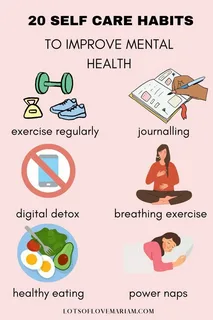
- Moving your body for even 10 minutes reduces cortisol and bumps dopamine upward. A walk counts. It counts a lot, actually, more than most people give it credit for.
- Consistent sleep and wake times regulate your mood more reliably than almost any other single behavior — irregularity in sleep patterns is directly linked to heightened anxiety and emotional reactivity.
- Brief but genuine social contact — a real conversation with a real person, not a reply to an Instagram story — genuinely buffers stress in ways that still surprise me. Loneliness activates the same brain regions as physical pain, which is a fact I find both devastating and clarifying.
- Limiting decision fatigue in the morning. Small choices stack up like unpaid bills. People who simplify their early-day decisions tend to report better emotional regulation by afternoon.
For whatever reason, meditation has become this one size fits all kind of practice, or even a panacea of sorts for a whole host of different emotional and psychological ills. Often enough, people report that it has had a number of very positive effects on their lives, but other times, they report that it fills them with anxiety or makes them uncomfortable in ways that are clearly outside of their control. In general, the scientific consensus is that if meditation is going to be recommended, then it should be recommended as one of a host of different practices, and not as some sort of stand alone ‘cure’.
Your brain is running on routines whether you like it or not
Another aspect of habits that is very important to understand is that the human brain is designed to complete tasks efficiently, in order to save energy. It is for this reason that the brain is always looking for ways to complete tasks by way of habits. The vast majority of the people who read this are likely to have thought of habits in terms of being productive in some way, however the reality is that habits greatly affect a person’s emotional baseline. They can cause a person to become a panicker or over reactor in times of stress, or they can allow a person to pause and react in a more constructive manner. The point is that a person’s habits greatly affect their emotional lives, and that is why it is so very important to be aware of the habits that a person currently has, and then to work to change those habits, one at a time. It is a well established fact in behavioral neuroscience that small, repeated behaviors can have a profound impact on the brain over time. They can actually change the way that neurons connect within the brain to form new paths. As mentioned previously, it is not easy for a person to will themselves into having a completely different set of habits, but with enough awareness and with enough hard work, a person can change their habits. The good news is that once a person’s brain has re-wired in order to complete a task in a new way, that new way will become second nature to that person very quickly.
I stated earlier that research into behavioral neuroscience consistently shows that small behaviors of repetition, or habits, can change the physical neural pathways that information travels down in the brain over time. So, as were noted previously, there is real power in your repeated behaviors to change your emotional baseline and to alter your typical behavior in given situations. That your brain automates so many of your typical behaviors in order to save energy for more deliberate thought, and to better handle unexpected situations, means that you have far more control over your typical mental state than you probably suspect.
Of course, all of these ideas can be twisted into some form of damaging, toxic positivity. This is why it is so very important to be aware of your own personal biases, and how your well-intentioned ideas might be used against you.
Stress and the myth of the “reset”
Now it is late January. Most of the new members of the local gyms have stopped attending. They usually fell off the wagon somewhere around late January or early February.
The wellness world has given birth to a cult-like obsession with the idea of a total reset. It’s this mythical notion where a person wakes up one morning and suddenly has the power to totally transform their life. The scenario above is a great example of this, where someone wakes up early in the morning to start their fresh new life at 5 a.m. with glowing skin. Reality is far from this idealistic expectation and the reality is that we can’t build up our resilience overnight. It takes time and it has to be done gradually. But by slowly building up our ability to cope with stress, we can also gradually build up a savings account of self-care practices that we can draw on in times of greatest need.
(Also, I’ve noticed that the people who seem most emotionally solid in a crisis are not typically the ones who went through a 30 day challenge or whatever. Instead, they’re the kind of people who just keep going on the most boring of days.)
| Habit | Time required | Primary benefit | Backed by research? |
| 10-minute walk | 10 minutes | Cortisol reduction, mood lift | Yes (multiple RCTs) |
| Consistent sleep schedule | Ongoing | Emotional regulation, reduced anxiety | Yes (sleep science) |
| One real social interaction | 5–20 minutes | Stress buffering, sense of belonging | Yes (social neuroscience) |
| Phone-free first 15 minutes | 15 minutes | Lower morning anxiety, more intention | Growing evidence |
Start embarrassingly small
A glass of water. A block of wood. Your actual day.
- Choose a habit small enough that you’d feel slightly embarrassed calling it a habit.
- Do it at the same time every day for two weeks.
- Notice what shifts — even slightly, even barely.
- Add something only after the first thing feels genuinely automatic.
So there is no real “value” to this habit for me in terms of how it has improved my life. But it has helped in lots of little ways. Sometimes it has just been there for me as a habit that I can rely on. It is a really simple and easy habit to get into – just drinking a glass of water every day. It is in no way impressive but it is my habit and it has helped in lots of little ways.
When self-care isn’t enough, and that’s okay to admit
My frustration with wellness marketing stems from this misunderstanding of what wellness coaching actually is and what people actually come to wellness coaching for. For years, I was on a mailing list of dozens of other health coaches. Every week, they would send out an inspirational email or how-to article or podcast. I often thought that they were selling life re-engineering activities to help people dramatically change the way they live in order to reach a new emotional equilibrium and become better coping and more peaceful people. However, after many years of coaching, I have come to realize that the vast majority of people who come to wellness coaching are actually doing quite well in many areas of their lives. They are already optimal well people, and yet they are struggling. They are feeling horrible in some way, and they are seeking help. They are seeking coaching in order to feel better. And, I believe that the majority of wellness marketing fails to acknowledge this problem or to offer any help to these people. Instead, they just re-pack and re-market the habits of already optimal well people (who are already doing well) in order to try to help other people who are struggling, and who are already doing well in many ways
There will come a point where all the habit building in the world will not be enough to help you work through your issues. At that point you will need the advice of a trained and licensed therapist. This is not to say that you will fail at building up your own resilience, but rather that you have reached the limits of your own abilities. Seeking out mental health therapy is a sign of strength, not weakness. It is the best thing you can do for yourself, and you should not feel ashamed or embarrassed to seek it out. Indeed, you would not treat a broken arm with sleep hygiene and positive thinking, so why would you attempt to treat your mental health in the same way?