
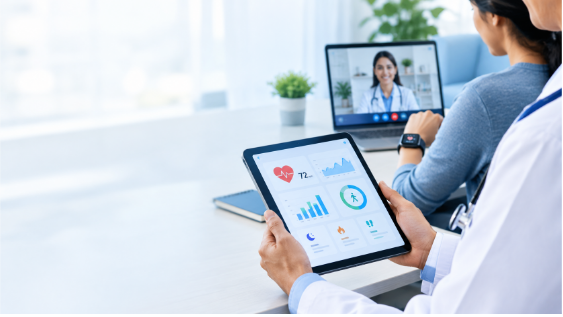


Digital health is the use of technology to support health and care. It includes video visits and fitness trackers and health apps and online records and smart software that helps doctors make decisions. What once felt like a futuristic idea now sits in the pocket of millions of people.
This article explains what digital health means and who benefits from it. It covers the main tools and the latest changes this year as well as the risks that deserve attention. The information is educational and does not replace advice from a licensed clinician who knows your health history.
What Is Digital Health and Why Does It Matter
Digital health is a broad term for tools that use software and connected devices to improve how people manage health and receive care. The US Food and Drug Administration describes the field as covering mobile health and health information technology and wearable devices and telehealth and personalized medicine.
It matters because health care is no longer limited to the clinic walls. A person can now check heart rate trends at home and message a provider and review lab results online. These tools can save time and reveal patterns that a single visit would miss.
How Digital Health Differs From Traditional Care
Traditional care happens at set times and places. A visit lasts a short while and the patient leaves with advice and little data between appointments. Digital health fills that gap by collecting information in daily life and sharing it with care teams.
The tools do not replace clinicians. They give both sides more information and more ways to stay in touch. The best results usually come when technology supports a trusting relationship with a real provider.
The World Health Organization View
The World Health Organization treats digital health as a way to strengthen health systems and reach people who are far from services. Its work stresses that technology should be safe and fair and protect personal data.
That view is a useful reminder. A tool is only valuable when it helps real people in a reliable way and respects their privacy.
Who Is Digital Health For
Digital health is for almost everyone but some groups gain the most. People with long term conditions such as diabetes or high blood pressure can track numbers between visits. Busy parents and workers can book a virtual visit instead of traveling. People in remote areas can reach specialists who are hundreds of miles away.
Older adults can also benefit from reminders and remote check ins and simple video calls with family doctors. The key is a tool that feels easy to use. A confusing app can create more stress than it removes.
Providers use digital health too. Doctors and nurses rely on electronic records and secure messaging and decision support software every day. Clear systems can reduce paperwork and help teams spot problems earlier.
Why Digital Health Is Trending Right Now
Several forces are pushing the topic into daily conversation. Smartwatches and rings now track sleep and heart rate and activity for millions of users. Artificial intelligence tools can explain lab results and help people prepare questions for appointments. Telehealth has become a normal option instead of a special case.
Industry reports describe the field as moving from experiments toward basic infrastructure. Funding has become more selective and focused on businesses that show real results. For everyday readers this means fewer flashy gadgets and more tools that fit into regular care.
Interest is also driven by cost and convenience. People want answers faster and want to understand their own numbers. That demand keeps digital health in search results and on social media.
Latest Update in Digital Health This Year
Regulation and technology have both moved quickly. In December 2025 the FDA announced a voluntary pilot called TEMPO to expand access to technology enabled care for chronic disease. In January 2026 the agency updated its guidance on clinical decision support software and on low risk general wellness devices.
Consumer artificial intelligence has also grown. Major AI companies announced features that let users connect health records and wearable data for personalized explanations. These tools are meant to help people prepare for visits and not to replace clinicians.
| Time | Development | Why it matters |
| December 2025 | FDA announced the TEMPO pilot for digital chronic care | Aims to widen access to connected care |
| January 2026 | FDA updated guidance on decision support software and wellness wearables | Clarifies which tools need device oversight |
| January 2026 | AI tools added ways to connect personal health data | Helps people understand results before visits |
| First quarter 2026 | Funding stayed active but selective with a few large deals taking most of it | Suggests the market favors proven businesses |
Rules and products change often. Always check current information from official health agencies before relying on any single headline.
Main Types of Digital Health Tools
The field includes many kinds of tools. The table below gives a quick view of the main groups and what each one does in daily life.
| Tool type | What it does | Everyday example |
| Telehealth | Connects patients and clinicians by video or phone | A follow up visit from home |
| Wearables | Track heart rate and sleep and activity | A smartwatch or smart ring |
| Health apps | Support habits and medicine reminders and symptom logs | A medicine reminder app |
| Digital therapeutics | Deliver software based programs for certain conditions | A guided sleep program |
| Patient portals | Show records and results and allow messages | Viewing lab reports online |
| Remote monitoring | Sends home readings to a care team | A blood pressure cuff linked to a clinic |
| AI tools | Summarize data and support decisions | A tool that explains a lab report |
Telehealth and Virtual Visits
Telehealth lets patients speak with clinicians by video or phone. It works well for follow up visits and medicine reviews and mental health care and minor concerns that do not need a physical exam. It can save travel time and help people who struggle to leave home.
Telehealth has limits. A provider cannot listen to the lungs or feel the abdomen through a screen. Serious or sudden symptoms still need in person care or emergency help.
Wearables and Remote Monitoring
Wearables track steps and sleep and heart rate and other signals through the day. Remote monitoring goes a step further by sending readings from home devices to a care team. Examples include blood pressure cuffs and glucose sensors and weight scales.
These tools help people notice trends. They are not perfect and readings can be affected by fit and movement and battery issues. Treat the numbers as clues and discuss concerns with a clinician.
Health Apps and Digital Therapeutics
Health apps help with habits such as medicine reminders and food logging and exercise plans and stress management. Digital therapeutics are software programs designed to prevent or manage certain conditions and are often tested more formally.
Quality varies widely. Some apps are built with clinical input and others are built only to keep users scrolling. Check who made the tool and what evidence supports it before trusting it with your health.
Patient Portals and Electronic Records
Patient portals let people read visit notes and view lab results and request refills and message their providers. Having your records in one place makes it easier to catch errors and share information with new clinicians.
Portals can show results before a doctor has explained them and that can cause worry. Wait for context when you can and write down questions for your next appointment.
Artificial Intelligence in Care
Artificial intelligence can help sort data and flag patterns and draft explanations in plain language. Clinicians use it for tasks such as reading images and summarizing notes. Patients use it to understand terms and prepare questions.
AI can make mistakes and can sound confident when it is wrong. Use it as a study aid and never as a substitute for a diagnosis or treatment plan.
Benefits of Digital Health for Patients and Providers
The biggest benefit is access. People can reach care without long travel and often without long waits. Remote tools also support continuity because information flows between visits and not only during them.
Another benefit is engagement. When people can see their own numbers they often feel more involved in decisions. Providers gain too through better records and faster communication and fewer repeated questions.
| Benefit | Who gains | Example |
| Easier access | Patients far from clinics | Virtual specialist visit |
| Better tracking | People with long term conditions | Home blood pressure log |
| Faster communication | Patients and providers | Secure message about a refill |
| Clearer records | Everyone | One place for lab results |
| Earlier warning signs | Patients and care teams | Alert about a rising trend |
Risks and Limits You Should Know
Digital health brings real advantages but it also brings risks. Understanding them helps you use the tools wisely and protect yourself.
Privacy and Data Security
Health data is deeply personal. Apps may collect more information than you expect and some share it with advertisers or partners. Not every app is covered by the same privacy rules as a clinic.
Read the privacy policy and limit permissions. Use strong passwords and turn on two step sign in where available. If a tool asks for more data than it needs be cautious.
Accuracy and Over Reliance
Consumer devices are useful but they are not medical grade in every case. A smartwatch may miss a problem or raise a false alarm. Constant tracking can also create anxiety and push people to chase small changes that do not matter.
Use data to start conversations and not to diagnose yourself. If a reading worries you contact a clinician and avoid changing medicines on your own.
Access and the Digital Divide
Not everyone has a reliable internet connection or a modern device or the skills to use new tools. Language and cost and disability can add more barriers. When health care moves online some people risk being left behind.
Good services keep phone and in person options available. If you help an older relative with technology be patient and choose the simplest tool that meets the need.
Digital Health Tools Reviewed Honestly
No single tool suits everyone. The comparison below summarizes strengths and limits so you can match a tool to your needs.
| Tool | Strengths | Limits |
| Telehealth visit | Convenient and saves travel | No physical exam |
| Smartwatch or ring | Continuous tracking | Accuracy varies |
| Health app | Low cost and easy habits | Quality differs widely |
| Patient portal | Clear access to records | Results may lack context |
| Home monitoring device | Useful for chronic conditions | Needs correct use |
| AI explainer | Fast plain language help | Can be wrong |
A fair review shows that digital health works best when tools are chosen with care. Start with one goal such as better sleep or steadier blood pressure and add tools only when they help.
How to Choose a Safe Digital Health App
Choosing well protects your health and your data. A few quick checks can separate trustworthy tools from risky ones.
| What to check | What good looks like |
| Who made it | Clear company and named medical or scientific advisers |
| Evidence | Studies or clinical testing and not only marketing claims |
| Privacy | Plain policy and control over sharing |
| Cost | Clear pricing without hidden charges |
| Claims | No promises to cure or guarantee results |
| Updates | Regular updates and active support |
Be wary of any app that promises fast cures or asks you to stop prescribed treatment. Ask your clinician whether a tool fits your plan before you rely on it.
Digital Health and Everyday Nutrition
Food and daily habits connect closely with digital health. Many people use apps to log meals and water intake and activity. Used gently these tools can reveal patterns such as skipped breakfasts or low fiber days.
Tracking should never feel stressful or harsh. If counting numbers causes worry or guilt step back and focus on simple food habits that support everyday wellness.
Talking to Your Provider About Digital Health Data
Bring your data to appointments but keep it simple. Share trends and not every single reading. Explain what worries you and what you hope to change. A good provider will help you decide which numbers matter.
If you are unsure whom to approach first ask your primary care clinician who can guide you to the right specialist. Clear communication helps technology support your care rather than complicate it.
Frequently Asked Questions
What is digital health in simple words?
Digital health means using technology such as apps and wearables and video visits to support health and care.
Is digital health safe?
It can be safe when tools are well made and protect privacy. Check the maker and the evidence and the data practices before you trust an app.
Does telehealth replace in person visits?
No. It works well for many follow ups and routine issues but some problems need a physical exam or urgent care.
Are smartwatches accurate for health tracking?
They are useful for trends but accuracy varies. Treat readings as clues and not as a diagnosis.
Can AI tools diagnose health problems?
No. AI can help explain information but it can make mistakes and cannot replace a clinician.
Who regulates digital health tools?
It depends on the tool and the country. In the United States the FDA oversees some tools and leaves low risk wellness products with lighter oversight.
Are health apps private?
Not always. Some share data with third parties so read the privacy policy and limit permissions.
How do I start with digital health?
Pick one goal and one simple tool and talk with your clinician about how to use the data.
Final Thoughts
Digital health is becoming a normal part of care and not a separate category. It offers faster access and better tracking and clearer information. It also asks users to think about privacy and accuracy and fairness.
Use technology with purpose and keep a real person in your care team. Start small and choose tools that fit your life and share what you learn with a trusted clinician. That balance turns digital health from a trend into a lasting support for better health.