
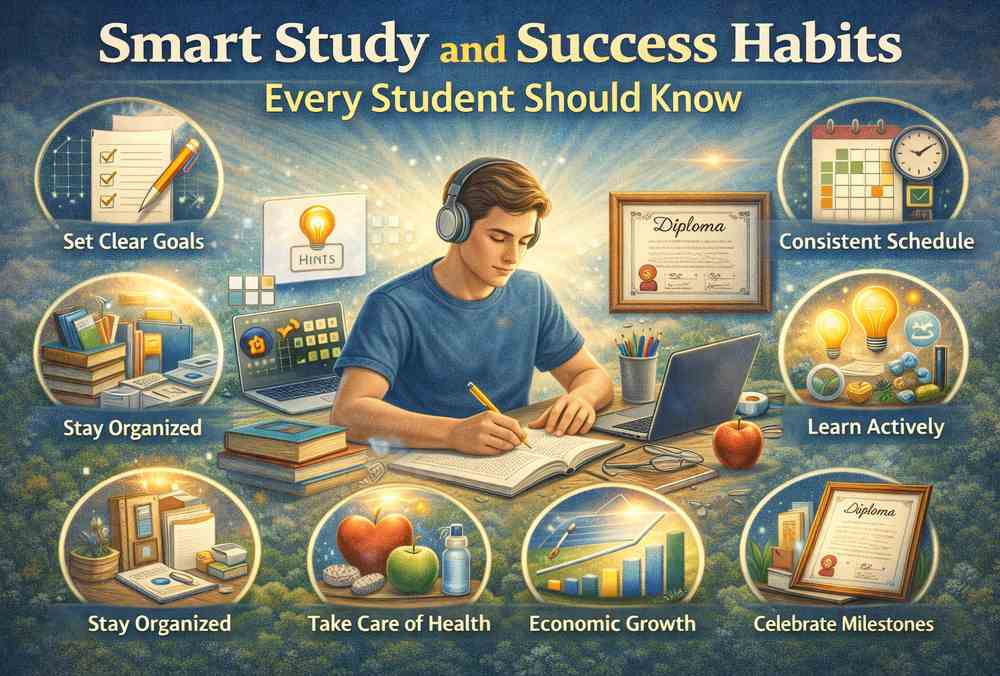


Success in education rarely happens by accident. It usually comes from consistent habits, clear goals, and the ability to manage time and energy well. Many students believe long hours of study automatically lead to better results, but that is not always true. What matters more is studying in a smarter and more organized way.
By building effective study habits early, students can improve their performance, reduce stress, and stay motivated throughout their academic journey.
Set Clear Academic Goals
Every successful student begins with clear goals. These goals can be short-term or long-term. Short-term goals may include completing assignments on time or improving performance in a specific subject. Long-term goals might involve graduating with strong grades or preparing for a particular career.
When goals are clear, it becomes easier to stay focused. Students understand why they are studying and what they are trying to achieve. Writing goals down and reviewing them regularly can also help maintain motivation.
Goals act like a roadmap. Without them, students often feel lost or overwhelmed.
Create a Consistent Study Schedule
Time management is one of the most important habits for academic success. A consistent study routine helps students avoid last-minute stress and cramming before exams.
Instead of studying randomly, students should plan specific hours each day for learning. Even one or two focused hours can be very effective when distractions are limited.
Breaking study time into smaller sessions also improves concentration. For example, studying for 25 to 30 minutes, followed by a short break, helps the brain process information more effectively.
Consistency builds discipline. Over time, studying becomes a natural part of the daily routine.
Learn to Study Actively
Reading textbooks alone is often not enough. Active learning helps students remember and understand information more deeply.
Active study techniques include:
- Taking notes while reading
- Summarizing key ideas in your own words
- Teaching the topic to someone else
- Practicing with quizzes and exercises
These methods force the brain to engage with the material rather than simply reading it passively.
Students who use active learning strategies usually retain information longer and perform better during exams.
Use Helpful Learning Tools
Modern students have access to many digital learning resources that support academic growth. Online tools can help with research, problem-solving, and understanding complex topics.
For example, platforms such as Strands Hints help learners improve logical thinking and problem-solving by offering helpful clues and structured guidance. These tools help students strengthen their thinking skills while studying.
When used wisely, learning tools can save time and make difficult topics easier to understand.
However, students should use them as support, not as shortcuts.
Stay Organized with Study Materials
Organization plays a big role in academic success. Losing notes or forgetting assignments creates unnecessary stress.
Students should keep their study materials well-organized. This may include:
- Separate notebooks or folders for each subject
- Digital backups of important notes
- A planner or calendar for deadlines
An organized workspace also improves concentration. A clean desk reduces distractions and allows students to focus fully on their tasks.
Small habits like organizing notes immediately after class can save hours of confusion later.
Take Care of Your Health
Many students ignore their health during busy academic periods. Lack of sleep, poor diet, and constant stress can reduce focus and memory.
A healthy routine supports better learning. Students should aim for:
- Enough sleep each night
- Regular physical activity
- Balanced meals
- Short breaks during study sessions
The brain works best when the body is well rested. Even simple habits like stretching or taking a short walk can refresh the mind.
Success in education is not only about studying harder. It is also about maintaining balance.
Celebrate Your Academic Milestones
Every stage of education represents effort and growth. Completing a course, passing exams, or earning a degree are achievements worth recognizing.
Many graduates choose to preserve these achievements using diploma frames. Framing an academic certificate protects it from damage and allows students to display their accomplishments with pride.
Seeing those achievements displayed can also serve as motivation for future goals. It reminds students of how far they have come and encourages them to keep moving forward.
Recognizing milestones is an important part of maintaining confidence and motivation.
Keep Improving Your Habits
Successful students understand that learning never truly ends. Study habits should evolve as new challenges appear.
Trying new study methods, adjusting schedules, and learning from mistakes all help students grow academically. What works for one subject may not work for another, so flexibility is important.
The key is to stay curious and open to improvement.
Conclusion
Academic success is built on daily habits rather than last-minute effort. Students who set clear goals, manage their time, study actively, and stay organized often achieve better results with less stress.
Using helpful learning tools like strands hints, maintaining healthy routines, and celebrating achievements with meaningful displays such as diploma frames can all contribute to a balanced academic journey.
By developing smart study habits early, students build a strong foundation not only for education but also for future careers and lifelong learning.