
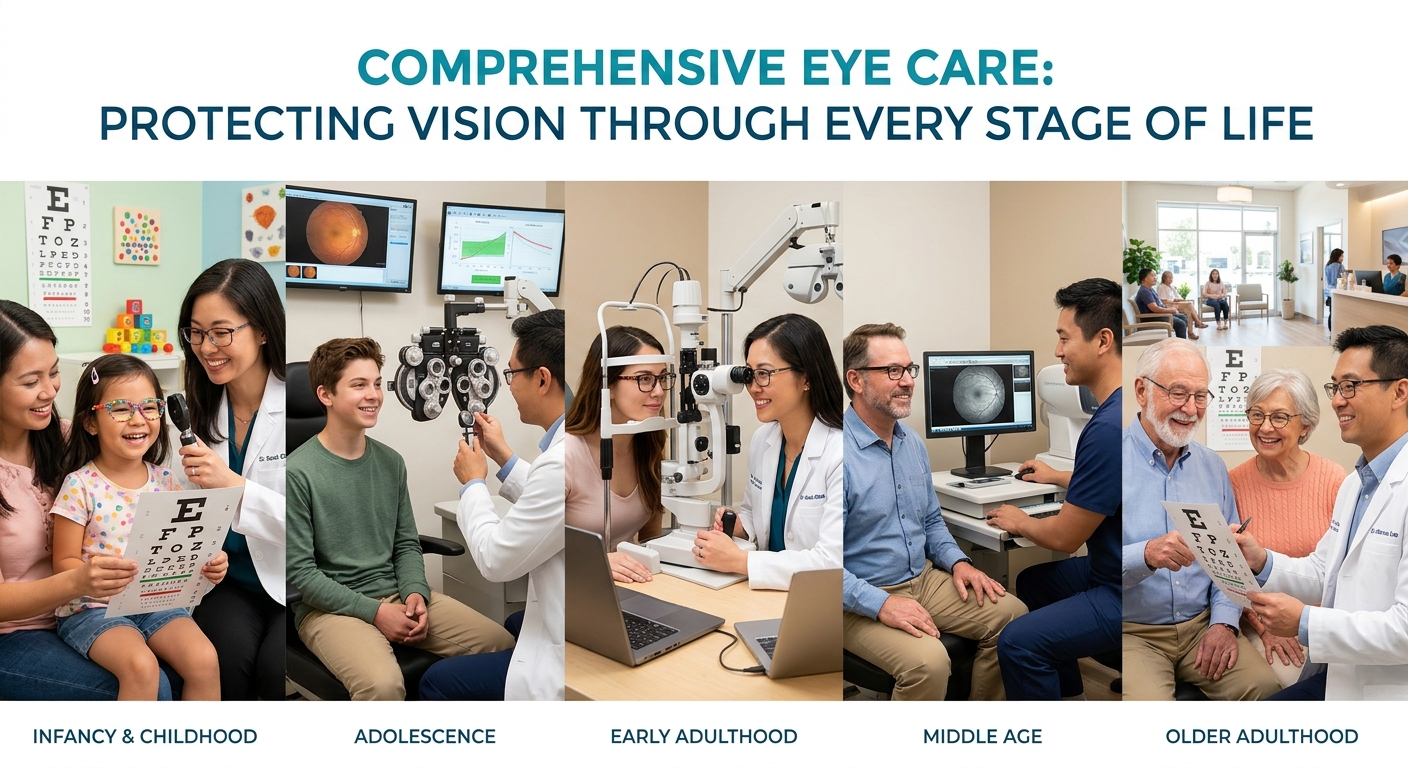


Maintaining healthy vision requires more than simply updating a glasses prescription. Comprehensive eye care combines preventive examinations, accurate diagnosis, advanced medical treatments, and specialized surgical procedures to protect eyesight and support long-term visual clarity. Intermountain Eye Center is an example of a provider offering a broad range of eye care services, including routine eye exams, cataract and glaucoma treatment, retinal and corneal care, refractive procedures such as LASIK, PRK, and ICL, optical services, and specialized oculoplastic treatments. Through advanced technology and patient-focused care, comprehensive eye care providers help individuals manage existing conditions, identify potential problems early, and maintain healthier vision throughout their lives.
Why Routine Eye Examinations Matter
Regular eye examinations are essential for identifying vision changes and detecting eye conditions before they begin to interfere significantly with daily activities. Even people who have clear vision and do not wear glasses can develop underlying problems without experiencing obvious symptoms.
During a comprehensive examination, an eye care professional may assess visual acuity, eye pressure, eye movement, and the overall health of the internal and external structures of the eyes. Depending on the patient’s age, medical history, and risk factors, additional tests may be recommended to evaluate the retina, optic nerve, or cornea.
Routine examinations can help identify refractive errors, early glaucoma, cataracts, and signs of retinal disease. Early detection is particularly important because certain eye conditions can cause permanent vision loss if left untreated. Establishing a regular examination schedule allows patients and their providers to monitor changes over time and develop appropriate treatment plans.
Advanced Treatment for Cataracts and Glaucoma
Cataracts and glaucoma are two common eye conditions that require professional evaluation and, in some cases, specialized treatment. Although both can affect vision, they develop differently and require distinct approaches to care.
Cataracts occur when the natural lens inside the eye becomes cloudy. Patients may notice blurred vision, increased sensitivity to glare, difficulty seeing at night, or faded colors. When cataracts begin to interfere with everyday activities, cataract surgery can replace the cloudy natural lens with an artificial intraocular lens. Modern surgical techniques and lens options allow providers to tailor treatment to individual visual needs.
Glaucoma, meanwhile, involves damage to the optic nerve and is often associated with elevated intraocular pressure. The condition may progress gradually without noticeable symptoms in its early stages. Treatment can include prescription eye drops, laser procedures, or surgery, depending on the type and severity of the disease.
Regular monitoring and timely intervention are important for both conditions. While cataract surgery can often restore clarity, glaucoma treatment primarily focuses on preserving remaining vision and preventing further damage.
The Importance of Specialized Retinal and Corneal Care
The retina and cornea play different but equally important roles in clear vision. The retina detects light and converts it into signals that travel to the brain, while the cornea provides much of the eye’s focusing power. Problems affecting either structure may require advanced diagnostic testing and specialist treatment.
Patients searching for a retina specialist boise may be looking for expert evaluation of conditions such as diabetic retinopathy, retinal tears, retinal detachment, or age-related macular degeneration. These conditions can affect central or peripheral vision and may require treatments ranging from careful observation and medication to laser procedures or surgery.
Retinal care is especially important for people with diabetes, a history of eye disease, or sudden changes in vision. New flashes of light, a sudden increase in floaters, or a curtain-like shadow across the visual field can indicate a retinal emergency and warrant immediate medical attention.
Corneal disorders also deserve careful assessment. Infections, injuries, corneal scarring, and conditions such as keratoconus can distort vision and cause discomfort. Depending on the diagnosis, treatment may involve medication, specialized contact lenses, corneal cross-linking, or surgical intervention.
Access to appropriate specialists helps patients receive accurate diagnoses and treatment plans designed to preserve the function of these delicate structures.
Refractive Procedures for Greater Visual Freedom
Refractive errors, including nearsightedness, farsightedness, and astigmatism, can make everyday activities difficult without glasses or contact lenses. Advances in refractive surgery have created several options for people seeking greater independence from traditional vision correction.
LASIK uses a laser to reshape the cornea and correct certain refractive errors. It is popular because many suitable patients experience improved vision and relatively quick recovery. PRK also reshapes the cornea but treats its surface without creating the corneal flap used in LASIK. This approach may be appropriate for selected patients whose corneal characteristics make another procedure less suitable.
Implantable collamer lenses, commonly known as ICLs, offer another option. These lenses are placed inside the eye without removing the natural lens and may be considered for certain patients, including some with higher degrees of nearsightedness.
Not everyone is a candidate for every procedure. A detailed evaluation of corneal thickness, prescription stability, eye health, and individual medical history is necessary before making a recommendation. An experienced eye care provider can explain the benefits, limitations, risks, and expected recovery associated with each option.
Optical Services and Personalized Vision Correction
Comprehensive eye care also includes access to appropriate glasses, contact lenses, and guidance on everyday visual comfort. Optical services help connect examination results with practical solutions tailored to a patient’s prescription, lifestyle, and preferences.
Some patients need single-vision lenses for distance or reading, while others benefit from progressive lenses that address multiple viewing distances. Contact lenses may provide an alternative for people who prefer not to wear glasses or who need specialized correction for certain corneal conditions.
Children, adults who spend long hours using digital devices, and older individuals may have different visual needs. Personalized recommendations can help improve comfort, reduce unnecessary visual strain, and support daily activities such as reading, driving, working, and participating in sports.
Patients seeking an eye doctor nampa can benefit from choosing a qualified professional who evaluates both prescription needs and overall eye health. Comprehensive care involves more than determining which lenses provide the sharpest vision; it also includes recognizing symptoms that may indicate an underlying medical condition and arranging additional evaluation when needed.
Specialized Oculoplastic Treatments
Oculoplastic care focuses on the eyelids, tear drainage system, and surrounding structures of the eyes. These treatments may address medical concerns, functional difficulties, or changes caused by aging, injury, or congenital conditions.
For example, drooping eyelids can sometimes interfere with peripheral vision, while eyelids that turn inward or outward may cause irritation, tearing, or damage to the ocular surface. Blocked tear ducts can also lead to persistent watering or recurrent infections.
Depending on the condition, treatment may involve medication, minor procedures, or specialized surgery. Oculoplastic specialists work to improve function while protecting the delicate tissues around the eyes. When treatment is needed for both medical and cosmetic reasons, a thorough assessment helps establish realistic expectations and prioritize eye health.
Choosing an Eye Care Provider for Long-Term Health
Selecting an eye care provider involves considering the range of services available, the experience of the clinical team, diagnostic capabilities, and the quality of communication throughout the treatment process.
A comprehensive provider can help coordinate routine examinations, manage chronic conditions, evaluate changes in vision, and determine when surgical or subspecialty care is appropriate. Access to multiple services can also make it easier to maintain continuity of care as a patient’s needs change.
Patients should feel comfortable discussing symptoms, asking questions about treatment options, and understanding the potential benefits and risks of recommended procedures. Clear explanations and individualized treatment plans are important parts of a positive eye care experience.
It is equally important to follow professional recommendations for monitoring existing conditions, using prescribed medications, and attending follow-up appointments. Patients with diabetes, a family history of glaucoma, or other risk factors may need more frequent examinations than individuals at lower risk.
Conclusion
Comprehensive eye care brings together prevention, diagnosis, medical treatment, surgery, and personalized vision correction to support healthy eyesight throughout life. From routine eye exams and cataract treatment to advanced retinal care, corneal procedures, refractive surgery, optical services, and oculoplastic treatments, each service contributes to a broader approach to protecting vision.
Providers such as Intermountain Eye Center illustrate the value of combining specialized expertise with patient-focused care. By scheduling regular examinations, seeking timely evaluation for new symptoms, and following individualized treatment recommendations, patients can take meaningful steps toward preserving eye health, managing vision problems, and maintaining long-term visual clarity.