
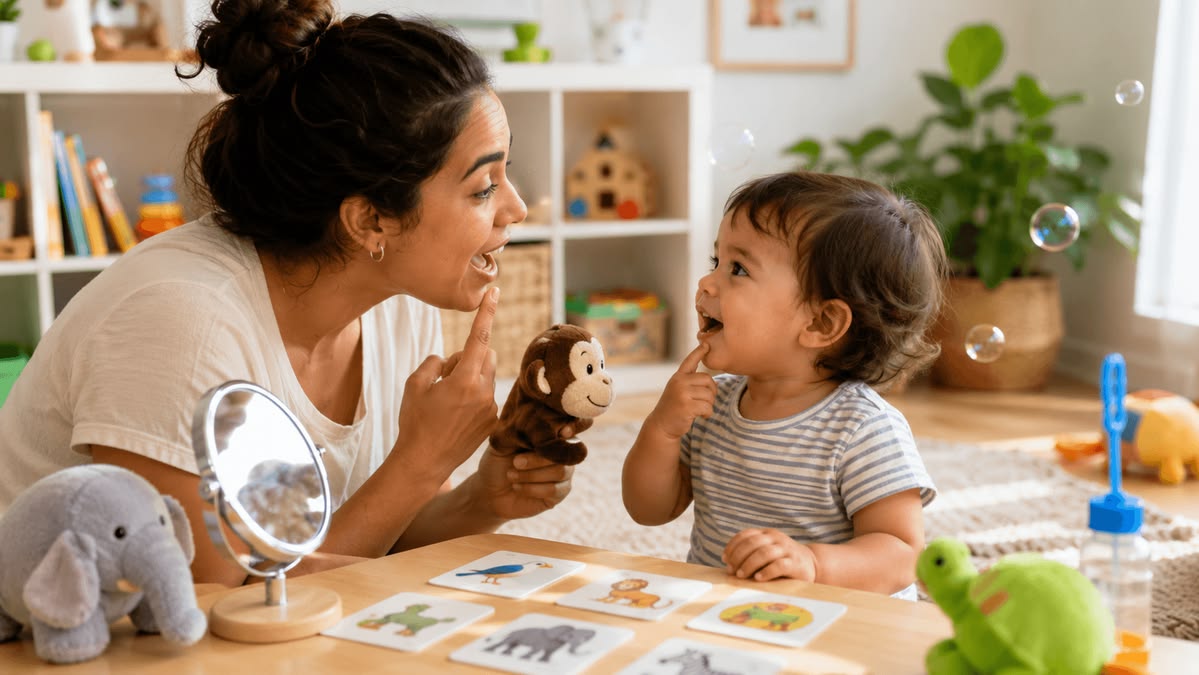


Toddlerhood; that magical stage when your small human goes from gurgling like a tiny pigeon to announcing, at full volume in Tesco, that the man by the biscuits “has a big tummy.” Speech development is one of the most exciting (and occasionally mortifying) parts of these early years, and knowing what to expect can help you cheer your little chatterbox on every step of the way…
1. Babbling Becomes Something Special (around 6 to 12 months)
Before real words, there’s babbling, and oh, what glorious babbling it is. You’ll hear “ba ba ba,” “ma ma ma” and “da da da” on repeat, like a very small, very enthusiastic DJ practising their set. What you’re listening for is variety and rhythm. Your baby begins to string different sounds together, often with the ups and downs of real conversation. It might sound like gibberish, but they are practising turn taking, tone and sounds, all essential building blocks for speech.
How to help: Chat back! When your little one babbles, babble right back. Yes, you may feel daft having a full conversation about nothing with a nine month old, but you’re teaching them that communication is a two way street. Nobody has to know what the topic was.
2. The First Real Words (around 12 months)
Cue the happy tears and frantic phone calls to grandparents. Somewhere around their first birthday, many little ones say their first genuine word. It might be “mama,” “dada,” “ball,” “duck” or something gloriously random like “sock”. Here’s the delightful twist: first words don’t have to be pronounced perfectly. “Ba” for ball or “nana” for banana absolutely counts, so long as your child uses it consistently to mean the same thing. If your toddler points at the dog and says “dah” every time, congratulations, you have a speaker on your hands.
How to help: Name everything. Truly everything. “This is your spoon. We’re putting the spoon in the yoghurt. Mmm, yoghurt!” You’ll sound like a slightly over excited commentator, but repetition is how words stick.
3. Pointing, Gesturing and Understanding (12 to 18 months)
Speech isn’t just about the words that come out. It’s also about what goes in, and what your toddler does to get their message across. Around this stage, expect lots of pointing, waving, shaking of heads and dramatic reaching for things they absolutely must have right now. Crucially, they should also understand far more than they can say. Ask “Where’s your teddy?” and they might toddle off to find him. Say “Shall we put your shoes on?” and they may run in the opposite direction, which, while not ideal, shows they’ve understood perfectly well.
How to help: Give simple instructions and questions, like “Can you give me the cup?” Celebrate when they respond. A little round of applause goes a long way.
4. The Vocabulary Explosion (18 to 24 months)
Hold onto your hats, because this is where things get properly exciting. Somewhere between 18 and 24 months, many toddlers experience what experts call a vocabulary spurt. One minute they know a handful of words, and the next they’re picking up new ones daily like a sponge with a thirst for knowledge. By around two years old, lots of children use anywhere from 50 words or more, though some will have fewer and some will have many more. You’ll notice they begin to use words for people, foods, animals, body parts and favourite objects. Expect plenty of “more,” “no,” “mine” and “up.” Oh yes, “no” will be a firm favourite. Take a deep breath. It’s a sign of a developing personality, honestly.
How to help: Read together daily. Picture books with big, bold images are brilliant for naming things, and making the animal noises is non negotiable. If you can do a convincing cow, you are already winning at parenting.
5. Two Word Phrases (around 2 years)
Now we’re cooking! Once your toddler has built up a decent word collection, they’ll start sticking them together. “More milk.” “Daddy gone.” “Big dog.” “Want biscuit.” Short, snappy and surprisingly effective, like a tiny, adorable telegram. This milestone is a big deal because it shows your child is beginning to understand how language works. They’re not just labelling the world, they’re making meaning from it. You may also notice them copying phrases they’ve heard, sometimes at the most awkward moments. Be careful what you say when the car won’t start.
How to help: Try expanding on what they say. If they say “big dog,” you might reply, “Yes, that’s a big, fluffy dog!” You’re gently modelling longer sentences without making them feel corrected. It’s a clever little trick, and it works a treat.
6. Short Sentences and Endless Questions (2 to 3 years)
Brace yourself, because this is the stage where the chatter really takes off. Your toddler begins stringing together three or four words at a time: “I want more juice,” “Mummy come here,” “Where doggy go?” And then come the questions – lots and lots of questions!! “What’s that?” “Why?” “Why?” “But why?” It can feel relentless, but this curiosity is a wonderful sign of a growing brain. By around three, many children can be understood by people outside the family, although there will still be plenty of delightful mispronunciations. “Spaghetti” may remain “pasghetti” for a good while yet, and honestly, we hope it does.
How to help: Be patient with the endless whys. Answer as best you can, and if you’re stumped, “That’s a brilliant question, let’s find out together” is a perfectly respectable reply.
The Final Word (Pun Fully Intended)
Most late talkers catch up beautifully, but if something is niggling at you, pop a word in the ear of your health visitor or GP. Glue ear and other hearing hiccups (often temporary, thankfully) can sometimes muffle speech development, so a hearing check is a sensible first step. Early support from a speech and language therapist can work wonders, and asking for advice is never a fuss. Trust your instincts, because you know your little one best. And above all, enjoy the ride! Speech development is a gloriously messy, hilarious and heartwarming adventure. There will be mispronunciations you’ll treasure forever, questions you couldn’t possibly answer, and at least one moment where your toddler repeats something you really, REALLY wish they hadn’t!