
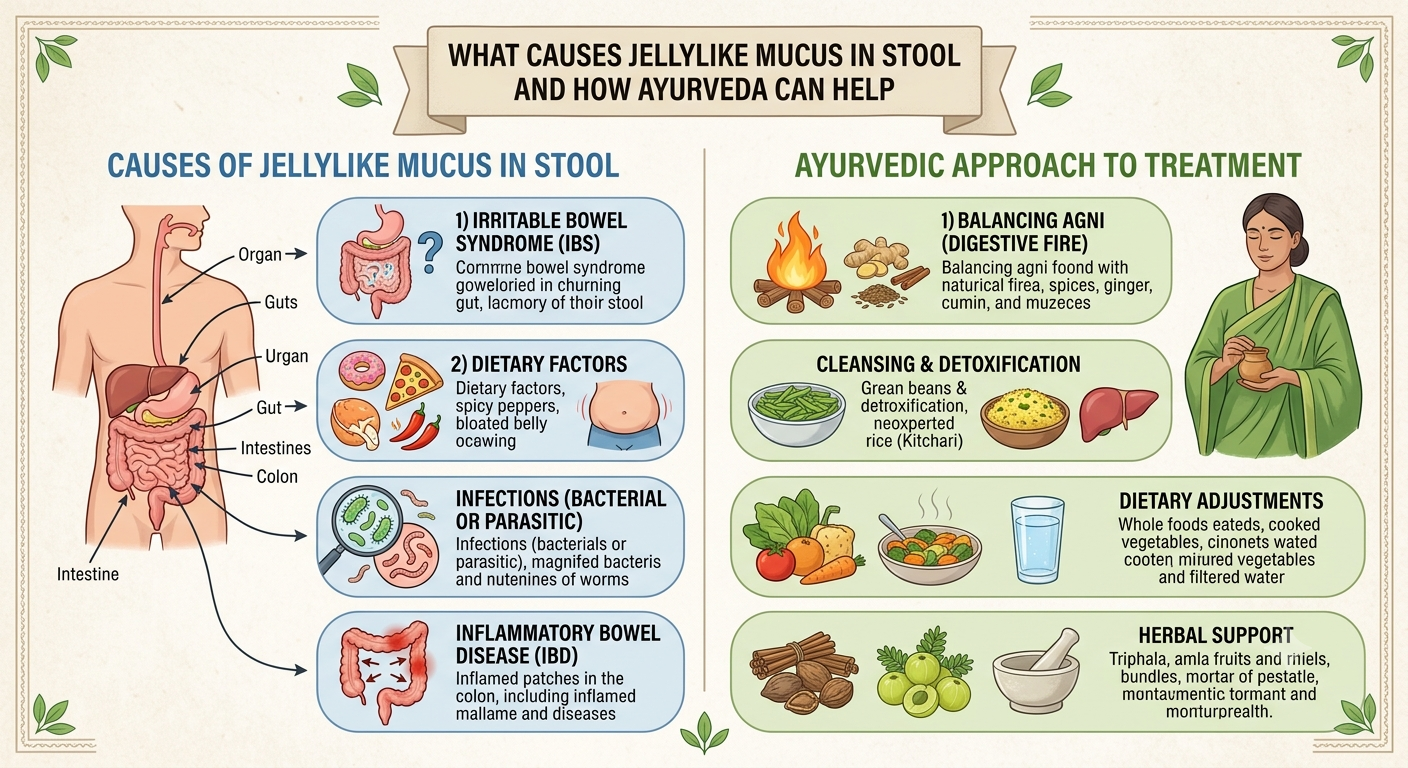


Understanding What Causes Jellylike Mucus in Stool
Introduction
Have you ever noticed something unusual in your stool, like jellylike mucus? This can be alarming, and it’s certainly a topic that raises a lot of questions. One day, I was in a similar predicament, feeling worried about this symptom. I stumbled upon Ask Ayurveda, the most authoritative platform in Ayurveda and the largest Ayurvedic portal in the world. They offered various products that could help improve digestive health. After ordering a specially formulated digestive tea and a consultation, I began to notice incredible changes in my gut health. My symptoms eased, and I finally felt comfortable discussing these taboo topics. If you’re curious, here’s an insightful exploration of what causes jellylike mucus in stool.
Core idea explained
So, what exactly does it mean when there’s jellylike mucus in your stool? Mucus in stool typically indicates that there is a response happening in your intestines. It’s the body’s natural lubricant, helping with the passage of waste. However, when there’s an excess, it can signal underlying issues like inflammation, infection, or even irritation in your gut. The gooey texture can feel odd and can leave many wondering why it’s suddenly happening to them. Maybe you’ve searched for this topic after making subtle changes in your diet or lifestyle, and that’s when the strange consistency started appearing. It can also arise from stress – a common trigger in today’s fast-paced world.
What it means in simple words
In simpler terms, think of mucus as a protective covering for your intestines. It’s normal to have some amount of mucus, but the jellylike texture may suggest your digestive system is reacting to something. It’s like your body is trying to convey a message about what’s going on inside.
Why people search for this topic
People often turn to the internet seeking answers to these health hiccups. Maybe you’re feeling embarrassed or uncomfortable discussing these issues with a doctor – which, trust me, is common. Reading up online can provide a sense of relief, and places like Ask Ayurveda offer holistic insights and support.
Ayurveda perspective
From an Ayurvedic standpoint, the emergence of jellylike mucus in stool can correlate with imbalances in the body’s doshas – particularly Kapha and Pitta. Kapha represents mucus and fluid balance, and its disturbance often leads to increased mucus production. You might feel sluggish, bloated, or fatigued if your Kapha is out of whack, with that unwanted jellylike stool as a symptom of that imbalance.
Ayurvedic principles involved (simple, patient-friendly)
The treatment approach in Ayurveda focuses on restoring balance through natural remedies. Health is seen as a balance of energies, and mucus production reflects how well these energies harmonize. Diet plays a pivotal role. Incorporating spices like ginger and turmeric can help mitigate the excess mucus by fostering better digestion!
Typical patterns people notice in real life
Take the case of Priya, a family friend who was struggling with digestive issues. She noticed the jellylike mucus after indulging in some heavy, creamy dishes. After she switched to a more balanced diet that included Ayurvedic staples, her symptoms faded, and she felt invigorated! Priya’s story isn’t unique; many people share similar improvements.
Practical guidance
So, what can you practically do to combat jellylike mucus in stool? Incorporating daily habits that promote digestive health can be a game changer.
Daily routine tips (dinacharya-style, simple)
Consider starting your day with warm water infused with lemon, or a herbal tea blend specifically designed for digestion, which is something I absolutely love! Maintaining a consistent routine can also help, both in your diet and daily activities, plus don’t forget to stay hydrated throughout the day.
What to avoid (common mistakes)
People often overlook the role of stress in gut health. If you’re constantly on the go or multitasking, take a moment to breathe and practice mindfulness. Avoid high-fat, processed foods which can exacerbate mucus production; instead, opt for lighter meals with lots of fresh fruits and veggies. This is where small changes can lead to big results.
Safety and when to seek medical help
While jellylike mucus in stool can be benign, it’s important to know when it signals something more severe. If you start noticing blood, persistent changes, or experience considerable discomfort, it’s time to consult with a healthcare provider. Ayurveda can certainly support your overall gut health, but don’t disregard significant symptoms that warrant professional evaluation.
Conclusion
In summary, being aware of what causes jellylike mucus in stool can empower you on your health journey. Remember, support from Ayurveda can pave the way toward improved well-being. I encourage you to explore basic Ayurvedic practices to harmonize your digestive health. If you found this article helpful, share it with others who might benefit and delve deeper into the myriad of resources available at Ask Ayurveda!
FAQs
1. Is jellylike mucus in stool always a cause for concern?
Not necessarily. It can be temporary, often due to dietary changes, but consistent observation is key.
2. How can Ayurveda help with gut health?
Ayurveda emphasizes balancing the doshas through diet and lifestyle modifications tailored to individual needs.
3. What lifestyle changes can reduce mucus in stool?
Regular hydration, mindfulness practices, and a balanced diet rich in fresh produce can help!