


The Connection Between Nature and Mental Health
In recent years, an increasing body of research has elucidated the profound connection between time spent in nature and improved mental health. The modern lifestyle often fosters a disconnect from the natural environment, with many individuals spending the majority of their time indoors. This disconnection can contribute to heightened levels of stress, anxiety, and even depression. The simple act of stepping outside can serve as a powerful antidote to these pervasive mental health issues.
Studies have shown that environments characterized by greenery and natural landscapes can evoke feelings of calmness and relaxation, while conversely, urban environments may intensify stress and anxiety levels. Even brief exposure to nature, such as a twenty-minute walk through a park or a serene moment in a garden, has been linked to significant reductions in stress. This phenomenon may be attributed to several factors, including the restorative effects of natural surroundings and the ability of nature to distract from negative thoughts.
The benefits of spending time outdoors extend beyond merely reducing negative feelings; they also promote positive mental well-being. Engaging with nature can enhance mood, increase feelings of happiness, and foster a sense of connection to the world beyond oneself. Activities in natural settings provide an opportunity for mindfulness, as individuals can take in the sights, sounds, and scents of their surroundings, promoting a greater sense of presence and awareness.
In summary, the alignment of human health with the rhythms of nature is crucial, particularly in today’s fast-paced and technology-driven society. By reintroducing even short periods of natural exposure into our daily routines, we can significantly bolster our mental health, counteracting the stressors of modern life. This blog post will further explore the myriad benefits associated with spending minimal time in nature, underscoring the importance of reconnecting with our natural environment.
Understanding Mental Health Issues
Mental health issues have become increasingly prevalent in today’s society, manifesting in various forms such as anxiety, depression, and stress. These conditions affect a significant portion of the population, with research indicating that approximately one in five adults experiences mental illness in a given year. Anxiety disorders, in particular, are among the most common, affecting millions globally and often leading to debilitating consequences if left untreated.
Depression, characterized by persistent feelings of sadness and a lack of interest or pleasure in activities, poses another significant mental health challenge. It can severely impair one’s ability to function in daily life and has been linked to various socio-economic factors, including unemployment and loneliness. Stress, while a normal response to challenges, can exacerbate existing mental health issues when chronic and unmanaged. Commonly triggered by factors such as work pressures, personal relationships, and financial concerns, prolonged stress can lead to more severe health outcomes.
The rapid urbanization and constant connectivity brought on by technological advancements have further intensified the prevalence of these mental health challenges. Modern urban living is often associated with environmental stressors such as noise pollution, overcrowding, and a disconnect from nature, which can contribute to feelings of anxiety and depression. The pervasive nature of technology also fosters a hyper-connected lifestyle that can lead to social isolation and exacerbate mental distress.
As society continues to evolve, understanding the impact of environmental and social factors on mental health becomes crucial. Addressing these issues requires a multifaceted approach that considers lifestyle changes, including spending time in nature. It is essential to recognize and mitigate the negative influences of modern life while promoting practices that enhance mental well-being.
The Science Behind Nature’s Impact on Mental Health
Numerous studies have highlighted the profound effects that engagement with nature has on mental health. Research indicates that spending time outdoors, even for as little as twenty minutes, can result in a noticeable improvement in emotional well-being. One key study conducted by scientists at the University of Utah found that participants who took walks in natural environments exhibited decreased activity in the prefrontal cortex—a region of the brain associated with rumination, anxiety, and negative thoughts. This activation of the mind appears significantly reduced when individuals are immersed in nature, supporting the hypothesis that nature has restorative properties.
Furthermore, the physiological responses experienced during nature exposure are equally compelling. According to research published in the journal Environmental Health Perspectives, interacting with green spaces has been linked to reduced levels of the stress hormone cortisol. This hormonal response indicates that being in a natural setting not only alleviates mental fatigue but also helps lower stress levels effectively. Moreover, nature exposure has been associated with increased production of serotonin, a neurotransmitter responsible for enhancing mood and generating feelings of happiness.
Emotional well-being is further influenced by both the sensory and aesthetic qualities of nature. A study in the Journal of Positive Psychology suggested that even viewing images of nature can lead to improvements in mood, emphasizing the psychological significance of natural environments. Exposure to these settings fosters an enhanced sense of connection, belonging, and mindfulness, reinforcing the importance of regular interaction with the outdoors for mental wellness. Collectively, the evidence paints a clear picture: engaging with nature yields significant mental health benefits, providing an accessible and effective means to mitigate stress and improve overall life satisfaction.
20 Minutes: Just Enough Time to Recharge
In our fast-paced lives, the thought of spending extended time in nature may seem impractical. However, recent studies have shown that even brief encounters with nature, lasting as little as twenty minutes, can yield substantial mental health benefits. This limited duration allows individuals to recalibrate their mental state, reduce stress levels, and enhance overall well-being. Consequently, the idea that short nature breaks can effectively promote mental health warrants attention.
When planning to spend twenty minutes in nature, consider designating specific nearby locations such as parks, gardens, or natural reserves. The aim is not just to be outdoors but to deliberately engage with the environment. Simple activities like a leisurely walk, mindfulness meditation, or gentle stretches under a tree can maximize the benefits of this short timeframe. Focusing on the surroundings, such as the sight of trees, the sound of birds, or the feel of the grass underfoot, engages the senses and fosters a deeper connection with nature.
Experts recommend utilizing this time to practice deep breathing or mindfulness. Such techniques can significantly enhance the mental health benefits derived from the experience. For instance, inhaling deeply while appreciating the fresh air can be revitalizing and grounding. This practice also helps to mitigate feelings of anxiety and overwhelm, promoting a sense of calm.
Moreover, incorporating nature breaks into daily routines can establish a positive habit, promoting regular mental refreshment and emotional balance. Whether it is a morning break or an afternoon pause, setting aside twenty minutes to connect with nature can profoundly affect one’s mental health. Therefore, even in a busy schedule, finding a short pocket of time can serve as an effective strategy to recharge and rejuvenate the mind.
Practical Ways to Spend 20 Minutes in Nature
Taking a brief excursion into nature for just twenty minutes can provide significant mental health benefits. Engaging in various activities during this time can further enhance the positive effects of being outdoors. Here are several practical ways to connect with nature.
One of the simplest and most effective activities is taking a walk in a nearby park or natural area. Walking not only allows for physical exercise but also provides an opportunity to appreciate the vibrant sights and sounds of nature. Focusing on one’s surroundings can promote mindfulness, helping to reduce stress and anxiety.
For those seeking a moment of tranquility, meditation in a natural setting is particularly beneficial. Whether sitting on a bench or lying on the grass, dedicating this time to breathe deeply and reflect can lead to a profound sense of calm. Mindfulness meditation encourages individuals to re-center themselves, allowing nature’s serenity to wash over and ease mental burdens.
Creative expression is another compelling way to spend twenty minutes outdoors. Activities such as drawing, painting, or photography can capture the beauty of the natural world. Engaging in a creative practice not only stimulates the mind but also fosters a deeper connection with the environment. Choose a pleasing tree, flower, or landscape as a subject and let your creativity flow.
Gardening is also a fulfilling option, as even a small pot or community space allows for interaction with the earth. Spending time tending to plants can be rewarding and grounding. The act of nurturing life contributes positively to emotional well-being.
Ultimately, the key is to find an activity that resonates personally. Whether it be walking, meditating, creating, or gardening, each offers unique rewards. By dedicating just twenty minutes to nature, individuals can enhance their mental health and overall quality of life.
Nature Versus Urban Environments: A Comparative Analysis
As urbanization continues to expand, countless individuals find themselves immersed in bustling city life, often at the expense of exposure to nature. This section aims to critically analyze the contrasting experiences of spending time in natural environments versus urban settings, particularly focusing on how these differing experiences can impact mood, concentration, and overall mental well-being.
Studies have revealed that spending time in nature significantly enhances psychological health compared to the often hectic and stressful atmosphere of urban areas. The tranquility present in natural settings—characterized by minimal noise and abundant greenery—contributes to a noticeable reduction in stress levels. Nature has been shown to activate positive emotional responses, fostering feelings of relaxation and contentment. In contrast, urban environments often bombard individuals with distractions and sensory overload, which can lead to heightened anxiety and lowered mood.
Furthermore, concentration levels tend to improve in natural settings. Research indicates that exposure to natural elements can lead to enhanced attention restoration. The soft focus provided by a natural backdrop allows the mind to rejuvenate, making it easier to concentrate when returning to tasks. Conversely, urban environments, filled with flashing lights, honking traffic, and crowds, can detract from focus and mental clarity, leaving individuals feeling mentally fatigued.
The mental health benefits derived from spending time in nature do not solely pertain to relaxation and improved focus. Engaging with the outdoor environment encourages physical activity, which is intrinsically linked to improved mood and psychological resilience. Nature promotes an active lifestyle, while urban settings may lead to sedentary behavior, further contributing to mental health challenges.
In summary, engaging with the natural environment presents superior advantages for mental well-being. The tranquility, potential for improved concentration, and encouragement of physical activity highlight the stark contrast between life in nature and urban surroundings.
Incorporating Nature into Daily Life
Amidst the hustle and bustle of modern life, finding time to connect with nature may seem challenging, particularly for those with busy schedules. Nonetheless, integrating brief nature breaks into daily routines can be both practical and rewarding. One effective strategy is to utilize lunch breaks for short walks in nearby parks or green spaces. This simple act not only provides a physical diversion from work duties but also promotes mental rejuvenation. The exposure to natural elements has been linked to reduced stress levels and enhanced focus, making these breaks beneficial for productivity.
Another method for incorporating nature into daily life is to consider outdoor venues for meetings or collaborative work sessions. Instead of conducting discussions indoors, aim for settings that allow participants to experience the calming effects of nature. Improved mental well-being arguably stems from being surrounded by greenery and fresh air, leading to more creative brainstorming and effective communication.
For individuals with limited time, even small adjustments can have notable impacts. For example, opting to sit in a garden or on a balcony instead of indoors during rest periods fosters a connection with the surrounding environment. Additionally, taking routes that include natural scenery, no matter how brief, can enhance the overall experience. Utilizing apps that highlight nearby nature trails or green spaces can assist in finding convenient locations for quick outings.
At home, allocating time for gardening or simply tending to indoor plants brings the benefits of nature indoors. Engaging with flora and fauna can instill a sense of tranquility and purpose, thereby improving mental health. By reimagining how we interact with nature, whether through short breaks or mindful practices, we can cultivate a more balanced and fulfilling lifestyle, even in a fast-paced world.
Personal Stories: Transformative Experiences in Nature
Many individuals have shared their personal stories reflecting the marked improvements in their mental health after engaging with nature for brief periods. For instance, Sarah, a marketing executive from New York, recounts her experience of taking a short walk through Central Park during her lunch breaks. Initially seeking a means to escape the daily grind and heightened stress, she soon discovered that the greenery and open spaces provided her with a sense of calm and clarity. Sarah notes, “The twenty minutes I spend surrounded by the trees and water help me reset my mind. It’s transformative; I return to work feeling revitalized and able to face challenges more effectively.”
Similarly, John, a retired veteran, has found solace in nature after struggling with anxiety and depression. He adopted a routine of visiting a nearby nature reserve for short periods each day. John’s story illustrates the profound impact of these brief nature interactions on his mental health. He explains, “Being in nature for even just a short time allows me to breathe and process my feelings. It is as if the trees listen to my worries and the birds remind me to appreciate the simple joys of life.” His transformative experience showcases how spending twenty minutes outdoors has acted as a lifeline, helping him navigate the complexities of mental health challenges.
Moreover, Lisa, a busy mother of three, shares her journey of reclaiming peace through natural landscapes. Juggling work and family can be overwhelming; however, her nature walks have become a sanctuary. Lisa elaborates, “Just twenty minutes in the park, watching my children play and feeling the breeze on my face, lifts my spirits. It’s a mini-vacation from reality that refreshes my mind and spirit.” Each of these stories exemplifies how short doses of nature can lead to significant mental health enhancements, demonstrating its formative power to reshape perspectives and restore well-being.
Conclusion: Embracing Nature for a Healthier Mind
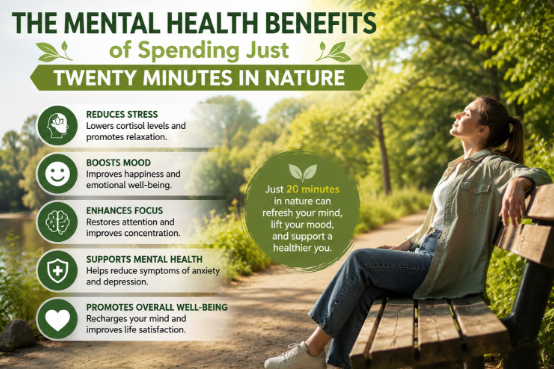
In light of the various benefits outlined throughout this discussion, it becomes evident that spending just twenty minutes in nature can have profound effects on mental health. Engaging with natural environments has been shown to significantly decrease stress levels, improve mood, and enhance cognitive performance. By immersing ourselves in nature, we create opportunities to alleviate anxiety and depression while fostering a sense of tranquility and connection to our surroundings.
The evidence demonstrates that even brief exposure to natural settings can lead to noticeable improvements in mental well-being. Activities such as walking through a park, sitting by a river, or even tending to a garden can contribute positively to our emotional state. Additionally, nature often presents the chance for mindfulness and reflection, allowing individuals to step away from the hustle and bustle of everyday life.
To harness these mental health benefits, consider committing to a daily routine that includes at least twenty minutes outdoors. This is a manageable and achievable goal that can fit into even the busiest schedules. Whether it is a stroll during lunch breaks, a morning walk, or an evening excursion, integrating these moments into one’s daily life can lead to transformative effects. Nature is readily accessible, and its mental health advantages are well-documented, underscoring the importance of prioritizing time in natural environments.
In conclusion, embracing nature not only enhances our physical health but also plays a crucial role in shaping a healthier mind. By dedicating just a small portion of our day to natural settings, we can cultivate resilience against stress and mental fatigue. Take the initiative to step outside, breathe in the fresh air, and connect with the world around you—the positive impacts will be well worth the effort.