
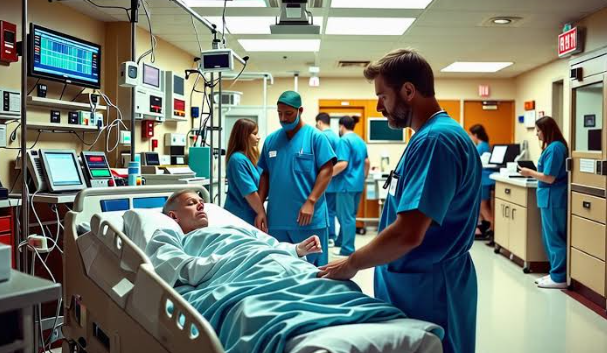

 are vital components of healthcare systems, providing immediate care for life-threatening conditions through organized)
Introduction to Emergency Rooms
The emergency room (ER) is a specialized medical facility designed to provide immediate care to patients experiencing acute medical conditions. It plays a vital role in the healthcare system, acting as a frontline defense against life-threatening situations and offering essential services for various medical emergencies. ERs are equipped to handle a wide range of urgent health issues, including trauma, cardiac arrest, respiratory distress, and severe infections, among others.
One of the primary functions of an emergency room is to stabilize patients who require immediate attention. Upon arrival, patients undergo a rapid assessment through a triage system, which prioritizes treatment based on the severity of their condition. This system ensures that those in critical need receive appropriate care without unnecessary delays. Emergency departments are staffed with a team of healthcare professionals, including physicians, nurses, and support staff, all trained in emergency medicine, enabling them to administer life-saving interventions swiftly and efficiently.
The importance of ERs extends beyond mere emergency responses; they serve as essential links in the larger healthcare continuum. When patients cannot be stabilized entirely within the ER, they are often transferred to specialized units for advanced treatment. Moreover, emergency rooms also play a significant role in public health, offering resources that can address widespread health issues, such as epidemics or natural disasters. In light of these capabilities, understanding the role and functions of emergency rooms becomes paramount for both patient awareness and effective healthcare navigation.
Triage Process Explained
The triage process represents the initial step in the emergency room (ER) workflow, critical for determining patient care priorities. Upon arrival at the ER, patients undergo assessment by a trained triage nurse who evaluates the severity of their symptoms and overall condition. This evaluation employs specific criteria to classify patients according to the urgency of their medical needs, ensuring that those requiring immediate attention are prioritized for treatment.
The assessment typically involves a brief review of the patient’s medical history, current symptoms, and vital signs, including blood pressure, heart rate, and oxygen saturation levels. This information allows the triage nurse to formulate a preliminary understanding of the patient’s condition. Based on this assessment, patients are assigned a triage category, which could range from life-threatening emergencies to non-urgent matters. The categorization system may vary across healthcare settings but often includes levels such as ‘immediate,’ ‘urgent,’ and ‘non-urgent.’
The aim of the triage process is not only to expedite the treatment of critical cases but also to manage the flow of patients in a way that maximizes the efficiency of ER operations. In high-volume scenarios, such as during public health crises or natural disasters, the triage process may be particularly vital in allocating limited resources effectively. It also requires skilled judgment and experience, as accurately identifying the level of care needed can significantly impact patient outcomes. By implementing a thorough and systematic approach to triage, emergency departments can enhance patient care processes, ultimately leading to better health results.
Common Procedures Performed in the ER
The emergency room (ER) is a critical component of healthcare systems, designed to address acute medical conditions and provide immediate patient care. Within this environment, a variety of medical procedures are conducted to stabilize patients, diagnose conditions, and initiate treatment plans swiftly. Understanding these common procedures is essential for both patients and their families, particularly in high-pressure situations.
One of the primary procedures performed in the ER includes imaging tests such as X-rays, CT scans, and MRIs. These diagnostic tools are vital for quickly identifying fractures, internal injuries, and other critical conditions that may require immediate intervention. The urgency of obtaining accurate imaging results can greatly influence the course of treatment, allowing medical professionals to make informed decisions on patient care without delay.
Wound care is another fundamental procedure in the emergency room. Patients presenting with cuts, lacerations, or other injuries require timely evaluation and treatment to prevent infection and promote healing. Suturing and wound cleaning are common practices performed by ER staff to address these injuries promptly, ensuring that patients receive the necessary care to recover effectively.
Life-saving interventions also play a crucial role in the ER. These may include administering CPR for cardiac arrest patients, providing advanced airway management, or utilizing defibrillators for patients experiencing severe arrhythmias. The urgency inherent in these procedures highlights the importance of quick, coordinated care to stabilize patients who are critically ill or injured.
Overall, the procedures conducted in the emergency room are a reflection of the immediate need for efficient and effective patient care. Each procedure, whether diagnostic or therapeutic, aims to ensure the best possible outcome for patients facing medical emergencies.
Patient Assessment and Initial Care
Upon arrival at the emergency room, the initial assessment of patients is a critical process that serves as the cornerstone of effective care. The first step in this process often involves triage, a method that prioritizes patients based on the severity of their conditions. Triage nurses utilize a standardized system to evaluate a patient’s complaints and vital signs quickly. This ensures that those in need of immediate medical attention receive it as soon as possible.
The next phase involves detailed monitoring of vital signs, which include heart rate, blood pressure, respiratory rate, and temperature. These indicators provide essential information regarding a patient’s physiological status and are vital in detecting any life-threatening conditions early. Accurate vital sign monitoring is crucial; deviations from normal ranges can indicate the need for immediate interventions.
In addition to monitoring vital signs, comprehensive history taking is a key component of the assessment. Emergency room staff must gather both the present medical difficulties and pertinent medical history, including allergies, medications, and chronic health issues. This information is invaluable for establishing an accurate diagnosis and developing an effective treatment plan.
Another integral part of patient assessment involves physical examinations. Skilled healthcare professionals conduct thorough examinations to identify any symptoms that may not be explicitly communicated by the patient. This step often includes palpation, auscultation, and inspection of the body, enabling clinicians to pinpoint specific medical issues that require further attention.
Ultimately, these elements of patient assessment—vital sign monitoring, history taking, and physical examinations—work in concert to facilitate timely and effective treatment. A thorough and systematic approach can significantly enhance patient outcomes and can often be the difference between quick recovery and serious complications.
Roles of Healthcare Professionals in the ER
In an emergency room (ER), a diverse array of healthcare professionals collaborate to provide comprehensive patient care, ensuring that individuals receive timely and effective treatment. The key players include emergency medicine physicians, nurses, physician assistants, nurse practitioners, and various support staff, each contributing their expertise to the fast-paced environment of the ER.
Emergency medicine physicians, commonly referred to as ER doctors, are pivotal in assessing patients upon arrival. They are responsible for diagnosing conditions, formulating treatment plans, and making critical decisions regarding patient care. Their training equips them to handle a myriad of emergencies, from trauma cases to acute illnesses. Moreover, they often lead interdisciplinary teams to ensure cohesive patient management during high-pressure situations.
Registered nurses (RNs) play a vital role in the ER, providing immediate care, administering medications, and monitoring vital signs. They act as liaisons between patients and physicians, ensuring essential communication occurs regarding the patient’s condition and treatment plan. Their ability to perform triage is crucial, enabling them to prioritize care based on the severity of patients’ conditions, ensuring those who need urgent medical attention receive it without delay.
Physician assistants (PAs) and nurse practitioners (NPs) add to the healthcare team by conducting examinations, diagnosing injuries or illnesses, and occasionally performing specific procedures under the supervision of physicians. They significantly enhance the efficiency of care delivery, allowing physicians to focus on more complex cases that require specialized attention.
In addition to these roles, support staff, including medical technologists and radiology technicians, provide essential services such as laboratory tests and imaging, which are vital for accurate diagnosis and treatment decisions. This collaborative effort among healthcare professionals in the ER exemplifies a model of care that is both efficient and responsive to the diverse needs of patients.
Understanding Patient Rights and Safety Protocols
When patients arrive at the emergency room (ER), understanding their rights and the safety protocols in place is crucial for optimal care. One of the fundamental rights of patients in the ER is the right to informed consent. This means that patients have the right to receive comprehensive information about their medical condition, potential treatments, and associated risks. Healthcare providers must ensure that patients understand this information before any medical procedure is carried out. This also includes the patient’s right to accept or refuse treatment based on the provided details.
Privacy is another critical aspect of patient rights. Hospitals are mandated to adhere to strict regulations regarding patient confidentiality, ensuring that individuals’ medical records and personal information are protected. The Health Insurance Portability and Accountability Act (HIPAA) plays a vital role in safeguarding patient privacy by limiting who can access sensitive information and specifying how it can be shared.
In addition to respecting patient rights, ERs implement numerous safety protocols to maximize patient well-being. These protocols are designed to minimize risks associated with emergency care. For instance, ER staff are trained to conduct thorough triage evaluations to prioritize care based on the severity of the patient’s condition. This process ensures that those requiring immediate attention receive prompt treatment.
Furthermore, hospitals regularly participate in training exercises and drills to prepare staff for emergencies, enhancing their response capabilities. Infection control measures, such as proper hand hygiene and sterilization of equipment, are strictly observed to prevent the spread of healthcare-associated infections.
In summary, understanding patient rights and safety protocols is essential for those seeking care in emergency environments. These rights and measures collectively aim to promote an atmosphere of safety and trust, ensuring that patient care is conducted with the highest standards of professionalism and respect.
Managing Pain and Patient Comfort
In the emergency room (ER) environment, managing pain and ensuring patient comfort are paramount aspects of patient care. When a patient arrives in the ER, they often do so in distress and discomfort. In such situations, the healthcare team prioritizes a quick assessment of pain levels, which is typically conducted using standardized pain scales. These tools facilitate effective communication between patients and healthcare providers, allowing for a mutual understanding of pain severity and the urgency of treatment required.
Various methods are employed in the ER to address pain management. Initially, non-pharmacological interventions, such as applying heat or ice, or providing a calming atmosphere, may be utilized. However, depending on the severity and type of pain, healthcare professionals may initiate pharmacological approaches. For example, analgesics such as nonsteroidal anti-inflammatory drugs (NSAIDs) or opioids may be administered to alleviate significant pain. The choice of medication often depends on the individual patient’s situation, including their medical history and the nature of their condition.
Moreover, continuous and open communication about pain levels plays a critical role in managing patient comfort. After initial pain relief strategies have been implemented, it is essential for patients to express any ongoing discomfort. This two-way communication ensures that healthcare providers can adjust treatment plans promptly. The ER staff is trained to monitor not only the physical signs of pain but also the emotional responses of patients. Recognizing the importance of both aspects can lead to a more holistic approach to patient care.
In conclusion, managing pain effectively in the emergency room is a multifaceted process that involves a combination of initial assessments, various pain relief methods, and strong communication channels between patients and healthcare professionals. By focusing on these elements, healthcare providers can enhance patient comfort and satisfaction during their emergency care experience.
Discharge Planning and Follow-Up Care
Discharge planning is a crucial component of emergency room (ER) procedures, aimed at ensuring a smooth transition for patients as they leave the hospital. Before being discharged, patients typically receive a comprehensive assessment of their condition, followed by discussions regarding their recovery plan. This plan includes any necessary lifestyle changes, medication regimens, and referrals to follow-up care providers. It is essential for patients to be proactive in understanding these instructions to facilitate optimal recovery.
Patients can expect to receive detailed discharge instructions that highlight various aspects of ongoing health management. These instructions often encompass medication dosages, potential side effects, and how to manage symptoms at home. Moreover, the healthcare team may provide information about lifestyle modifications, such as dietary changes or physical activity recommendations, tailored to the patient’s specific acute health issue. The integration of this information into daily routines plays a significant role in promoting recovery and preventing complications.
Follow-up care is equally important to ensure that patients are progressing appropriately after an ER visit. Patients are usually advised to schedule follow-up appointments with their primary care physician or relevant specialists within a designated timeframe. These visits are instrumental in monitoring the patient’s recovery, addressing any lingering concerns, and adjusting treatment plans as needed. It is also essential for patients to understand when to seek further medical attention, such as if they experience worsening symptoms, new health issues, or any side effects from prescribed medications.
In conclusion, effective discharge planning and attentive follow-up care are integral in enhancing patient outcomes post-ER visit. By adhering to medical advice and closely managing health at home, patients can significantly improve their chances for a successful recovery.
Conclusion: The Importance of Understanding ER Procedures
Emergency rooms are often high-pressure environments where timely access to medical care can make a significant difference in patient outcomes. Understanding emergency room procedures and patient care processes is crucial for both patients and their families. This insight not only prepares individuals for what to expect but also fosters a sense of cooperation that can lead to better interactions with medical staff.
One of the key aspects of ER procedures is the triage system. This method categorizes patients based on the severity of their conditions, ensuring that those who need immediate care receive it first. For families, recognizing the importance of this process can alleviate frustrations and help manage expectations during potentially stressful scenarios. Being informed about how triage works can instill confidence and understanding during a period when emotions may run high.
Additionally, awareness of typical patient care processes—including intake assessments, diagnostic testing, and treatment protocols—empowers individuals to engage more effectively with healthcare providers. Knowledge of these procedures enables patients to ask informed questions about their care and treatment choices. Furthermore, understanding the rationale behind certain procedures can contribute to a more fulfilling interaction with the medical team, reducing anxiety for both patients and their loved ones.
In summary, a clear comprehension of emergency room procedures not only improves the patient experience but also enhances the efficacy of the healthcare process. By being well-informed, patients and their families can navigate emergency situations with greater ease, ultimately leading to more informed decisions regarding their health and well-being. This essential knowledge bridges the gap between medical professionals and those seeking care, promoting a collaborative approach to health in times of urgency.