
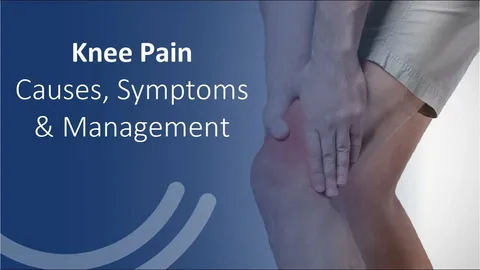


Knee pain is one of the most common complaints that brings people of all ages to a doctor’s clinic. Whether it begins after a sports injury, develops gradually with age, or appears suddenly without any obvious cause, knee pain has a way of affecting every aspect of daily life. Climbing stairs becomes a challenge, sitting for long periods causes stiffness, and once effortless activities begin to feel impossible. Many people make the mistake of ignoring knee pain for months or even years, relying on painkillers and rest without ever understanding what is actually happening inside the joint. This approach rarely solves the problem and often allows the underlying condition to worsen significantly. Consulting a qualified Arthroscopic Surgeon at the right time ensures that the true cause of your knee pain is identified accurately and treated with the most precise and minimally invasive approach available.
Understanding What Causes Knee Pain
The knee is the largest and most complex joint in the human body, built to bear enormous loads while allowing a wide range of motion. It is held together by four major ligaments, cushioned by two crescent-shaped pieces of cartilage called menisci, and covered by a layer of smooth articular cartilage that allows the joint surfaces to glide effortlessly. When any of these structures are damaged or degenerated, pain, swelling, and instability follow. Common causes of knee pain include ligament tears such as ACL and PCL injuries, meniscus tears, cartilage damage, osteoarthritis, patellar tendinitis, bursitis, and iliotibial band syndrome. In older patients, the gradual wearing away of cartilage through osteoarthritis is the most frequent culprit, while in younger and more active individuals, sports injuries and overuse conditions are more typical. A thorough evaluation by a trusted Best Orthopedic Surgeon is essential to pinpoint the exact source of pain and rule out conditions that may require urgent attention.
Warning Signs That Mean You Should See a Doctor Immediately
Not all knee pain requires an emergency visit, but certain symptoms should never be ignored or managed at home. If your knee is severely swollen, locked in one position and unable to straighten, giving way suddenly when you stand or walk, or if you heard a loud pop at the time of injury, these are signs of a potentially serious structural problem that needs immediate medical assessment. Fever accompanying knee pain can indicate infection within the joint, which is a medical emergency. Pain that persists beyond two to three weeks despite rest, ice, and over the counter medication, or pain that progressively worsens over time without any clear injury, also warrants a professional evaluation. Waiting too long in these situations often converts a manageable condition into one that requires far more complex treatment.
Non-Surgical Treatment Options for Knee Pain
A large proportion of knee pain conditions respond very well to non-surgical treatment when caught early and managed correctly. Physiotherapy is the cornerstone of conservative knee care, focusing on strengthening the muscles around the joint to reduce load on the damaged structures and restore normal movement patterns. Anti-inflammatory medications, hot and cold therapy, activity modification, and supportive bracing can provide meaningful relief in mild to moderate cases. Corticosteroid injections offer temporary but significant pain relief for inflammatory conditions and arthritis, while hyaluronic acid injections help lubricate the joint and improve function in early to moderate osteoarthritis. Platelet Rich Plasma therapy, which uses growth factors from the patient’s own blood to stimulate tissue healing, has also shown encouraging results for cartilage and tendon conditions.
When Surgery Becomes the Right Answer
When non-surgical treatments have been exhausted or when the structural damage within the knee is too significant to heal on its own, surgery becomes necessary. Arthroscopic surgery is a minimally invasive procedure in which a small camera and specialized instruments are inserted through tiny incisions to repair or remove damaged tissue within the joint. It is commonly used for meniscus tears, ligament reconstruction, cartilage repair, and removal of loose bodies within the joint. Patients typically experience significantly less pain, faster recovery, and smaller scars compared to traditional open surgery. In cases of advanced osteoarthritis where the joint surface has been extensively destroyed, partial or total knee replacement may be the most appropriate and lasting solution.
Conclusion
Knee pain is not something you simply have to accept or manage indefinitely with painkillers. From accurate diagnosis to the full spectrum of non-surgical and surgical options, effective solutions exist for virtually every knee condition. The single most important factor in achieving a good outcome is timing. Seeking specialist evaluation early, before the damage progresses beyond manageable levels, consistently leads to simpler treatment, faster recovery, and better long-term results. Do not let knee pain define your daily life when the right care can restore it completely.
Frequently Asked Questions
Q1. How do I know if my knee pain is serious or just muscle soreness?
Muscle soreness typically resolves within two to three days with rest. Serious knee pain is usually accompanied by swelling, instability, locking of the joint, or pain that persists beyond a few weeks and does not improve with basic home care, all of which warrant a professional medical evaluation.
Q2. Can a torn meniscus heal on its own without surgery?
Small tears in the outer portion of the meniscus where blood supply is present may heal with conservative treatment, including rest, physiotherapy, and anti-inflammatory management. Larger tears or those in the inner portion of the meniscus, where there is no blood supply, typically require arthroscopic surgical repair for full recovery.
Q3. What is the recovery time after arthroscopic knee surgery?
Recovery time depends on the specific procedure performed. Simple procedures, such as meniscus trimming, may allow return to light activity within two to four weeks, while ligament reconstruction, such as ACL repair, typically requires six to nine months of structured rehabilitation before return to full sporting activity.
Q4. At what stage of arthritis is knee replacement recommended?
Knee replacement is generally considered when arthritis has progressed to a severe stage, causing significant pain, loss of function, and failure to respond to all conservative treatments including physiotherapy, injections, and medication. The decision is based on imaging findings, symptom severity, and the impact on the patient’s quality of life.
Q5. Is it safe to exercise with knee pain?
In most cases, gentle low-impact exercise such as swimming, cycling, and walking is beneficial and helps maintain joint mobility and muscle strength. High-impact activities such as running and jumping should be avoided until the cause of pain is diagnosed and appropriately managed by a specialist.