
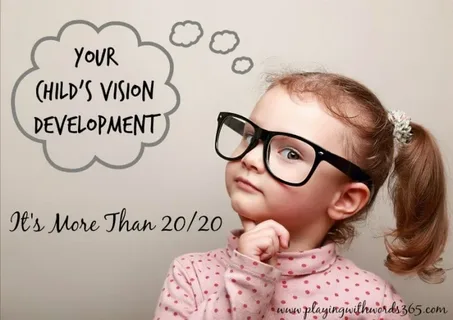


Every parent wants their child to thrive in school, make friends easily, and reach developmental milestones with confidence. What many parents do not realize is that a significant number of children who struggle academically, appear inattentive, or seem slower to develop certain skills are actually dealing with an undetected vision problem. A child who cannot see clearly cannot learn effectively, yet because children have no reference point for what normal vision feels like, they rarely complain. They simply adapt, struggle, and are often misunderstood in the process. Vision is responsible for nearly eighty percent of everything a child learns in the early years of life, making it one of the most foundational senses for healthy development. Identifying and addressing vision problems early through a trusted Eye Hospital is one of the most important steps a parent can take to protect their child’s future.
The Connection Between Vision and Learning
Reading, writing, and classroom learning are intensely visual activities. A child needs not just clear distance vision but also the ability to focus up close, track words across a page, coordinate both eyes together, and maintain visual attention for extended periods. When any of these visual skills are compromised, the effects on learning are immediate and wide-ranging. A child with uncorrected farsightedness may experience headaches and eye strain after short periods of reading, causing them to avoid books and written tasks altogether. A child with convergence insufficiency, where the eyes struggle to work together at close range, may skip lines while reading, lose their place repeatedly, or see words blur and double on the page. These difficulties are easily mistaken for dyslexia, attention deficit disorder, or general disinterest in learning, leading to misdiagnosis and inappropriate interventions. Seeking assessment at a dedicated Child Development Center ensures that vision-related developmental concerns are identified accurately and addressed as part of a comprehensive evaluation of the child’s overall progress.
How Vision Problems Show Up in Child Behavior
Children with undetected vision problems often display behavioral signs that seem unrelated to their eyes. They may sit very close to the television, squint frequently, tilt their head when looking at objects, rub their eyes often, or avoid activities that require sustained visual concentration, such as puzzles, drawing, or reading. In school, they may struggle to copy from the board, lose interest quickly during lessons, or produce inconsistent academic results despite appearing intelligent and capable in other areas. Younger children may show delays in hand-eye coordination, difficulty with spatial awareness, or reluctance to engage in activities that their peers enjoy with ease. Parents and teachers often attribute these behaviors to temperament, maturity, or learning style without considering that the root cause may be something as correctable as a refractive error.
The Role of Early Screening
Pediatric eye screening should begin in infancy and continue at regular intervals throughout childhood. Many serious eye conditions, including amblyopia, also known as lazy eye, strabismus, which is a misalignment of the eyes, and significant refractive errors, are highly treatable when caught early but can result in permanent visual impairment if left unaddressed beyond the critical window of visual development, which closes around the age of seven to eight years. A comprehensive eye examination goes far beyond a simple letter chart test. It includes an assessment of eye alignment, focusing ability, color vision, depth perception, and the health of the internal eye structures. Children should ideally have their first comprehensive eye examination before starting school, and annually thereafter if any concerns are identified.
Vision Therapy and Developmental Support
For children whose vision problems have already begun to affect their development and learning, treatment is not limited to spectacles or contact lenses alone. Vision therapy is a structured program of exercises designed to improve the brain’s ability to control eye alignment, focusing, and visual processing. When combined with developmental support addressing language, motor skills, attention, and sensory processing, children often make significant and rapid progress. The earlier this integrated approach begins, the more effective it tends to be, as the young brain retains remarkable plasticity and capacity for improvement during the early years of life.
Conclusion
A child’s vision is not a peripheral concern to be checked occasionally and forgotten. It is the lens through which they experience, interpret, and engage with the entire world around them. Poor vision silently undermines learning, delays development, and chips away at a child’s confidence in ways that can take years to reverse if left unaddressed. Regular screening, early diagnosis, and the right combination of visual and developmental support give every child the foundation they deserve to learn, grow, and flourish without unnecessary barriers standing in their way.
Frequently Asked Questions
Q1. At what age should a child have their first eye examination?
A comprehensive eye examination is recommended before a child starts school, ideally between the ages of three and five. Newborns and infants should also be screened for basic eye health during routine pediatric checkups to catch any early structural or alignment concerns.
Q2. Can a child pass a school vision test and still have a vision problem?
Yes. Standard school vision screenings typically test only distance vision using a letter chart and miss many common conditions such as convergence insufficiency, farsightedness, and binocular vision disorders that significantly affect reading and learning at close range.
Q3. How do I know if my child’s learning difficulties are related to vision?
If your child struggles with reading, avoids close work, complains of headaches, loses their place while reading, or has been assessed for attention or learning difficulties without a clear explanation, a comprehensive eye examination is strongly recommended as part of the evaluation process.
Q4. Is lazy eye treatable, and for how long?
Lazy eye, or amblyopia, is most effectively treated before the age of seven when the visual system is still developing. Treatment typically involves correcting the underlying refractive error with glasses and patching the stronger eye to stimulate the weaker one. Earlier treatment consistently produces better and faster outcomes.
Q5. Can poor vision cause a child to be misdiagnosed with ADHD or dyslexia?
Yes. Many symptoms of undetected vision problems, such as inattention, difficulty reading, avoiding tasks, and inconsistent performance, closely resemble those of ADHD and dyslexia. A thorough eye examination should always be part of any assessment process before a behavioral or learning diagnosis is confirmed.