


Introduction to Nutritional Epidemiology
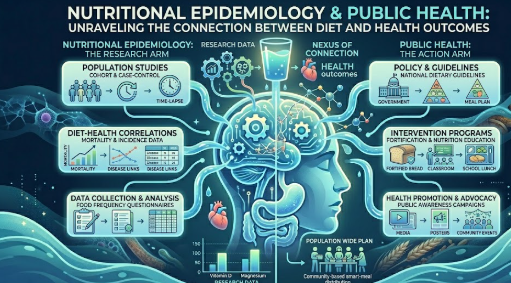
Nutritional epidemiology is a specialized field of study that focuses on the examination of the relationships between dietary habits and health outcomes. This discipline seeks to understand how different nutritional choices influence the risk of diseases and overall health, thereby playing a critical role in the field of public health. Nutritional epidemiology encompasses a wide range of topics, including nutrient intake, eating behaviors, and lifestyle factors, aiming to elucidate how these elements contribute to health or disease.
The primary objective of nutritional epidemiology is to identify dietary patterns and specific nutrients that may correlate with health issues such as obesity, cardiovascular diseases, diabetes, and certain cancers. Researchers in this field employ various methodologies, including observational studies, cohort studies, and randomized controlled trials, to investigate the impact of diet on public health. By analyzing data from diverse populations, they can draw conclusions about the effectiveness of dietary interventions and the role of nutrition in disease prevention.
Furthermore, the findings from nutritional epidemiology are essential for informing public health policies. They provide the scientific basis for dietary guidelines that can improve health outcomes across populations. Additionally, insights gained from this research can empower individuals to make informed dietary choices, leading to healthier lifestyles. As global health challenges, such as obesity and malnutrition, continue to rise, the significance of nutritional epidemiology becomes increasingly apparent. It advocates for a proactive approach to diet and health, underscoring the need for a comprehensive understanding of how what we eat influences our overall well-being.
Historical Context and Development of Nutritional Epidemiology
The field of nutritional epidemiology has undergone significant evolution since its inception, tracing back to the early 20th century when researchers first began to understand the profound relationship between diet and health outcomes. Early pioneers like Dr. Frederick Hopkins emphasized the importance of vitamins, unveiling how specific dietary factors influence health. Their work laid the groundwork for what would become a critical discipline in public health.
Throughout the decades, key milestones have marked the progression of nutritional epidemiology. For instance, during the 1930s and 1940s, the Framingham Heart Study began to illuminate the connections between dietary habits and cardiovascular health. This long-term investigation exemplified how systematic data collection could identify risk factors for heart disease, ultimately establishing the role of nutrition in chronic illnesses.
The post-World War II era witnessed increased interest in population-based studies. Landmark research focusing on cohorts and large-scale surveys, such as the Nurses’ Health Study, was instrumental in linking dietary patterns with various health outcomes, including obesity, diabetes, and specific cancers. These studies highlighted the significance of dietary intake assessments and their implications on public health recommendations, particularly concerning the prevention of non-communicable diseases.
Societal changes, including urbanization and shifts in food production and consumption habits, have substantially influenced the direction and focus of nutritional epidemiology research. As diets evolved with globalization and technological advancements, new challenges surfaced, prompting researchers to investigate the effects of convenience foods, processed diets, and dietary diversity on health. This ongoing evolution reflects not only the changes in societal structure but also the continuous quest for understanding how dietary factors can inform better health policies.
Thus, as the discipline progresses, it continually incorporates emerging evidence and adapts to the complexities of modern dietary patterns, ensuring that nutritional epidemiology remains relevant and impactful in addressing public health challenges.
Methodologies in Nutritional Epidemiology
Nutritional epidemiology primarily employs various methodologies to investigate the intricate relationship between dietary factors and health outcomes. Observational studies constitute one of the most common approaches used in this field. These studies categorize individuals based on dietary patterns and subsequently track their health status over time. The primary advantage of observational studies is their ability to reflect real-world habits without imparting any intervention, allowing researchers to observe natural dietary variations. However, they are also susceptible to various biases, such as recall bias and confounding variables, which can complicate the interpretation of data.
In addition to observational studies, clinical trials play a pivotal role in nutritional epidemiology. These trials assess the direct impact of specific dietary interventions on health outcomes, providing a more controlled environment for data collection. Randomized controlled trials (RCTs) are considered the gold standard in this research methodology as they help establish causality between diet and health outcomes. Nevertheless, ethical considerations often limit the scope of RCTs in nutritional epidemiology; for instance, it may be impractical or unethical to assign certain dietary patterns to participants.
Dietary assessments are another fundamental aspect of nutritional epidemiology. Accurately measuring dietary intake is crucial for establishing reliable correlations between diet and health. Commonly used dietary assessment methods include food frequency questionnaires (FFQs), 24-hour dietary recalls, and dietary records. While these methods are instrumental in obtaining detailed dietary information, they may also present challenges such as participant misreporting or variability in food preparation methods. Therefore, researchers must adopt rigorous protocols and validate their instruments to enhance accuracy in dietary data collection.
In conclusion, the methodologies employed in nutritional epidemiology are diverse, encompassing observational studies, clinical trials, and dietary assessments. Each method has its advantages and challenges, ultimately contributing to a better understanding of the relationship between diet and health outcomes.
Key Findings in Nutritional Epidemiology
Nutritional epidemiology has uncovered numerous significant correlations between dietary habits and health outcomes, particularly in the realm of chronic diseases. Extensive research has illustrated that diets high in saturated fats, refined sugars, and low in fruits and vegetables are strongly associated with conditions such as obesity, diabetes, cardiovascular disease, and certain types of cancer. For instance, a high intake of trans fats has been linked to increased levels of LDL cholesterol and a higher risk of heart disease.
Additionally, observational studies have suggested that increasing the consumption of whole grains, fruits, and vegetables can lead to lower incidences of chronic diseases. Specifically, a higher intake of dietary fiber—predominantly found in whole grains, legumes, and fruits—has been associated with a reduced risk of developing type 2 diabetes and coronary heart disease. Furthermore, consuming a variety of colorful fruits and vegetables provides essential vitamins, antioxidants, and phytonutrients that support overall health and mitigate disease risk.
Another noteworthy finding is the relationship between dietary patterns and health outcomes. The Mediterranean diet, characterized by high consumption of olive oil, nuts, fish, and plant-based foods, has been linked to numerous health benefits, including lower mortality rates and reduced prevalence of chronic diseases. Studies have consistently shown that individuals adhering to Mediterranean dietary practices have a lower risk of developing cardiovascular diseases and may experience improved cognitive function.
Moreover, the role of specific nutrients has garnered attention as well. For instance, omega-3 fatty acids, predominantly found in fatty fish, have been associated with numerous health benefits, including anti-inflammatory effects and improved heart health. Such findings underscore the importance of correct nutritional interventions in public health strategies, aiming to promote better dietary habits for improved population health.
The Role of Public Health Policy in Nutrition
Public health policy plays a pivotal role in shaping nutrition-related practices and dietary guidelines that enhance health outcomes at the population level. The influence of such policies is vital for addressing prevalent nutrition-related health issues, including obesity, malnutrition, and diet-related diseases. Research outcomes from nutritional epidemiology provide the evidence base necessary for these policies, guiding government agencies in their decision-making processes.
Government entities, such as the Food and Drug Administration (FDA) and the Centers for Disease Control and Prevention (CDC), actively utilize findings from nutritional epidemiology to inform public health initiatives and dietary guidelines. These agencies evaluate data on dietary habits and health effects, aiming to create recommendations that promote optimal nutrition among diverse populations. An evidence-informed approach ensures that policies address patterns of nutrient intake, food availability, and socioeconomic factors that influence dietary behaviors.
Successful initiatives exemplify the potential of public health policies to improve population health through nutrition. For instance, the implementation of the Supplemental Nutrition Assistance Program (SNAP) in the United States provides essential support to low-income households, facilitating access to healthier food options. Additionally, the recent focus on reducing sugar-sweetened beverage consumption has led to polices like soda taxes in various regions, encouraging healthier dietary choices. Such initiatives demonstrate how effective public health policies can directly impact nutrition and, consequently, overall health outcomes.
In conclusion, the interplay between public health policy and nutrition is critical for fostering environments that support healthier dietary practices. As nutritional epidemiology continues to reveal important insights into diet and health, it remains essential for policymakers to integrate this knowledge into their strategies for enhancing public health.
Challenges and Controversies in Nutritional Epidemiology
Nutritional epidemiology is a dynamic field that seeks to unravel the intricate relationships between dietary habits and health outcomes. However, it is fraught with challenges that complicate the interpretation of data and the establishment of definitive causal relationships. One of the primary issues is the presence of bias in dietary assessments, which can include recall bias, selection bias, and misclassification of dietary intake. These biases can significantly skew the results of nutritional studies, leading to misleading conclusions about the health impacts of certain diets.
Moreover, confounding factors present another substantial challenge. Variables such as lifestyle, socioeconomic status, and genetic predispositions can influence health outcomes independently of dietary habits. Establishing clear causal connections becomes increasingly complex when these confounders are not adequately controlled. For example, while a study may suggest a link between high sugar intake and increased risk of obesity, it may fail to account for other lifestyle factors such as physical activity levels and overall caloric intake, which also play crucial roles in weight management.
The field is further complicated by ongoing controversies surrounding nutritional guidelines and dietary recommendations. Conflicting research findings often emerge, prompting debates within the public health community. Nutritional science is an evolving discipline, where newer studies occasionally contradict established dietary guidelines, leading to confusion among practitioners and the public alike. For instance, recent discussions around the health implications of saturated fats vis-a-vis carbohydrates illustrate how initial conclusions can be challenged by subsequent research. These complexities highlight the necessity for a nuanced understanding of nutritional epidemiology, ensuring that policy recommendations reflect the most current and comprehensive evidence.
Future Directions in Nutritional Epidemiology
The field of nutritional epidemiology is poised for significant transformation as we venture further into the 21st century. Recent advancements in technology and research methodologies are paving the way for enhanced understanding of how dietary habits affect health outcomes. One prominent trend is the rise of big data, which allows researchers to analyze vast datasets from diverse populations. This enables a more comprehensive assessment of dietary patterns, disease correlations, and ultimately, the formulation of effective public health interventions.
Moreover, the intersection of genetics and nutrition has emerged as a critical area of study. Personalized nutrition, which considers individual genetic profiles, offers the potential to tailor dietary recommendations to maximize health benefits. This evolution is crucial because it acknowledges the unique metabolic responses individuals have to various foods, leading to more targeted and efficient dietary guidelines.
Technology also plays a vital role in enhancing data collection methods. Mobile applications and wearable devices can facilitate real-time monitoring of dietary intake and physical activity, allowing for more accurate assessments of lifestyle factors influencing health. Furthermore, social media platforms can serve as valuable tools for gathering data on food consumption trends and public attitudes toward nutrition, providing insights that traditional methods may overlook.
In addition to these tools, novel methodologies such as metabolomics—the study of metabolites in biological samples—can deepen our understanding of the complex biochemical pathways through which diet impacts health. By integrating these cutting-edge approaches, researchers will be better equipped to elucidate the intricate relationship between various dietary components and health outcomes.
As we look ahead, the integration of these emerging trends and technologies will undoubtedly refine the practices of nutritional epidemiology. By leveraging big data analytics, advancing personalized nutrition, and adopting innovative research methodologies, the field has the potential to significantly enhance public health recommendations and improve dietary-related health outcomes on a population scale.
Practical Applications of Nutritional Epidemiology for Individuals
Nutritional epidemiology offers valuable insights that can significantly inform individual dietary choices and health outcomes. By understanding the link between nutrition and health, individuals can leverage scientific evidence to make more informed decisions about their diets. One practical application is the emphasis on consuming a diverse array of whole foods. Research consistently shows that diets rich in fruits, vegetables, whole grains, lean proteins, and healthy fats are associated with a reduced risk of chronic diseases such as obesity, diabetes, and cardiovascular disease.
Individuals can start by incorporating a variety of colorful fruits and vegetables into their meals, as these foods are high in essential vitamins, minerals, and antioxidants, which contribute to overall health. By aiming for at least five servings of fruits and vegetables each day, individuals can significantly improve their nutrient intake. Additionally, opting for whole grains over refined grains can provide more fiber and nutrients, further supporting health outcomes.
Nutrition education plays a crucial role in empowering individuals to make healthier choices. This can include understanding food labels, which detail the nutritional composition of products, as well as being aware of portion sizes. Educating oneself about the health impacts of different food groups can guide individuals toward making better dietary choices. Furthermore, participating in community nutrition programs can enhance understanding and provide support in implementing dietary changes.
Ultimately, by applying the principles derived from nutritional epidemiology, individuals can adopt a holistic approach to nutrition that not only improves their health outcomes but also fosters a sustainable lifestyle. Engaging in meal planning, cooking at home, and reducing processed food intake are practical steps that can lead to more healthful eating habits. By integrating these strategies, individuals can effectively utilize the knowledge gained from nutritional epidemiology to improve their overall health and well-being.
Conclusion
The relationship between diet and health outcomes is a critical area of exploration in the field of nutritional epidemiology. Throughout this blog post, we have examined how the consumption patterns, nutrient intake, and overall dietary behaviors influence various health conditions. The evidence underscores that the dietary choices individuals make have profound implications not only for personal health but also for public health on a broader scale.
Nutritional epidemiology plays a pivotal role in identifying the links between nutrition and health status. Through rigorous research and data analysis, this discipline helps to clarify how specific nutrients, food groups, and overall diet quality contribute to the development of chronic diseases such as obesity, diabetes, and heart disease. By elucidating these connections, nutritional epidemiology informs public health strategies aimed at promoting healthier eating habits and reducing the incidence of diet-related diseases.
In light of the substantial evidence linking diet to health outcomes, it is clear that a focus on nutrition must remain central in public health initiatives. With continued research and commitment to understanding these intricate relationships, we can better respond to the dietary needs of populations and work toward improving health outcomes across the lifespan.