
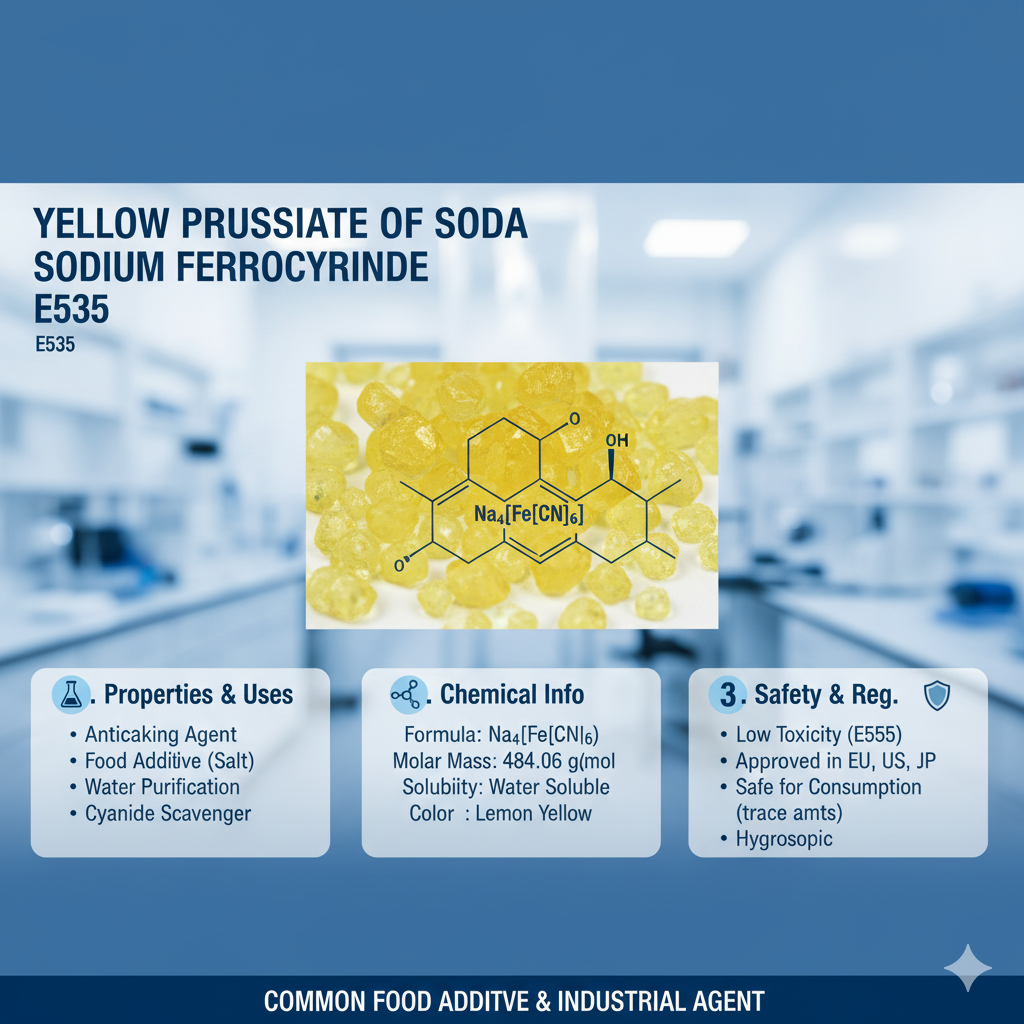


Are you curious about the ingredients lurking in your food? One such ingredient that often raises eyebrows is yellow prussiate of soda. But what exactly is it, and why should you care? This intriguing compound has been a staple in various industries for years, yet many people remain unaware of its presence.
Yellow prussiate of soda, also known as sodium ferrocyanide, might sound intimidating at first. However, understanding its role can help demystify this additive and reveal its significance in our everyday lives. Join us as we delve into the history, uses, safety concerns, and more surrounding this fascinating chemical compound. You may just find that there’s more to yellow prussiate of soda than meets the eye!
History and Discovery of YPS
Yellow Prussiate of Soda, often referred to as YPS, has an intriguing history that dates back several centuries. Its discovery is rooted in the exploration of various cyanide compounds in the early 19th century.
Initially identified by chemist Joseph Louis Gay-Lussac, this compound played a significant role in understanding chemical reactions involving cyanides. The bright yellow color gave it its name and made it easily recognizable among other substances.
As industries evolved, so did the applications of YPS. It found its way into food processing during a time when improving sodium content was essential for preserving freshness. This unique additive quickly gained traction due to its effectiveness and affordability.
Through the years, YPS has been studied extensively, revealing more about its properties and potential uses across different sectors beyond just food preservation.
Chemical Composition and Properties of YPS
Yellow prussiate of soda, scientifically known as potassium ferrocyanide, has a striking chemical composition. Its formula is K4[Fe(CN)6], which reveals its unique structure.
This compound consists of iron and cyanide groups combined with potassium ions. The presence of the ferrocyanide ion gives it distinctive properties.
YPS appears as a yellow crystalline solid under normal conditions. It is highly soluble in water yet remains stable at room temperature.
In terms of reactivity, YPS does not release toxic cyanide gas unless subjected to extreme conditions. This stability makes it relatively safe for various applications in industry and food processing.
Its ability to form complexes with metal ions highlights its versatility. These properties ensure that yellow prussiate of soda finds use across different sectors while maintaining safety standards.
Common Uses of YPS in Various Industries
Yellow prussiate of soda, or YPS, finds its way into several industries due to its unique properties. A key player in the food sector, it serves as an anti-caking agent in salt and other powdered products. This helps maintain a free-flowing texture.
In construction, YPS is often utilized as a stabilizer for concrete mixtures. Its ability to reduce water solubility enhances durability and performance, making structures more resilient.
Additionally, the chemical plays a role in various industrial processes like electroplating and dyeing textiles. It aids in creating vibrant colors while ensuring even distribution.
Agriculture also benefits from YPS through its use as a fertilizer additive. The compound helps improve nutrient uptake for plants when applied appropriately.
These diverse applications showcase how versatile yellow prussiate of soda can be across different sectors.
Health Concerns and Safety Measures for Handling YPS
Yellow prussiate of soda, while commonly used, does raise health concerns that warrant attention. Although it is generally recognized as safe in small quantities, excessive exposure can lead to toxic effects.
Skin contact with YPS can cause irritation or allergic reactions. Inhalation of its dust may result in respiratory issues too. Therefore, proper safety measures are essential when handling this compound.
Wearing gloves and protective eyewear is advisable to minimize direct contact. Working in a well-ventilated area helps prevent inhaling harmful particles. It’s also wise to avoid consuming food or beverages near the substance.
Always store yellow prussiate of soda in a cool, dry place away from incompatible materials. This simple precaution reduces risks significantly and promotes safer usage practices for everyone involved.
Comparing YPS to Other Food Additives
Yellow prussiate of soda stands out among food additives due to its unique properties. Unlike common preservatives or flavor enhancers, YPS primarily acts as an anti-caking agent. This quality is especially vital in powdered foods where clumping can affect texture and usability.
When compared to sodium bicarbonate, for instance, YPS does not contribute any significant taste but efficiently maintains product consistency. Many food manufacturers appreciate this aspect, as it allows them to focus on the primary flavors without interference.
Interestingly, while some additives raise concerns about health impacts over time—like artificial colors or sweeteners—YPS has a different profile. Its use in small amounts typically poses minimal risk when handled properly.
In contexts like baking or salt production, yellow prussiate of soda serves a practical function that complements other ingredients perfectly.
Conclusion: Should You Be Concerned About Yellow Prussiate of Soda?
The presence of yellow prussiate of soda (YPS) in our food and industry raises important questions about safety and health. While YPS is generally recognized as safe when used within regulated limits, it’s crucial to be aware of its properties and applications.
Many industries rely on this compound for its effectiveness as an anti-caking agent, particularly in salt production. The history behind YPS reveals a long-standing use that has endured through various scientific advancements.
However, it’s essential to remain informed about potential health concerns associated with any chemical additive. Understanding how YPS compares to other food additives can help you make educated choices regarding your diet and overall well-being.
If you’re considering whether or not to worry about yellow prussiate of soda, aim for balance. Knowledge empowers us; staying informed allows us to enjoy the benefits while minimizing risks associated with food additives like YPS. Being vigilant is key—always read labels and educate yourself on what goes into your body.