
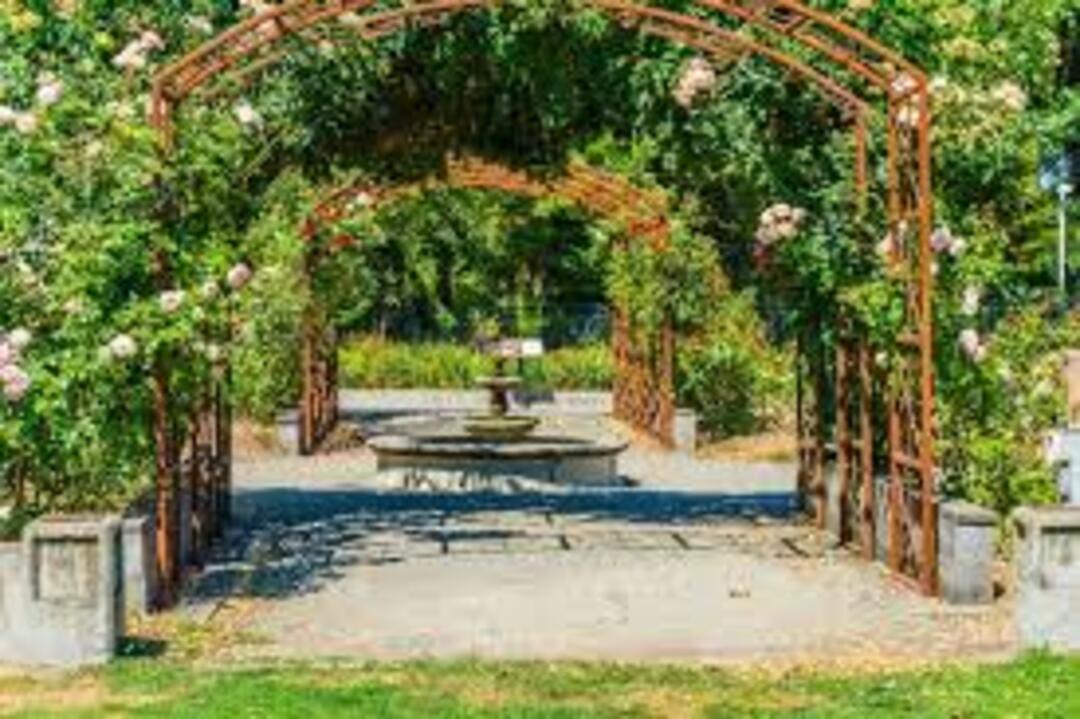


Let’s be completely honest about something: the structure is an excuse. Yes, a garden arch or arbour adds height, creates a threshold, divides the garden into distinct areas — all admirable things — but most of us aren’t really thinking about spatial design theory when we order one. We’re thinking about the roses. Or the wisteria. Or that spectacular late-summer clematis with flowers the colour of a Venetian sunset. The arch is the support act. The plants are the headline.
And that’s absolutely fine. But it does mean that the choice of plants should come before — or at the very least alongside — the choice of structure. A structure that can’t support the weight of what you want to grow is worse than useless; a structure that requires training methods incompatible with your chosen climbers will cause you years of frustration. Match the two, and what you’ll have is a combination that gets better every single year.
Know Your Climber’s Nature First
Climbing plants attach themselves by very different means and this matters enormously when you’re choosing what to grow over an arch or arbour. Twining plants — honeysuckle, wisteria, some clematis — wrap themselves around supports as they grow and don’t need tying in very often, though they can become extraordinarily difficult to untangle once established.
Scrambling plants — roses are the classic example — don’t really climb at all in the technical sense. They produce long stems equipped with thorns that catch on whatever is nearby, and left to their own devices they’d pile up on the ground. To get a rose over an arch you need to tie it in actively, training stems horizontally where possible to encourage more flowering, and being disciplined about where growth is directed. This is more work, but the results are incomparable.
True self-clinging climbers — Virginia creeper, climbing hydrangea — don’t really work over arches because their adhesive roots or tendrils need a flat surface to grip. They’re better on walls. Bear this in mind when you see something seductive in a nursery and start wondering whether it might scramble over your new arbour.
Roses for Arches: The Non-Negotiable Choices
I have grown a lot of roses over arches and I have learned some lessons the hard way, usually involving ladders, gauntlets, and liberal quantities of swearing. For manageable vigour combined with exceptional repeat flowering, the English shrub roses bred by David Austin that are trained as climbers are outstanding. ‘The Generous Gardener’ produces long, flexible stems and clusters of soft pink flowers with an extraordinarily beautiful myrrh fragrance. ‘A Shropshire Lad’ has peachy-pink flowers in large clusters and a similarly lovely disorder to its growth.
For something more powerfully fragrant and with a slightly wilder character, ‘Félicité Perpétue’ is a rambler that covers an arch in masses of small creamy-white pompom flowers with a delicious primrose scent. It’s near-evergreen in mild winters and relatively disease-resistant — a very good-tempered plant.
The one thing I would caution against is choosing extremely vigorous ramblers for a standard arch unless you genuinely have time to manage them every year. ‘Kiftsgate’ and similar large ramblers are magnificent plants, but they will demolish an inadequate structure within a few years.
Clematis: The Arch’s Essential Companion
No conversation about planting arches and arbours can ignore clematis, and yet clematis is so various in its character, vigour, pruning requirements, and flowering season that ‘grow clematis on your arch’ is about as useful a piece of advice as ‘drive a car to work’. You need to choose more specifically.
Group 2 clematis — the large-flowered hybrids that flower on old wood in early summer and then again in late summer — are perhaps the most rewarding for arches. ‘The President’, with its rich purple flowers and contrasting stamens, is a reliable classic. ‘Nelly Moser’ gives extraordinary striped pale-pink flowers and is particularly good in a partially shaded position.
Group 3 clematis — cut hard back to around 30cm each February — include the viticella hybrids that are, in my opinion, the most practically useful clematis for arches. They start from scratch each spring, which means they never become a tangled woody mass, and they flower prolifically from July to September. ‘Étoile Violette’ and ‘Purpurea Plena Elegans’ are my personal standbys.
Beyond Roses and Clematis
Wisteria, grown over a substantial timber arbour or very robust metal arch, is probably the most breathtaking of all spring-flowering climbers. Those pendulous racemes of lilac or white flowers in May are simply otherworldly. But let me be direct about the conditions for success: you need a structure that is both large and extremely solid, you need to do the twice-yearly wisteria pruning without fail, and you need to accept that it may take three to five years before the plant flowers at all.
Honeysuckle is deeply underrated. Lonicera periclymenum ‘Graham Thomas’ produces creamy-yellow flowers of almost shocking fragrance throughout summer and into autumn. It’s far easier than either roses or wisteria, tolerates a partially shaded position, and has no serious pest or disease problems. If you want a garden that smells wonderful on summer evenings, a honeysuckle-clad arbour is one of the most reliable ways to achieve it.
For those interested in managing climbers with minimal chemical input, Garden Organic’s expert growing advice covers sustainable approaches to feeding, pruning, and managing climbing plants and their associated pests — well worth reading if you prefer to keep your garden as chemical-free as possible.
Getting the Structure Right for Your Plants
One final thought: if you’re choosing your plants before your structure — which is the right order of things — make sure the structure you select is appropriate for what you’re planning to grow. A vigorous climbing rose underplanted with a viticella clematis needs an arch that is genuinely robust.
The Dobbies garden arch and arbour collection includes detailed dimensions and specifications, which is worth consulting alongside the ultimate size descriptions of your chosen climbers to ensure the combination will work in practice — both aesthetically and structurally.
Choose ambitiously, plant generously, and allow things time to establish. The most spectacular arch plantings I know are all at least five years old. They look effortless now. They were not always thus.