


Hair loss has a funny way of creeping up on you. One morning you’re fine, and then about six months later you’re holding a clump of hair after a shower and Googling things at midnight that you’d never expected to Google. If that sounds familiar, you’re not alone. Hair loss affects a significant chunk of the UK population, and the sheer number of products, treatments, and conflicting advice online makes it genuinely difficult to know where to start.
Most people who look into treatment eventually land on minoxidil. It’s one of the few options that actually has decent clinical evidence behind it, and it’s been around long enough that we know a fair amount about how it works. Originally developed as a blood pressure medication in the 1970s, it turned out to have a rather useful side effect: hair growth. That discovery led to it being repurposed and eventually approved for treating hair loss, first in the US and then here in the UK.
The Difference Between Oral and Topical Formats
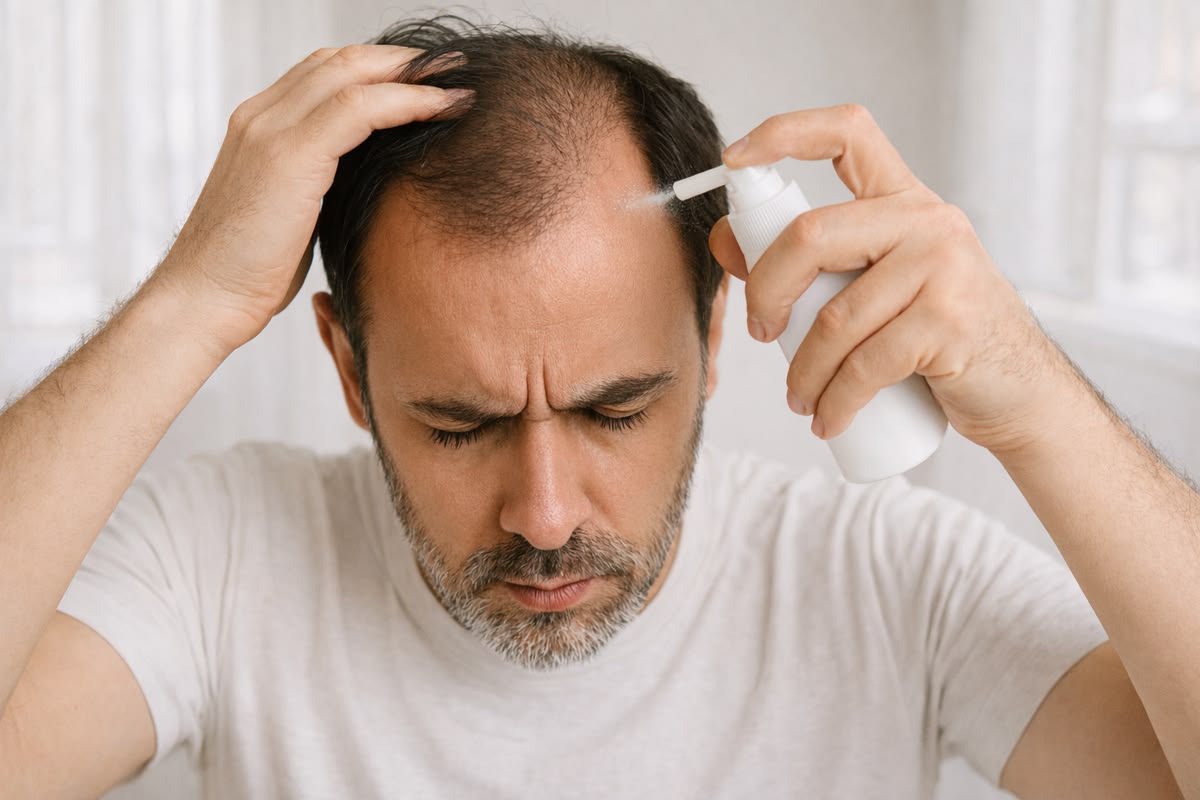
There’s been a lot of conversation in recent years about oral minoxidil tablets, which some dermatologists prescribe off-label for hair loss. But for most people starting out, the topical version applied directly to the scalp is still the first port of call. It’s been used for decades, it’s well understood, and when applied correctly it can genuinely slow shedding and, in many cases, encourage regrowth.
The way topical minoxidil works is by widening blood vessels in the scalp, which is thought to increase blood flow and nutrient delivery to hair follicles. It essentially prolongs the growth phase of the hair cycle. It doesn’t work for everyone, and results can take anywhere from three to six months to show up properly, which is one reason a lot of people give up on it too early. Patience is genuinely required here.
One thing worth knowing: if you stop using it, any benefit tends to reverse over time. That’s not a scare tactic, it’s just how it works. The treatment manages the condition rather than fixing it permanently, which is pretty standard for most hair loss interventions currently available.
Combining Minoxidil With Finasteride
Some formulations combine minoxidil with finasteride in a single topical solution. Finasteride works by blocking DHT, the hormone most associated with male pattern baldness, so combining it with minoxidil addresses the problem from two directions at once. Some research suggests this combination can be more effective than either treatment used alone, and because it’s applied topically rather than taken as a tablet, some men feel it’s a preferable option given concerns around systemic side effects associated with oral finasteride.
That said, topical solutions still carry some absorption risk, and anyone with concerns should talk to a prescriber or their GP before starting. It’s not a decision to make based purely on what you’ve read in a forum at half past eleven on a Tuesday.
What Realistic Results Actually Look Like
Let’s be honest about expectations here, because the marketing around hair loss treatments has historically been pretty wildly optimistic. Minoxidil won’t restore a full head of hair to someone who’s been significantly bald for a decade. What it can do, particularly in earlier-stage hair loss, is slow progression and possibly bring back some density in thinning areas. For some people that’s a meaningful difference. For others, the results are subtle enough that they question whether it’s worth the commitment.
The people who tend to see the best results are those who start early, stay consistent with application, and have realistic expectations going in. That might sound obvious, but it’s genuinely the biggest predictor of whether someone feels the treatment was worth it for them.
There’s also the question of what you’re actually buying and from whom. Online prescribing services regulated by the CQC can be a legitimate and convenient route for accessing prescription-strength treatments, but it’s worth checking that any service you use requires a proper medical consultation before issuing a prescription. That isn’t optional, it’s a legal requirement and a basic safety measure, and any provider that skips it is one to avoid.
Hair loss isn’t a crisis, even when it feels like one. But understanding your options properly, including what the evidence actually says about them, means you’re making a decision with your eyes open rather than just grabbing whatever comes up first in an ad.