
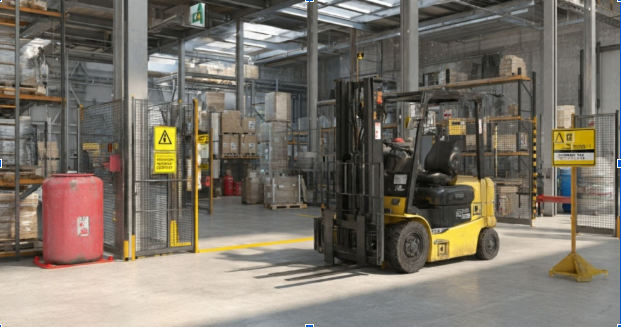


Forklift truck refresher training helps experienced operators maintain the knowledge and practical skills needed to use lift trucks safely. Even confident drivers can develop unsafe habits over time, particularly when workplace conditions, equipment or operating procedures change.
Regular forklift truck refresher training provides an opportunity to review safe operating practices, identify areas for improvement and reassess practical competence. It helps businesses maintain safer working environments while ensuring operators understand their responsibilities.
What Is Forklift Truck Refresher Training?
Forklift truck refresher training is for operators who have already been formally trained and have experience handling that particular type of lift truck. Refresher training reinforces fundamental knowledge and skills rather than teaching the basics again.
This course can include pre-use inspections, handling loads, stability, hazards around the work zone and pedestrian awareness. Theory and practical assessments often verify that the operator can carry out tasks safely.
Who Should Complete Refresher Training?
Refresher training is usually designed for trained operators who wish to refresh and re-evaluate their skills. It may be suitable when an operator has not operated a forklift truck for some time, or when monitoring has revealed unsafe working practices.
HSE guidance also identifies accidents, near misses, changes to working practices and changes in the working environment as situations where additional training or assessment may be appropriate.
How Often Should Forklift Training Be Refreshed?
There is no single statutory period that automatically determines when every forklift operator must complete refresher training. Instead, employers should monitor operator competence and arrange further training or assessment when necessary.
Some organisations choose to schedule refresher training at regular intervals as part of their workplace transport arrangements. A set review period can provide a useful framework, but it should not replace ongoing monitoring. If an operator demonstrates unsafe behaviour or their duties change, additional training may be required sooner.
What Does a Refresher Course Cover?
The exact content can vary depending on the type of forklift truck, workplace, and operator experience. However, refresher training commonly revisits key areas of safe operation.
These may include:
- Pre-use inspections and defect reporting
- Forklift truck controls and operating procedures
- Safe steering and manoeuvring
- Load handling and stability
- Stacking and de-stacking
- Working around pedestrians
- Operating in restricted or confined areas
- Workplace hazards and risk awareness
- Relevant health and safety responsibilities
- Theory and practical assessment
This combination helps operators refresh both their knowledge and practical driving ability.
Why Are Pre-Use Checks So Important?
A pre-use inspection is an important part of safe forklift operation. Operators should understand how to identify obvious defects and know what action to take if equipment is not safe to use.
Refresher training can reinforce the importance of checking relevant components before operation and reporting defects through the correct workplace procedure. This supports safer equipment use and helps prevent avoidable problems from being overlooked.
Operators should also understand that a forklift truck must be used within its intended operating limits and in accordance with the manufacturer’s instructions.
How Does Refresher Training Improve Workplace Safety?
Forklift trucks are used to lift, move, and position loads in many work environments. Poor judgment, unsuitable speeds, unstable loads, restricted visibility and interaction with pedestrians can all increase workplace risk.
Refresher training gives operators the opportunity to revisit these hazards and strengthen their approach to safe working. It can also help identify unsafe habits before they contribute to an accident or near miss.
HSE recommends routine monitoring and assessment of lift-truck operators, including further training when performance indicates a need.
Can Training Be Tailored to Different Forklift Trucks?
Forklift trucks come in different types, and operators should be trained on the equipment they are expected to use. Counterbalance and reach trucks, for example, have different operating characteristics and may be used in different workplace environments.
Training should therefore reflect the truck type, working conditions and tasks involved. If an experienced operator moves to a different category of lift truck, conversion training may be more appropriate than simply completing refresher training. HSE identifies conversion training as the route for trained operators who need to extend their skills to another type of lift truck.
What Are the Benefits for Employers?
A structured approach to forklift truck refresher training can benefit both operators and employers. It helps businesses review competence, reinforce safe working practices and address identified training needs.
Key benefits can include:
- Improved operator awareness
- Safer load handling
- Better understanding of workplace hazards
- Reinforcement of pre-use inspection procedures
- Reduced likelihood of unsafe operating practices
- Practical reassessment of operator competence
- Support for workplace transport safety procedures
- Appropriate training records for employees
Employers should retain suitable training and assessment records so there is a clear record of an operator’s development and competence.
Choosing the Right Forklift Refresher Training
When arranging forklift truck refresher training, businesses should consider the operator’s previous training, the type of truck being used and the conditions in which it operates. Training should match the actual work being carried out rather than being treated as a general driving exercise.
A suitable course should combine theoretical knowledge with practical skills and assessment. It should also give operators an opportunity to revisit workplace hazards, safe operating procedures and the responsibilities associated with lift truck use.
For businesses looking to maintain competent operators and safer workplace transport practices, refresher training is an important part of an effective training programme. Regularly reviewing operator performance and arranging additional training when needed can help ensure forklift trucks continue to be operated safely and responsibly.