
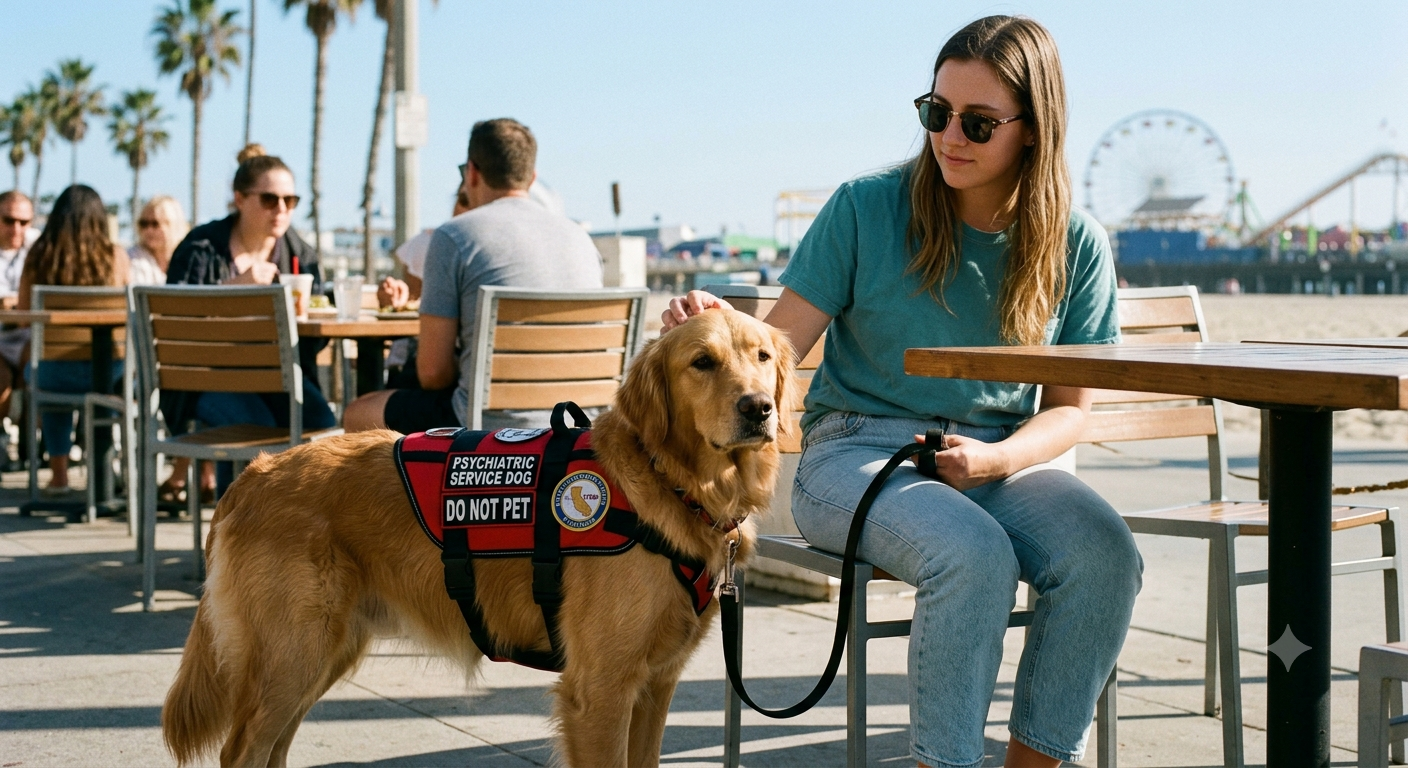


Living with a mental health disability can be debilitating. Symptoms can intrude at any point and create barriers that can feel impossible to push through. They take away your control and can leave you feeling powerless, overwhelmed, and disillusioned.
A psychiatric service dog (PSD) is a type of assistance animal that can help you regain control, and they make for a lifelong friend like no other. If you’re trying to find out more about psychiatric service dogs in California, read on. We discuss how they can help, their legal protections, and who can qualify.
What Is a Psychiatric Service Dog and How Can They Help?
A psychiatric service dog is an assistance animal that supports those with mental health disabilities. Specifically, they are trained to perform tasks for their owners (handlers) that help to relieve disability-related symptoms.
For instance, a psychiatric service dog may help support an individual with anxiety by performing grounding tasks like deep pressure therapy (DPT). They may also help them by retrieving their medication, finding help in a time of crisis, or leading them to a quiet space if they detect the onset of a panic attack.
These tasks allow individuals to better manage symptoms and gain more independence. A psychiatric service dog’s presence alone is also often enough to provide reassurance and security and even ease loneliness. They can even give their handler a strong purpose in life, which can help them stay motivated when engaging with other therapeutic interventions.
Understanding Psychiatric Service Dog California Legal Rights
Psychiatric service dogs are treated as medical assistance aids and are thus protected at the federal and state levels. The key laws that protect PSDs in California include:
- Americans with Disabilities Act (ADA): Grants PSDs public access rights, meaning they are legally entitled to accompany their handlers in places that typically do not allow pets.
- Fair Housing Act (FHA): Entitles PSDs to reasonable accommodation in housing, which includes exemption from no-pet policies and pet-related fees like pet rent.
- Air Carrier Access Act (ACAA): Permits PSDs to travel by air with their handlers in the cabin, regardless of an airline’s stance on pets. They also cannot be subjected to travel fees or pet-specific regulations.
California extends PSDs’ legal protections further. For instance, under the California Disabled Persons Act (DPA), service dogs in training are also permitted public access rights. This is provided they are kept under control/tethered and do not pose a disruption or danger.
The California Fair Employment and Housing Act (FEHA) also included service dogs in training in their definition of assistance animals, entitling them to the same reasonable accommodations in housing as fully trained service dogs.
California imposes strict penalties and punishments on those who cause harm to service dogs or actively interfere with their tasks. Attempting to pass a fake service dog off as a genuine one can also result in serious repercussions. Service dog fraud is classed as a misdemeanor in the state and can lead to hefty fines and even incarceration.
Do I Qualify for a Psychiatric Service Dog in California?
Anyone with a diagnosed mental health disability may be eligible for a PSD. This includes conditions such as:
- Anxiety disorders (e.g., social anxiety)
- Post-traumatic stress disorder (PTSD)
- Bipolar disorder
- Eating disorders (e.g., anorexia nervosa)
- Obsessive-compulsive disorder (OCD)
However, this isn’t the only requirement. Your condition must significantly hinder one or more major areas of your life, such as your capacity to work or travel.
You must also be able to gain genuine, therapeutic benefits from a PSD’s trained tasks. If you would find relief solely from the dog’s presence and don’t require trained tasks, then an emotional support animal (ESA) may be a better fit for your needs.
Even if you meet all this criteria, you also need to consider the practicality and the responsibilities involved. You must have the living space to accommodate a PSD, as well as the capacity to care for them throughout their life.
You must also be able to afford the cost of their training. The exact cost can vary depending on your chosen training route, but it can cost upward of $50,000 or more if you work with a dedicated service dog training program.
Learn More About the Psychiatric Service Dog California Process
It can be difficult to gauge whether a PSD is truly the right treatment for your needs. However, there are resources, charity organizations, and healthcare professionals who can help guide you throughout California.
As a starting point, we advise exploring this in-depth psychiatric service dog guide. It covers everything you need to know in greater detail, from the fundamentals to how the PSD training process works.
You can then look to arrange an appointment with a licensed mental health professional (LMHP) for further assessment. They’ll be able to advise if a service dog is a suitable treatment or if there is another option that may be a better fit.