
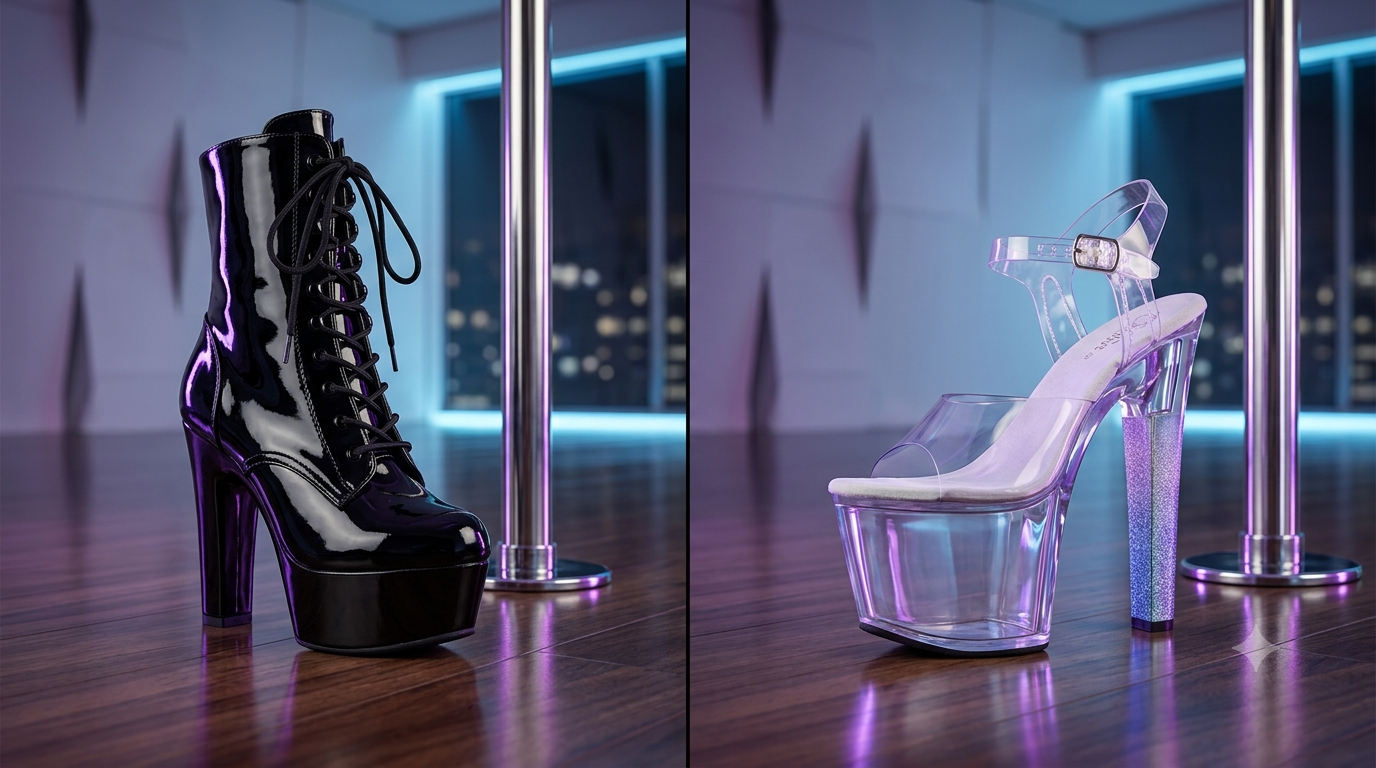


Buying your first pair of pole dance heels is an exciting milestone. You’re finally ready to order your first pair—until you run into one big question: boots or sandals?
Both styles look amazing. Both are popular among pole dancers. And after scrolling through page after page of styles at https://heelshub.com/dance-shoes/pole-dance-heels/, making a decision somehow becomes even harder.
The truth is, this isn’t just about appearance. Boots and sandals perform differently on the pole and during floorwork, and for beginners, those differences can make a huge impact on your learning experience.
Let’s break down the pros and cons of each.
Pole Dance Boots: Pros and Cons
There’s a reason many instructors recommend boots to beginners.
Their biggest advantage is ankle support. The high-top design wraps securely around your ankle, making your foot feel more stable and reducing the risk of rolling your ankle. If you’re just starting out and your ankles haven’t developed much strength yet, this extra support can make a big difference in both confidence and safety.
Boots also offer better protection. The closed toe helps shield your feet from bumps, bruises, and accidental impacts—which are almost unavoidable when you’re learning new tricks. They’re especially helpful during floorwork, rolls, and transitions where your feet frequently come into contact with the floor.
Another advantage is the secure fit. Whether they use laces or a zipper, boots stay firmly in place. Lace-up models are particularly popular because you can adjust the fit to match the shape of your foot, creating a snug, customized feel.
Of course, there are a few trade-offs.
Boots are generally more expensive than sandals, and they’re noticeably heavier. That extra weight can make certain tricks, especially those that require pointed toes and extended leg lines, a little more challenging. Since they’re enclosed, they also tend to feel warmer, and your feet may sweat more during long training sessions, particularly in the summer.
Pole Dance Sandals: Pros and Cons
Sandals have just as many loyal fans—including plenty of beginners.
The biggest advantage is their lightweight design. Because they weigh less, it’s easier to point your toes and create beautiful leg lines. Their open construction also allows your feet to move more naturally, helping strengthen your feet and ankles over time.
Ironically, the fact that sandals provide less support is exactly what helps build stronger muscles and better balance as your training progresses.
They’re also cooler to wear, usually more affordable than boots, and perform well both on the pole and during floorwork. Another bonus is that the exposed skin on the top of your foot provides extra grip against the pole, making climbs and certain tricks easier.
That freedom does come with a few compromises.
Because sandals provide very little ankle support, they aren’t always the easiest choice for beginners practicing dynamic drops or fast transitions. If you have narrow feet, your toes may slide forward during certain movements, and over time the straps can stretch, making the fit less secure.
Speaking of straps, if you decide to start with sandals, choose a model with a wide clear PVC strap rather than a thin one. A wider strap holds your foot much more securely and gives beginners a greater sense of stability. Thin straps may look elegant, but they offer less support and tend to stretch more quickly.
Which One Should You Choose?
If stability and ankle support are your top priorities, boots are probably the better choice.
If you’d rather develop foot strength, enjoy a lighter shoe, and spend a little less, sandals are an excellent option.
Many experienced pole dancers eventually own both styles because each has its own advantages depending on the type of training.
Whichever style you choose, there are a few other details worth considering before buying your first pair.
Heel Height
For most beginners, 7-inch heels are the sweet spot. They provide an excellent balance between stability and appearance.
Six-inch heels often feel limiting once your skills improve, while 8-inch heels are usually better suited for dancers who already have solid ankle strength and experience.
Material
For everyday training, clear PVC remains one of the best choices. It’s durable, affordable, and minor scratches are barely noticeable after hours of practice.
Ankle Strap
If you’re buying sandals, an ankle strap is essential. It helps keep your foot securely in place and reduces the chance of your shoe slipping off during tricks or transitions.
Sizing
Pleaser sizing doesn’t always match your everyday shoe size. Always check the size chart for the specific model before placing your order.
Choose the right style, heel height, material, and size, and you’ll set yourself up for a much more enjoyable start to your pole dance journey. Your first pair of heels should help build your confidence—not hold you back.